St. Petersburg, FL
Roof Repair in St. Petersburg, FL
Roof repair in St. Petersburg, FL. Shingle, tile, and flat roof repairs by Protech Roofing. Call (352) 605-0696 for a free estimate.
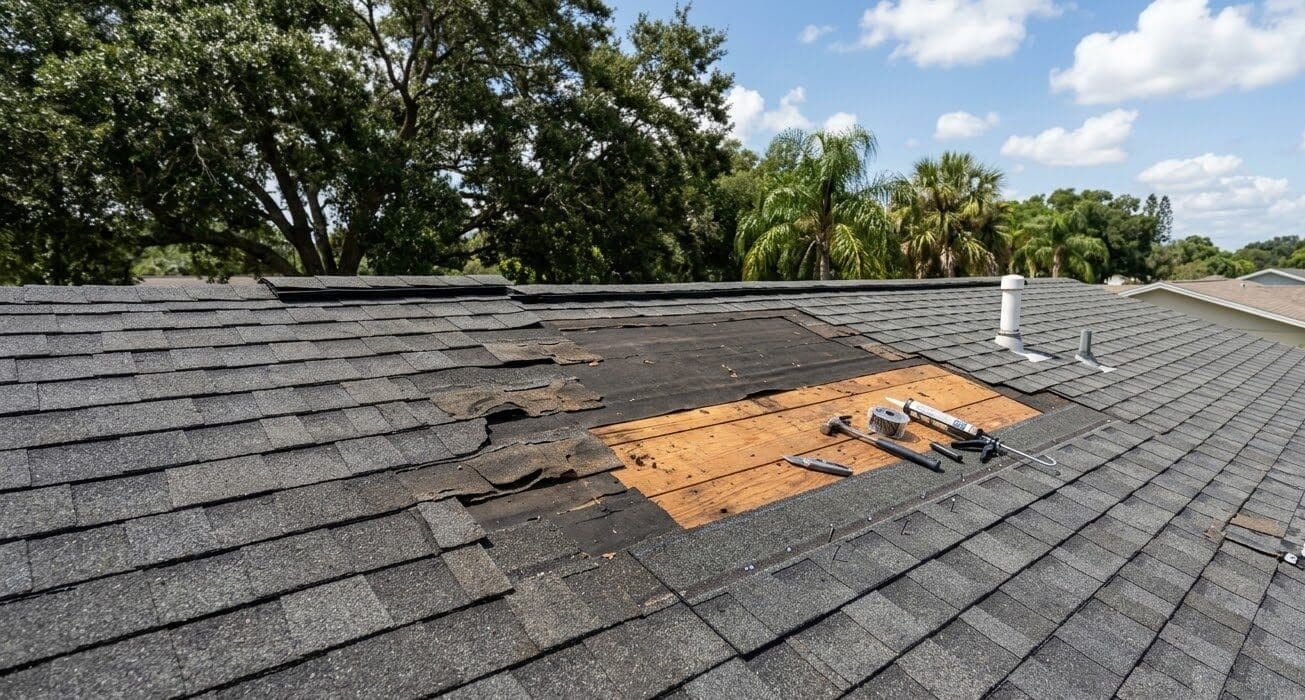
Call (352) 605-0696From the 1920s bungalow blocks of Historic Kenwood to the concrete-tile waterfront homes on Snell Isle, roof damage in St. Petersburg tends to start small and compound fast under Gulf-side humidity. A cracked barrel tile on a Mediterranean roofline or a split pipe boot on a Crescent Lake ranch can push water into the attic within a single afternoon squall. Protech Roofing handles roof repair in St. Petersburg, FL for homes of every age and material, fixing leaks, resetting tile, and reinforcing flashing before small issues turn expensive.
You Are Viewing
Roof Repair for homeowners and businesses in St. Petersburg, part of Pinellas County, FL, Florida.
Why St. Pete Roofs Need So Much Repair Work
Roof repair in St. Petersburg, FL is one of our busiest service categories, and it's not hard to see why. The city sits on a peninsula between Tampa Bay and the open Gulf, which means sun, salt, and sideways rain attack every roof from three different directions. Summer highs hit 90°F, and surface temperatures on a dark asphalt roof can climb past 160°F by midafternoon. That kind of thermal cycling degrades sealants, cracks pipe boots, and breaks the adhesive bond on three-tab shingles faster than almost anywhere inland.
Hurricane Milton on October 9, 2024 made things worse. St. Petersburg recorded 18-plus inches of rain in a single event, the highest total anywhere in the Tampa Bay region, plus 101 mph wind gusts at the airport. A lot of the repair calls we run today still trace back to Milton. Lifted ridge caps that were re-secured in a hurry after the storm are failing again. Tiles that were reset without proper foam adhesive are sliding off during normal afternoon thunderstorms. And inadequate emergency tarps that sat in the sun for two months have broken down, letting slow leaks develop under the temporary fix.
Repair costs across St. Pete generally run $250 to $1,800 for standard fixes, with pipe boot replacements closer to $175 to $400 per boot, flashing repairs $225 to $900 depending on length, and tile repairs a bit higher on Snell Isle and Old Northeast because matching historic clay profiles takes more work. Catching issues early almost always saves money. A $300 pipe boot fix beats a $6,000 water-damaged ceiling every single time.
Leak Sources and Post-Milton Damage We See Most Often
Asphalt shingle problems top the repair list in St. Pete. Wind-lifted shingles are number one, especially on 1950s and 1960s Crescent Lake, Disston Heights, and Euclid-St. Paul homes that still have three-tab roofs or early architectural products. The adhesive strips that glue each shingle to the one below it degrade under UV and heat. Once that seal breaks, the shingle flaps in later wind events until it tears off entirely. Milton accelerated that process on thousands of St. Pete homes at once.
Granule loss is the slow killer. The protective mineral granules on a shingle get scoured off by UV and driving rain over the years, and once they're gone the underlying asphalt bakes in direct sunlight. By the time you see dark bare patches from the street, the damage is advanced. Check your gutters and downspout splash blocks for granule accumulation. If they look like black sandpaper, your roof is telling you something.
Pipe boot cracks and vent-stack flashing failures are sneakier. The neoprene or thermoplastic collars that seal around plumbing vent pipes degrade in St. Pete heat within 8 to 12 years. When they crack, water runs right down the pipe and into the attic every time it rains. The stain on the living room ceiling might not show up for months because the water is tracking down the inside of an interior wall cavity. We find three to five cracked boots on a typical 20-year-old St. Pete roof.
Valley flashing and sidewall step flashing round out the top repair calls. Valleys concentrate water from two converging slopes, so any gap lets a big volume of water through. And step flashing at chimneys and dormers takes sideways wind-driven rain directly in every afternoon summer storm. Salt-corroded flashing along the coast in Shore Acres and Coquina Key rusts from the inside out and needs replacement even when the roof itself is sound.
Salt-Air Flashing Repair Near the Gulf and Tampa Bay
St. Pete sits four to six miles between the Gulf and Tampa Bay, and salt-heavy wind reaches every block of the city. Chloride deposits accelerate the corrosion of steel fasteners, galvanized flashing, and vent stack collars faster here than anywhere in Hernando or Pasco. On waterfront Snell Isle homes and raised Shore Acres properties, we typically find the roofing system still intact while the flashing and fasteners are eaten through.
When we repair flashing in St. Pete, we default to marine-grade materials. Stainless steel screws and copper nails on anything within a mile of the water. Aluminum drip edge instead of galvanized steel. Copper or lead boot flashing on vent stacks. Butyl tape in step flashing seams to seal against sideways wind-driven rain. These upgrades add $150 to $400 to a typical flashing repair, but they buy another decade of life on a coastal St. Pete roof.
We also check attic ventilation during every repair. Salt-air moisture that makes it past a failing flashing can stay trapped in a poorly vented attic, rotting decking from underneath while the visible roof surface still looks fine. If we see black staining on the underside of the decking, we add that to the repair estimate and explain what it means. Ignoring rotted decking to save a few hundred dollars today sets up a full deck tear-off two years from now.
Bungalow Repair in Historic Kenwood and the Brick Streets of Old Northeast
Historic Kenwood was laid out in the 1910s and 1920s as a streetcar suburb of bungalows, and hundreds of those original Craftsman homes still stand today on small lots under mature oaks. Roof repair here comes with its own set of rules. Original attic ventilation is tight. Old 1x6 or 1x8 plank decking is common instead of modern plywood sheathing, and individual planks expand and contract unevenly, which telegraphs through asphalt shingles as ridges and dips. When we repair a damaged section on a Kenwood bungalow, we verify plank spacing, check for nail-pop damage at plank edges, and sometimes add a half-inch OSB overlay across the exposed planks before resetting new underlayment.
Historic preservation guidelines apply, and material matching matters. On a local-historic-district bungalow with an original three-tab shingle profile, a repair patch in architectural shingle will stand out from the street. We source three-tab profiles when the district requires it, and we match color weathering as closely as possible. For metal shingle and low-profile stamped panels installed as full replacements, the City of St. Petersburg preservation office reviews the profile, and we handle that paperwork.
Old Northeast sits between 5th Avenue North and Coffee Pot Bayou on original 1920s brick streets with granite curbs. Repairs on this side of the city pick up a logistical complication. Dump trucks and debris containers damage the brick if they're staged wrong, and the historic preservation review board takes that seriously. We use smaller containers, park on protective plywood mats, and sweep and flush the brick at the end of every job. On the roofs themselves, barrel tile is still common, and Old Northeast tile repair means sourcing Ludowici, Ludi, or US Tile profiles that match 100-year-old clay.
Brick-Street Neighborhood Tile Repair on Snell Isle and Coffee Pot Waterfront
Snell Isle is the Mediterranean-Revival waterfront island north of Coffee Pot Bayou, and concrete barrel tile plus flat concrete tile dominate the roofs there. Tile repair is slower than shingle repair because each tile has to be individually unhooked from the course above and below it without cracking its neighbor. On a salt-weathered Snell Isle roof, the tile nails have often corroded through, so we end up replacing the fastener schedule as we go.
Cracked tile repair is the number one call from Snell Isle and Bayway Isles after any wind event. Milton left hundreds of Snell Isle homes with a handful of cracked or displaced tiles each. Individually those look minor, but each cracked tile is a direct water path to the underlayment, and if the underlayment is a single layer of 30-pound felt that's seen 22 years of Florida sun, the leak is already running. We pull the damaged tiles, inspect and patch the underlayment, and reinstall matching tile with stainless or copper fasteners. When we find underlayment failure across more than a small patch, we tell the homeowner straight, because underlayment repair under intact tile is a fantasy. You have to lift the tile, replace the underlayment, and put the tile back. That's effectively a re-roof, and pretending otherwise doesn't help anyone.
For tile color matching on Snell Isle's original 1920s Mediterranean homes, we maintain a small inventory of salvaged clay tile from demolition jobs across Pinellas. If your home has a specific Ludowici Spanish S-tile or a Ludi Mission profile, there's a decent chance we have or can source replacements rather than substituting a modern concrete tile that won't weather the same way. That matters for historic-district homes where the preservation board reviews any visible roof changes.
Repair vs. Replacement and What St. Pete Permits Require
Every St. Pete homeowner with damage asks the same question. Should we repair or replace? There's no universal answer, but there are good rules of thumb. Repair makes sense when damage is localized to less than 25 percent of the roof, surrounding material is still sound, and the roof has at least five years of useful life left. Replacement makes more sense when damage is widespread, the existing roof is already deteriorated beyond the visible damage, or the system is past its rated life.
Permits go through the City of St. Petersburg Development Services office at One 4th Street North. Small maintenance like a few shingle replacements or a single pipe boot typically doesn't need a permit. Larger repairs, decking replacement, and anything that touches more than 25 percent of the roof area do need one. Under the 2023 Florida law change, if your existing roof was built to 2007 or newer code, only the repaired sections need to meet current code. Pre-2007 roofs may still face the full upgrade requirement at the 25 percent threshold.
St. Petersburg sits in the 130 mph design wind zone, with barrier island exposure stepping up to 150 mph. Every repair product we install carries a Florida Product Approval Number matched to that rating, and the building inspector verifies materials and installation at the final. And we handle all of that paperwork for you. If the repair is small enough to be permit-exempt, we'll tell you. If it needs a permit, we pull it, schedule the inspection, and make sure the job closes clean.
More in this area
Other roofing services in St. Petersburg
FAQ
Frequently Asked Questions
How much does roof repair cost in St. Petersburg, FL?
+
Does the City of St. Petersburg require a permit for roof repairs?
+
What are the most common roof problems on St. Petersburg homes?
+
How quickly can Protech Roofing complete a roof repair in St. Pete?
+
Can you repair a cracked barrel tile on a Snell Isle or Old Northeast home?
+
From the Blog
Stay informed about roofing in Florida.
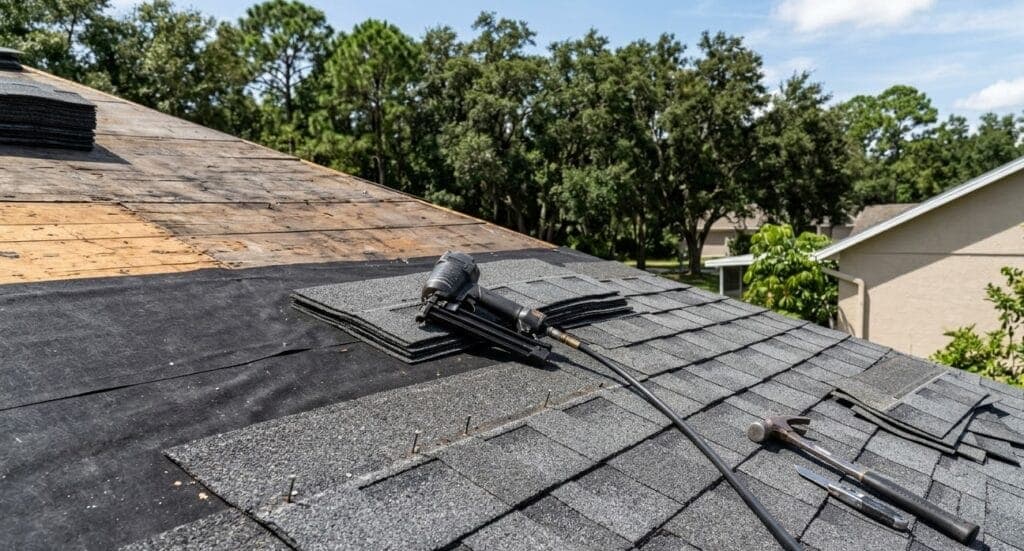
Roofing Warranties in Florida: What Voids Them
A new Florida roof usually carries two warranties: one from the manufacturer for the product and one from the contractor for the installation. Here is what each covers, what quietly voids them and how to keep your coverage.
Read Article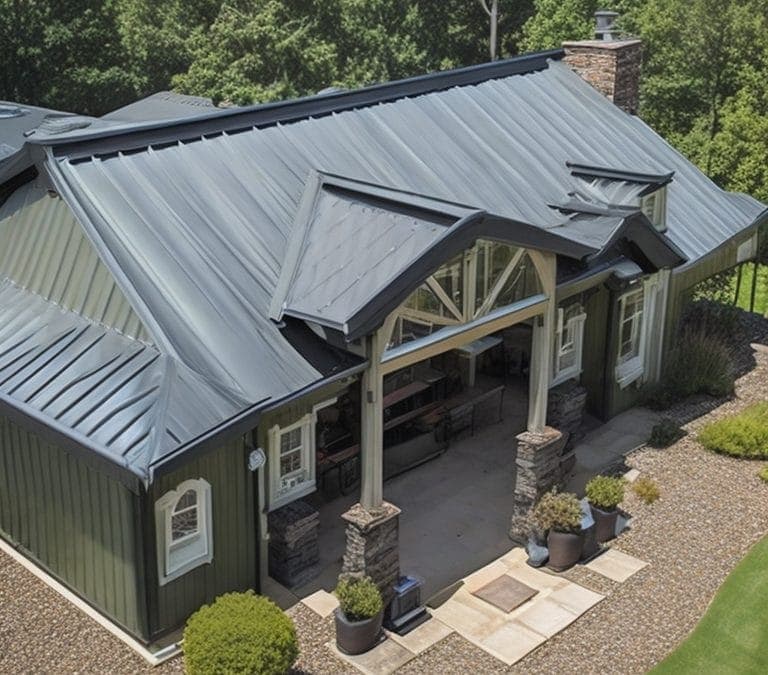
Best Roof Color for Florida Heat: Cool Roofs Explained
Florida test homes show a white shingle saves only 3 to 5 percent on cooling while reflective white metal or tile saves 18 to 26 percent. Here is how to choose a roof color that actually keeps your attic cooler.
Read Article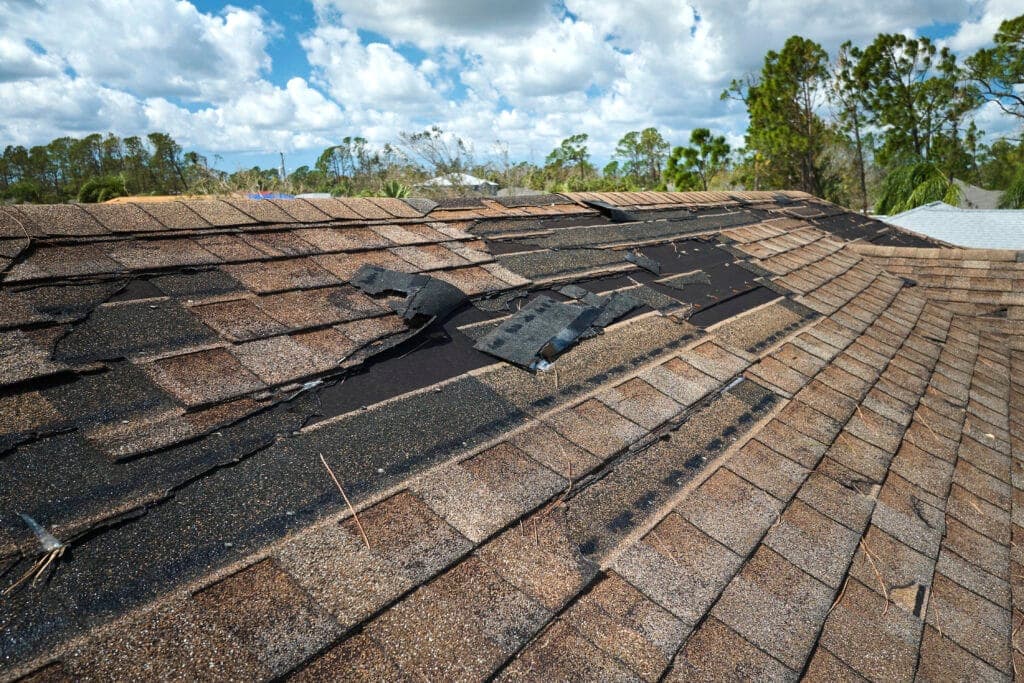
Roof Underlayment in Florida: The Hidden Layer Explained
Underlayment is the layer that decides what happens to your house when wind strips the shingles. Here is how felt, synthetic and peel-and-stick compare, what Florida code requires on a re-roof, and what each option costs in 2026.
Read ArticleReady When You Are
Get your free roof inspection today.
No-pressure, written estimate. Same-week scheduling across Hernando County. Call us now or request a visit online.