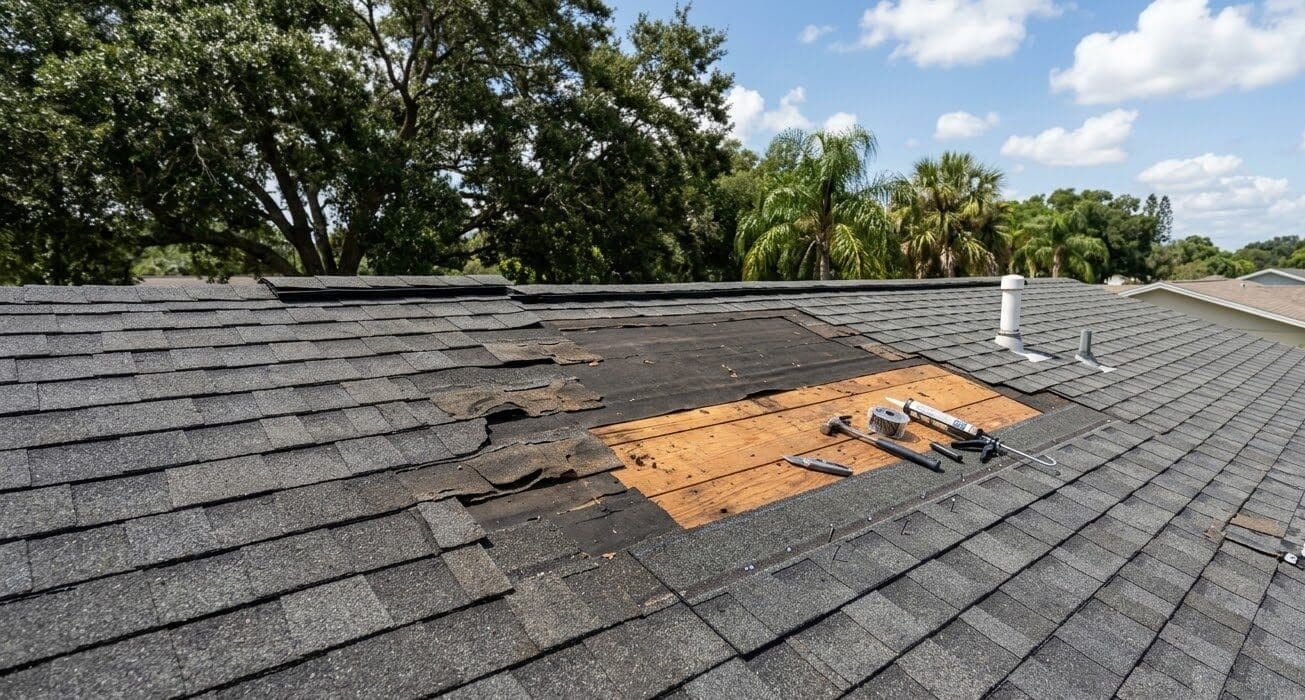
Tarpon Springs, FL
Roof Repair in Tarpon Springs, FL
Roof repair in Tarpon Springs, FL. Leak repair on historic homes, salt-air flashing, tile and storm fixes. Call (352) 605-0696.
Call (352) 605-0696Protech Roofing Services handles roof repair in Tarpon Springs, FL for homes across Greektown, Spring Bayou, Whitcomb Bayou, the Sponge Docks, and every street in between. Our trucks run Pinellas County routes out of Brooksville every week, and we have been tracking post-Milton and post-Helene repair patterns across the northern Pinellas coast block by block since late 2024. Whether you are looking at a fresh ceiling stain, a slipped Spanish tile, a rusted flashing joint on Dodecanese Boulevard, or a banyan-limb puncture on Riverside Drive, call (352) 605-0696 for a free inspection and a written quote.
You Are Viewing
Roof Repair for homeowners and businesses in Tarpon Springs, part of Pinellas County, FL, Florida.
Leak Repair on Century-Old Tarpon Springs Homes
If you searched for roof repair in Tarpon Springs, FL, you are probably staring at a ceiling stain on a 1920s plaster wall, a dripping pendant light in a Greektown cottage, or a pile of granules in a downspout on a Spring Bayou waterfront home. We have been fixing roofs in Tarpon Springs since 2008, and the first thing we tell homeowners is that the stain is rarely directly under the leak. On a 100-year-old home with original plank decking, water travels even farther than it does on a modern plywood deck. A single lifted ridge cap on Hope Street can put water two rafter bays away before it shows up as a mark on the ceiling.
Our leak-tracing process on a historic Tarpon Springs home starts in the attic, not on the roof. We pull insulation back where we can, follow the staining on the underside of the decking, and look for the high-water mark that reveals the true entry point. Then we climb and do a chalk-and-hose test to confirm. The payoff is that we fix the actual leak on the first visit instead of patching visible shingle damage that may not be the source at all. And we write the repair quote based on what the roof actually needs, not what looks damaged from ground level.
On Tarpon Springs homes, the top leak entry points in our service log are cracked pipe boots on plumbing vents, separated step flashing at chimney and wall intersections, missing ridge caps after Helene and Milton, slipped Spanish S-tile on older Tarpon Avenue and Hope Street homes, and rusted-through drip edge near the Sponge Docks. Each of those has a different fix, and we quote each one honestly.
Salt-Air Flashing Repair Near the Sponge Docks and Anclote River
Homes within a mile of the Gulf, the Anclote River, or the Sponge Docks along Dodecanese Boulevard sit in what the coatings industry classifies as a severe marine exposure zone. Chloride salt deposits eat galvanized steel flashing in roughly eight to twelve years, which is much faster than the twenty to thirty year service life that galvanized flashing delivers on inland Pinellas homes. If your roof is more than ten years old and within walking distance of Whitcomb Bayou or the Sponge Docks, rusted flashing is probably already part of the picture.
What we do on a coastal Tarpon Springs flashing repair is specific. We remove the rusted galvanized flashing. We swap it for aluminum or copper, never another piece of bare galvanized. We replace exposed fasteners with stainless or copper. And we reseal every joint with a polyurethane or silicone sealant rated for marine exposure, not the basic roof cement that holds up inland. This specification costs more up front, but it is the only honest repair for a home that sits this close to salt water. A standard inland flashing job will look fine on the invoice and fail within five years here.
The secondary benefit of a proper marine-grade flashing repair is that the insurance wind-mitigation inspector credits it correctly. We have had adjusters flag galvanized flashing on Whitcomb Boulevard as a deficiency on renewal inspections, and the fix pays for itself in premium savings within a couple of seasons.
Tile Repair in the Greektown Historic District
Tarpon Springs wears more Spanish S-tile than most of Pinellas, and a heavy share of that tile is original to the 1905 to 1940 housing stock in the Greektown Historic District and along Tarpon Avenue. When a single tile cracks or slips on Hope Street or Athens Street, the repair is never just a cosmetic swap. We lift the surrounding tiles, pull the damaged piece, inspect the felt underlayment and battens beneath, repair the underlayment if needed, and set a matching tile back in place with the correct foam adhesive and mechanical attachment.
Matching original tile is the trickier piece. A 1910s Greektown home often carries a profile that is no longer in production, and the Historic Preservation Board will not approve a visually different replacement from the street. We keep relationships with salvage yards across the Tampa Bay region and two custom tile fabricators who can match or cast replacements in the original clay. For repairs that can use a concrete substitute, we source color-matched profiles that pass design review on most Greektown blocks. The goal is always that the repair is invisible from Dodecanese Boulevard and watertight from above.
Inside the Historic Preservation Board process, minor in-kind repairs usually qualify as a staff-level approval that does not require a full Board hearing. We handle the application and the photos on the homeowner's behalf. If the repair crosses into material change or a different color, we walk the project through a full Board review.
Banyan Tree Root and Limb Damage Repair
The banyans along Spring Bayou, Whitcomb Bayou, and the streets around the Sponge Docks are part of what makes Tarpon Springs look like Tarpon Springs. They are also why our storm-response rotations include a dedicated limb-strike crew. Banyan limbs are heavier than live oak limbs at the same diameter, and when one comes down on a roof during a tropical system, the impact compresses the decking fibers across a wider area than the visible puncture suggests. Limb impact repair is almost always bigger than it looks from the ground.
Our process is to pull back the surrounding shingles or tiles, check the deck for compression cracks beyond the obvious hole, replace the damaged decking section with plywood that matches the existing thickness, lay new underlayment, and set new shingles or matching tile back in place. If the impact cracked a rafter below the decking, we bring a licensed framing sub to sister the rafter before we close the roof. Insurance carriers in Pinellas pay these repairs without much pushback as long as the documentation is strong, which is why we photograph the damage from the ground, the roof, and the attic before we start the work.
Root damage is the quieter cousin of limb damage. Banyan root systems can lift concrete slabs near the house, and when a slab lifts it can flex the wall and open a gap between the wall and the roof intersection. That gap becomes a flashing failure point that leaks on the inside of the wall, not the roof surface. If your Tarpon Springs home has a banyan within forty feet of the foundation, we check the wall-to-roof flashing on every inspection visit.
Post-Milton and Post-Helene Repair Patterns Across Tarpon Springs
Helene hit northern Pinellas on September 26, 2024 and pushed Gulf surge into the Sponge Docks, flooding first floors along Dodecanese Boulevard and across parts of Riverside Drive. Milton followed on October 9, 2024 as a Category 3 with 120 mph sustained winds at Siesta Key, and the northern Pinellas coast took a direct hit from the leading edge. A year and a half later, we are still taking repair calls from both storms every week.
The wind patterns were not uniform across the city. Homes on Spring Bayou and in Greektown saw strong south-southwest gusts and heavy limb damage from the banyan canopy. Waterfront homes on Whitcomb Bayou took the brunt of salt-driven rain that pushed moisture sideways under tile and shingle laps. Inland neighborhoods east of US-19 like Innisbrook and Tarpon Woods saw less wind but more prolonged rain, which found every weak underlayment seam on older roofs. Our repair log reflects that split. South-of-downtown calls are heavy on limb punctures and tile slips. Coastal calls are heavy on underlayment saturation and flashing corrosion. Inland calls are heavy on underlayment and valley leaks.
Two specific failures have become our most common post-storm repair in Tarpon Springs: lifted ridge caps on architectural shingle roofs between twelve and eighteen years old, and cracked Spanish S-tile at the ridge on older Greektown and Tarpon Avenue homes. Both are fixable without a full replacement if caught within a season or two. Both will escalate into replacement territory if ignored another hurricane season. If you had any visible damage after September or October 2024 and you have not had a roofer document it yet, call us before the 2026 season starts.
When Roof Repair Stops Making Sense on a Century-Old Tarpon Springs Home
Every repair call eventually reaches a threshold where replacement is the smarter money, and on a 100 year old Tarpon Springs home that threshold arrives differently than on a 1990s ranch in Seminole. The age of the roof covering matters less than the age and condition of the decking, the underlayment, and the original flashing details. A home on Hope Street that was re-roofed in 2010 may have a seven-year remaining life in the shingle but an original 1920s plank deck that is rotting quietly under a bathroom vent. In that case, a patch-and-move-on repair is leaving real risk on the table.
Our threshold rule for Tarpon Springs is this. Repair makes sense when the damage is under 25 percent of the roof slope, the surrounding material has five or more years of useful life, and the decking and underlayment visible from the attic look dry and sound. A wind-torn section on a seven-year-old architectural shingle roof fits that. A cracked pipe boot on a ten-year-old roof with good shingle coverage fits that. A couple of slipped Spanish tiles on a tile roof with intact underlayment fits that.
Replacement makes more sense when the damage is widespread, the underlayment has failed across multiple areas, the insurance non-renewal threshold is already in play, or the original plank decking has active rot. Tarpon Springs shingle roofs that hit twenty years are usually in the replacement conversation whether or not they have a visible leak, because Citizens and most private carriers now treat twenty-five years as the formal cutoff for shingle coverage and the inspectors routinely flag roofs two to three years before that line. Spanish tile, slate, metal, and concrete get fifty years. A lot of the original tile on Tarpon Avenue is already past that fifty-year mark. When we inspect a roof at or near those thresholds, we show the photos, explain the numbers, and let the homeowner decide with full information in hand.
More in this area
Other roofing services in Tarpon Springs
FAQ
Frequently Asked Questions
How much does roof repair cost in Tarpon Springs, FL?
+
Do I need a permit for a roof repair in Tarpon Springs?
+
Can you still fix Hurricane Milton or Helene damage on my Tarpon Springs roof?
+
My insurance company flagged my Tarpon Springs roof at a 12-year inspection. Can you help?
+
Does Protech Roofing handle banyan-limb damage repair in Tarpon Springs?
+
From the Blog
Stay informed about roofing in Florida.
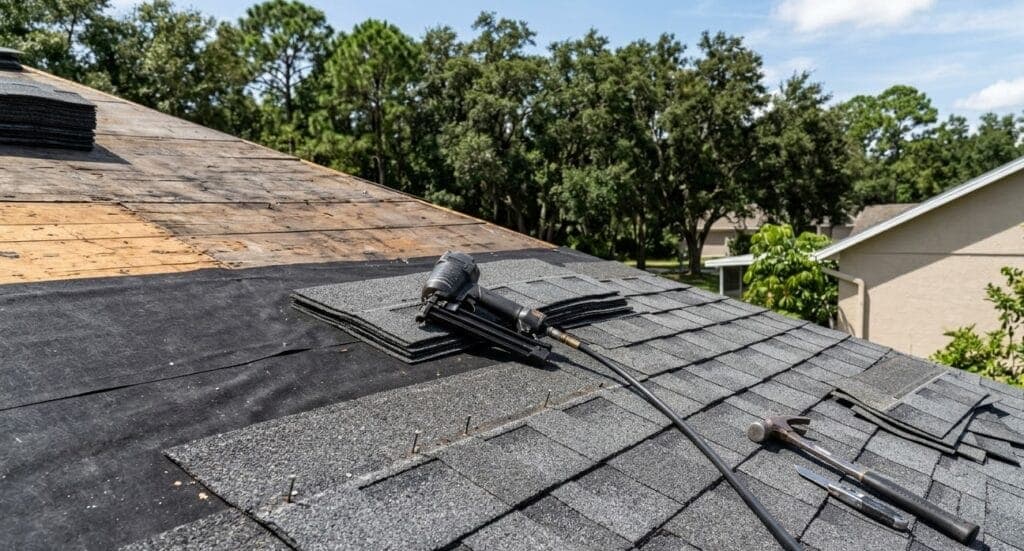
Roofing Warranties in Florida: What Voids Them
A new Florida roof usually carries two warranties: one from the manufacturer for the product and one from the contractor for the installation. Here is what each covers, what quietly voids them and how to keep your coverage.
Read Article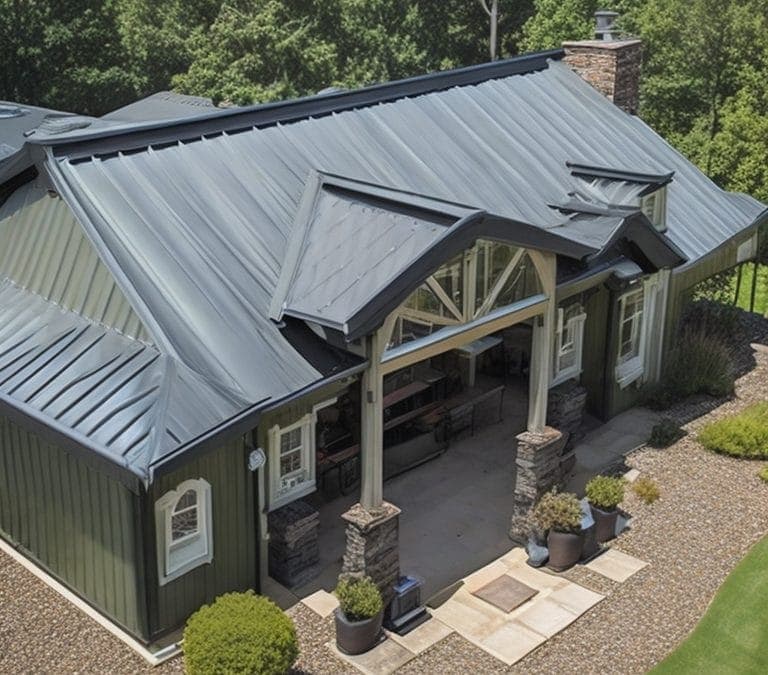
Best Roof Color for Florida Heat: Cool Roofs Explained
Florida test homes show a white shingle saves only 3 to 5 percent on cooling while reflective white metal or tile saves 18 to 26 percent. Here is how to choose a roof color that actually keeps your attic cooler.
Read Article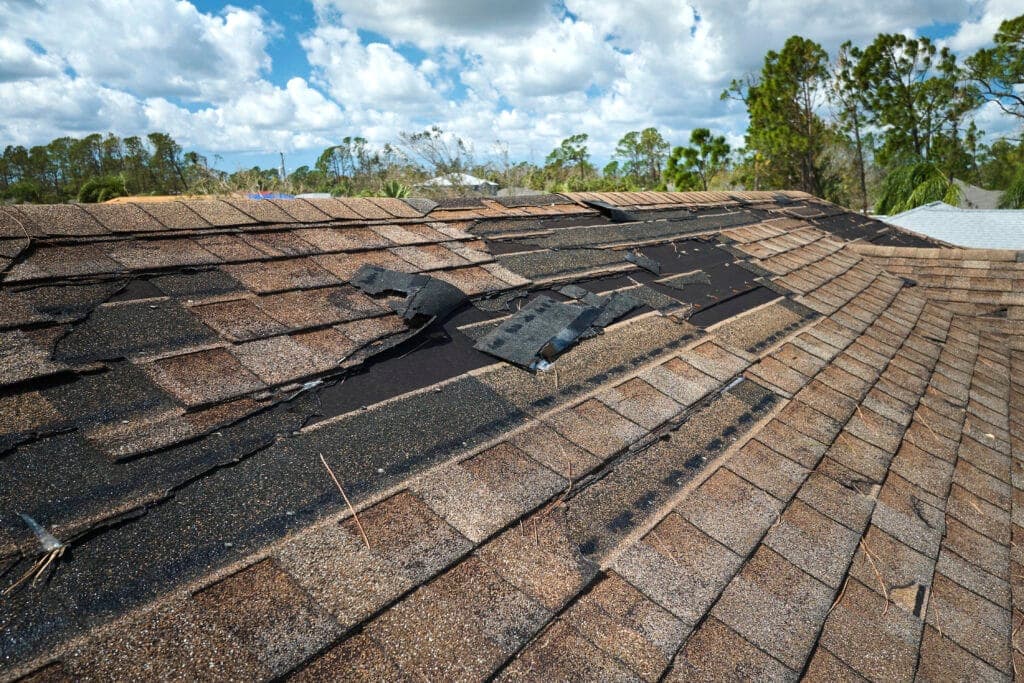
Roof Underlayment in Florida: The Hidden Layer Explained
Underlayment is the layer that decides what happens to your house when wind strips the shingles. Here is how felt, synthetic and peel-and-stick compare, what Florida code requires on a re-roof, and what each option costs in 2026.
Read ArticleReady When You Are
Get your free roof inspection today.
No-pressure, written estimate. Same-week scheduling across Hernando County. Call us now or request a visit online.