Blog
Multi-Family Roofing in Florida: How HOA and Condo Boards Vet Three Bids Under Statute 718
Call (352) 605-0696Most Florida boards discover the rules governing a multi-family roof replacement after they have already awarded the contract. That is the expensive order. Statute 718.3026 decides whether the award had to be competitively bid, Section 553.899 decides whether a structural inspection is already due on the same building, and HB 913 decided in 2025 that the reserve line funding that roof can no longer be waived by an owner vote. None of it is complicated, and all of it is easier to handle before the bids arrive than after. Here is the sequence, with the statute numbers attached.
A Multi-Family Roof Bid Is Not a Bigger Version of a House Bid
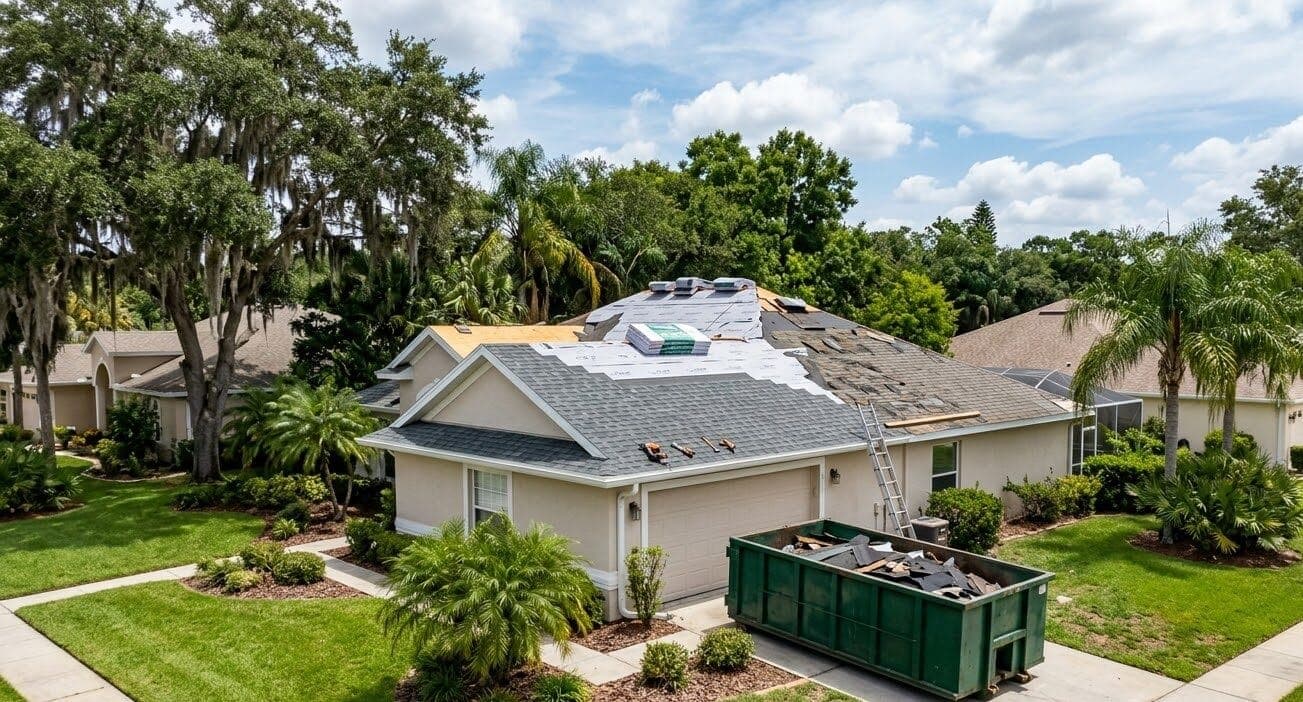
A single-family roof is one owner, one decision, one check. A multi-family roof is a board with a fiduciary duty, a statute that dictates how the contract gets awarded, a reserve account that may or may not be funded, an engineer's report that may or may not exist yet, and between eight and two hundred households who will all have opinions once the dumpster arrives. The roofing is the easy part.
That is why boards that treat a 40-unit roof replacement like four large house roofs end up in trouble. The three failure modes are always the same: the board awards a contract that Florida Statute 718 required to be competitively bid and did not bid it, the board compares three prices that were never quoting the same scope, or the board funds the project out of a reserve line that HB 913 no longer allows it to touch the way it used to.
This guide walks the sequence a Florida condominium or HOA board should actually follow, in order, with the statute numbers attached. Protech Roofing handles association and multi-building work across Hernando, Pasco, Pinellas, Polk and Marion counties, and the program details sit under multi-family roofing.
The 5 Percent Rule: When Statute 718 Forces a Competitive Bid
Section 718.3026(1) of the Florida Condominium Act is the provision that catches boards off guard, and it is short. Contracts for the purchase, lease or rental of materials or equipment, or for the provision of services, that require payment by the association exceeding 5 percent of the total annual budget of the association, including reserves, must be awarded by competitive bid and must be in writing.
Read that threshold carefully, because two words in it do most of the work. The first is aggregate. Splitting a roof project into a tear-off contract, a dry-in contract and a finish contract with the same vendor does not get you under the threshold. The statute looks at what the association pays in total for that work. The second is including reserves. The denominator is the full annual budget with reserves in it, not the operating budget alone, which makes the threshold a somewhat larger dollar figure than boards assume.
Run the arithmetic before you shop. An association with a $900,000 total annual budget including reserves crosses the threshold at $45,000. Practically every roof replacement on a three-story building clears that. An association with a $4 million budget crosses at $200,000, which means a single-building shingle re-roof might sit below the line while the phased four-building program sits well above it. Boards in the second situation are the ones that get sued, because the number felt small relative to the budget and nobody checked.
Note that Chapter 720, which governs homeowners associations rather than condominiums, does not carry the same bidding mandate. If your community is an HOA and not a condo, the competitive bid may be a governing-document requirement rather than a statutory one. Read the declaration before assuming either way.
What Competitive Bidding Does Not Require
Three misconceptions cost associations real money every year, and all three are the opposite of what the statute says.
- You do not have to take the lowest bid. Nothing in 718.3026 requires it. The board's duty is to act in the best interest of the association, and awarding to a properly licensed, properly insured, properly capitalized contractor over an unknown low bidder is a defensible exercise of that duty, provided the reasoning is recorded in the minutes.
- There is no magic number of bids. The statute sets no minimum and no maximum. Competitive bidding means more than one bid. Three is convention, not law. What matters is that the bids were genuinely solicited and genuinely comparable.
- Not every vendor is covered. Contracts with the association's attorney, accountant, architect, community association manager, engineering services and landscape architect services are exempt. That exemption is why the engineer who writes your roof specification can be retained directly while the contractor who executes it cannot.
That last point is the strategic one, and few boards use it. You can hire a roof consultant or engineer without bidding, have them write one specification, and then send that single specification to every roofing contractor. Now the bids are actually comparable, because all of them are pricing the same document instead of each pricing their own idea of the job.
Milestone Inspections: Section 553.899 in Plain English
Florida's milestone inspection program applies to condominium and cooperative buildings of three or more habitable stories. The initial inspection is triggered when the building reaches 30 years of age, with subsequent inspections every 10 years. Under SB 4-D as originally enacted, buildings within three miles of a coastline faced a 25-year trigger instead; HB 1021 in 2024 modified that provision so the 25-year coastal requirement is no longer automatically mandatory.
HB 913, signed June 23, 2025 and effective July 1, 2025, tightened the definition that decides whether your building is in the program at all. The threshold counts habitable stories, which means floors used exclusively for parking, storage or mechanical equipment do not count toward the three-story trigger. A garden-style building over a parking podium may sit outside the program that its neighbor sits inside. Confirm the count before budgeting for an inspection you may not owe, and before skipping one you do.
Why a roofing article cares: the milestone inspection is a structural inspection, and the roof assembly is where structural findings most often surface first. Deck deterioration, truss or joist damage at the bearing, and water intrusion tracking down a bearing wall all show up as roof symptoms. A board that already has an active leak and a milestone inspection on the calendar should sequence a roof inspection before the engineer arrives, not after, so the roof condition is documented and scoped rather than discovered.
SIRS: Why the Roof Is Component Number One
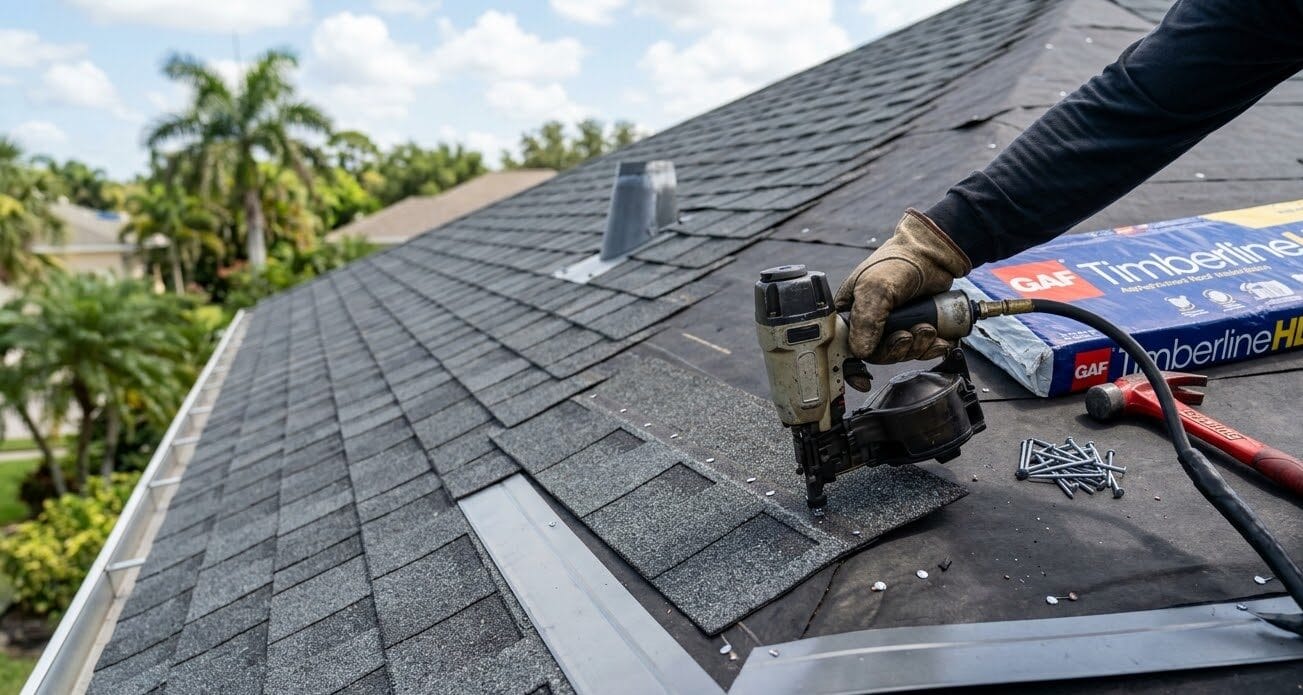
The Structural Integrity Reserve Study, required under Florida Statute 718.112(2)(g) as amended by HB 913, applies to condominium and cooperative associations with buildings of three or more habitable stories. It is a reserve study covering eight components: roof, load-bearing structure, fire protection, plumbing, electrical, waterproofing and exterior painting, windows and exterior doors, and any other item with a deferred maintenance or replacement cost exceeding $25,000 that affects those systems.
The compliance deadline for most associations was December 31, 2025, with an extension available to December 31, 2026 for associations coordinating the SIRS with an upcoming milestone inspection. If your association is inside that extension window, the roof number in that study is being written right now, and it will govern reserve contributions for years.
That makes the SIRS the most consequential roofing document your association will produce, and it is routinely produced badly. A reserve specialist who writes "asphalt shingle, 20-year remaining life" without anyone going on the roof has just underfunded a line item that will come due early. The useful version pairs the reserve study with a real condition assessment: fastener pattern verified, deck condition sampled, existing layers counted, permit history checked, and remaining life estimated against Florida ultraviolet and heat exposure rather than a national table.
Reserve Funding After HB 913: What Boards Can and Cannot Pause
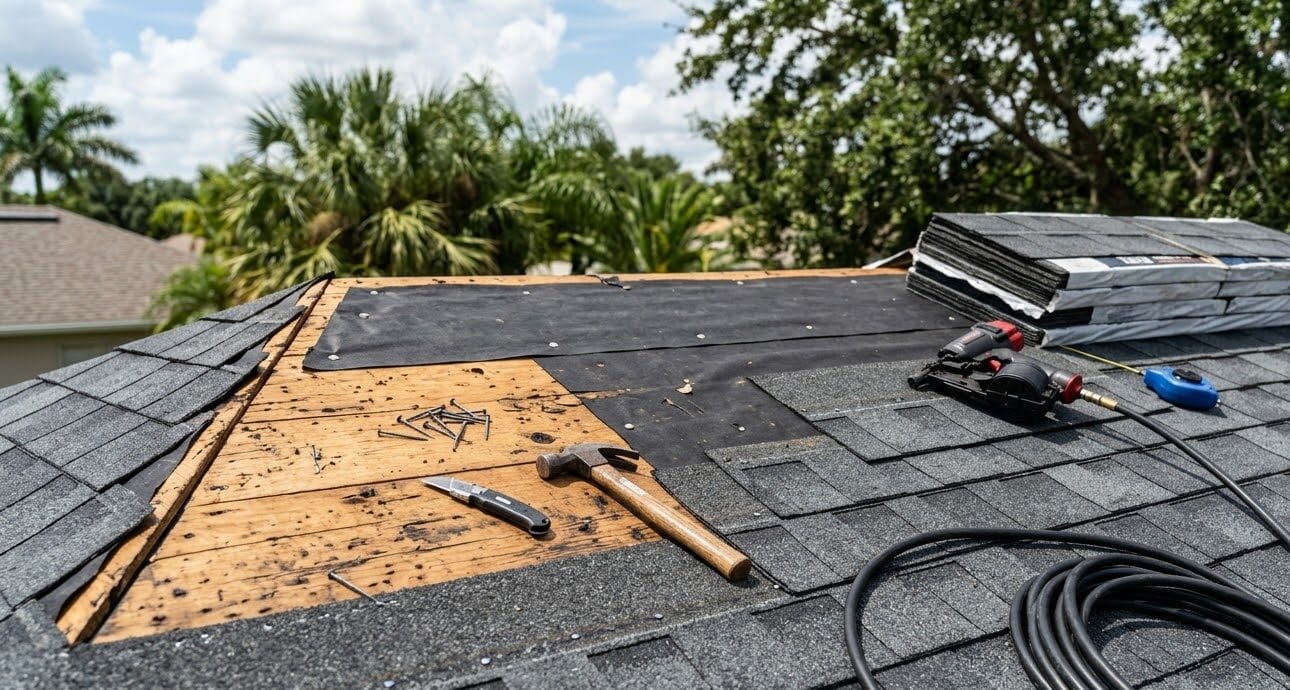
This is the change that reshaped association budgets. Under Statute 718.112 as amended by HB 913, effective July 1, 2025, associations can no longer waive or reduce reserve funding for the eight mandatory SIRS structural components, regardless of how unit owners vote. The roof is one of those eight. The old practice of an annual owner vote to waive reserves and keep the monthly assessment flat is gone for structural line items.
HB 913 did add one relief valve, and boards should understand its limits. For budgets adopted on or before December 31, 2028, an association that completed a milestone inspection within the previous two calendar years may temporarily pause or reduce reserve contributions. That is a timing accommodation for associations that just spent heavily on inspection-driven repairs. It is not a return to waiving reserves, it expires, and using it without a plan to catch up simply moves a special assessment into the future with interest.
The practical consequence for roofing is that deferral got expensive. Before 2025 a board could stretch a tired roof another three years and keep assessments flat. Now the reserve contribution accrues either way, so stretching the roof buys leaks and emergency repairs without buying budget relief. Boards facing that math are better served by a planned replacement with a phased schedule than by another year of patching.
Reading Three Bids Side by Side Without Guessing
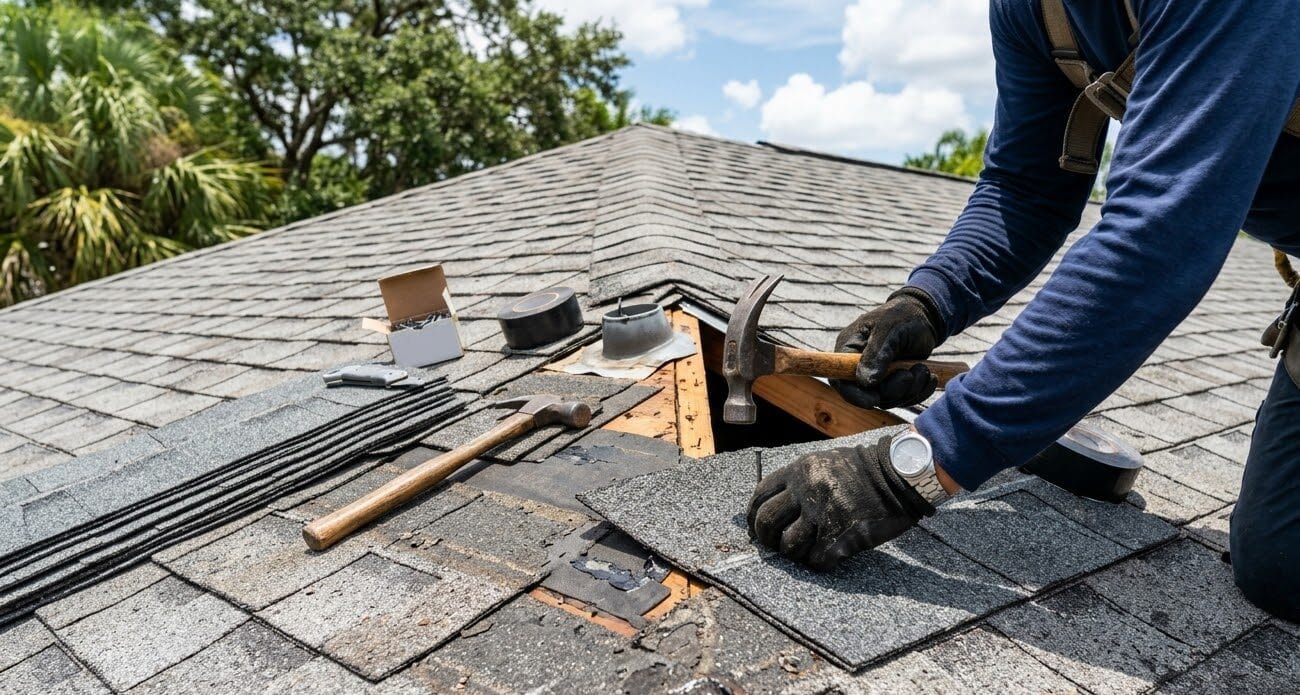
Assume the board did it right and has three written proposals against one specification. Here is the comparison that actually protects the association. Every one of these items has been the subject of a change order on somebody's building this year.
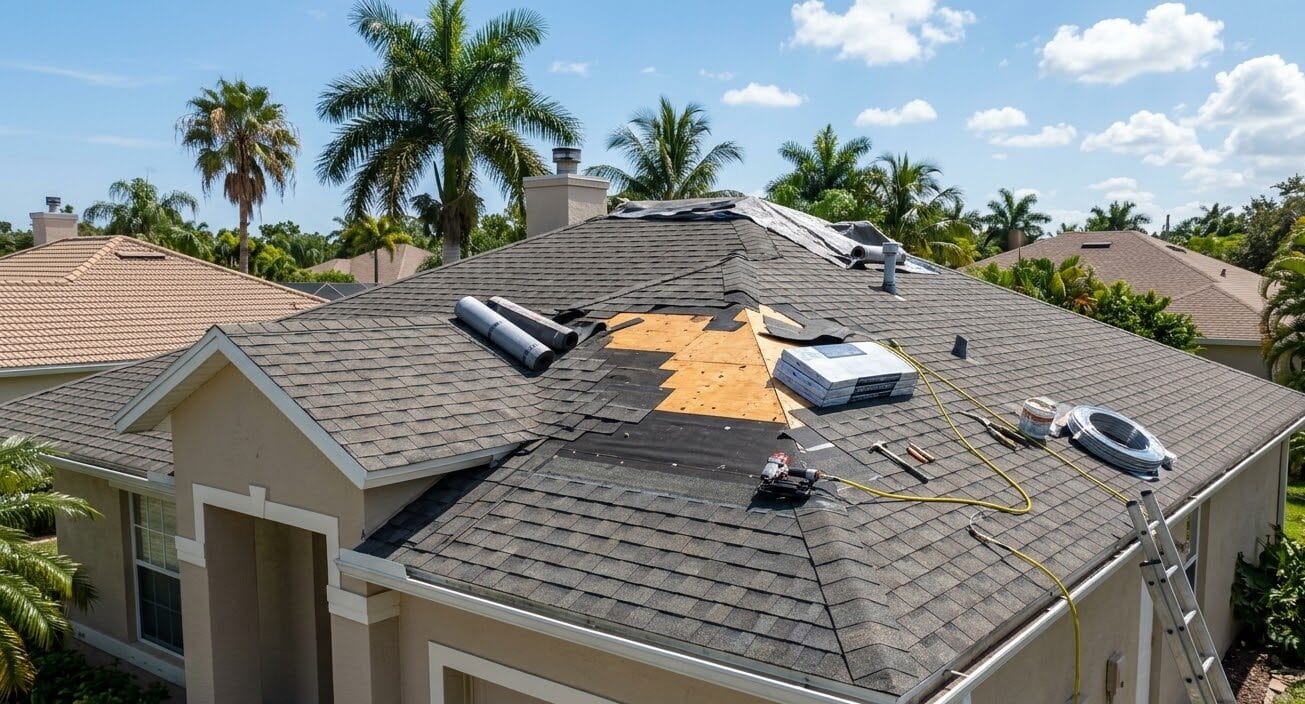
- Squares and measurement source. Roofers price by the square, meaning 100 square feet of roof area. Confirm all three bids used the same square count and say where it came from: field measurement, aerial report or the plans. A 5 percent measurement difference on a 400-square job is roughly 20 squares of silent price difference.
- Deck replacement allowance. Sheathing condition is unknown until tear-off. A bid with no allowance is not cheaper, it is incomplete. Require a stated unit price per sheet and a stated included quantity so change orders are arithmetic rather than negotiation.
- Fastening and underlayment to current code. Florida replacements face tightened fastening and underlayment requirements including nail spacing and higher-rated secondary water barriers. Confirm the bid prices the required assembly rather than a generic felt line.
- Re-nailing of existing deck. On older buildings this is frequently required at replacement, and it is frequently the line one bidder omitted.
- The 25 percent rule position. Historically, repairing more than a quarter of a roof triggered bringing the whole roof to current code. That rule is being relaxed so partial recovery is permitted where the lower system already complies. On a multi-building community this determines whether you are repairing three buildings or replacing them, so the bid should state the assumption it is pricing.
- Permit, inspection and dumpster logistics. Who pulls permits, who pays fees, where dumpsters and material stage, and what happens to resident parking. On a house this is a footnote. On a 60-unit building it is a line item and a source of complaints.
- Warranty, and whose warranty. Manufacturer system warranties usually require certified installers and specific accessory components. A workmanship warranty from the contractor is a different instrument from a manufacturer system warranty, and the bids should be explicit about which is included.
- License, insurance and certificate holder. Verify the license is active and the certificate of insurance names the association as certificate holder. Ask for it directly from the carrier or agent, not as a forwarded PDF.
For orientation on magnitude: 2026 Florida pricing runs roughly $4 to $8 per square foot for asphalt shingle, $9 to $19 for concrete tile and $12 to $21 for clay tile, with low-slope membrane assemblies at roughly $4.50 to $7.50 for modified bitumen, $5 to $8 for TPO and $5 to $9 for EPDM. Metal spans $8 to $12 for exposed fastener panels and $14 to $20 for standing seam. Multi-family work tends to sit toward the upper half of each range because of staging, occupancy protection and access constraints, not because the material changed.
Phasing a Multi-Building Community Without Wrecking the Budget
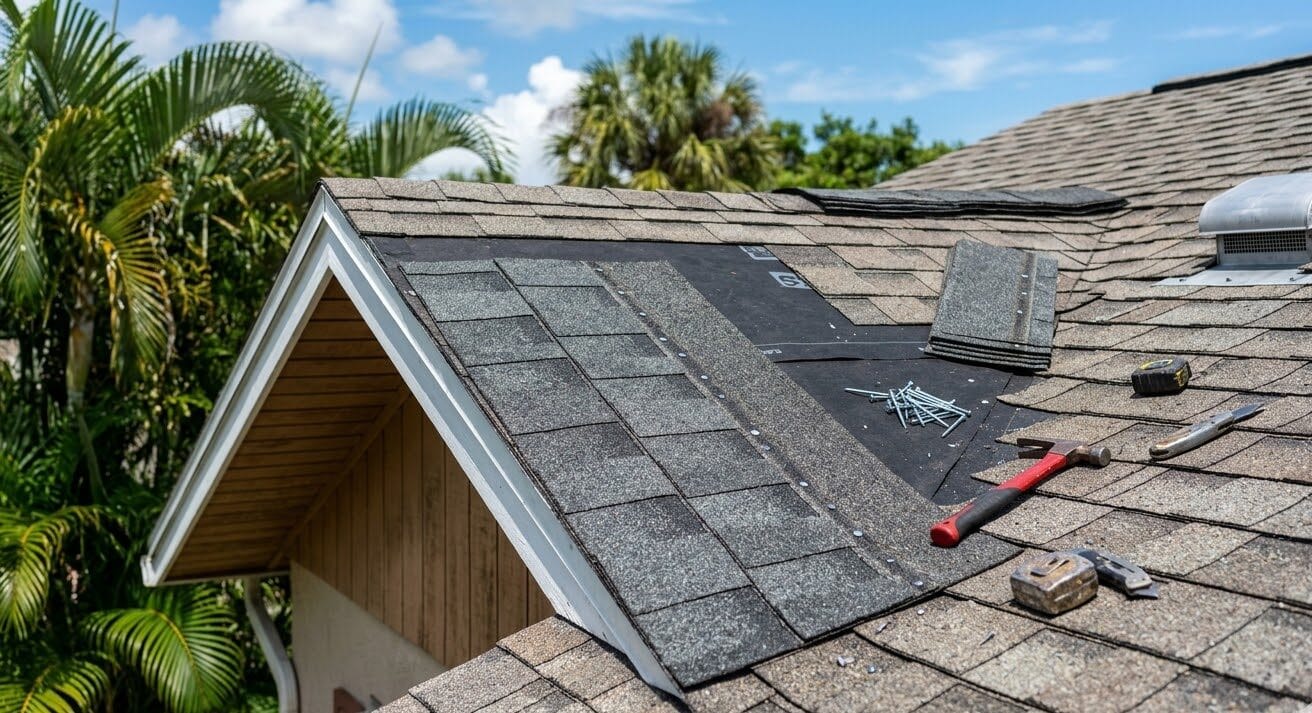
Most associations cannot replace every roof in one year, and most should not try. Phasing is the normal answer, and there is a right and a wrong way to build the phase order.
The wrong way is by building number or by whichever board member complains loudest. The right way is by measured condition and exposure. Rank the buildings on four factors: documented leak history, age and layer count of the existing assembly, orientation and shading, since south and west exposures burn through asphalt faster, and any structural finding from the milestone inspection. That ranking is defensible in a meeting, which matters when the owners in Building D want to know why Building A went first.
Two commercial realities favor phasing done well. Mobilization costs drop when the phases are contiguous and scheduled in advance rather than bid one at a time each spring. And material pricing locked across a multi-phase agreement removes one variable from a reserve projection that already has enough of them. Ask bidders to price both the single phase and the full program, and compare the delta.
One caution specific to Florida: do not phase into hurricane season if you can avoid it. A building in dry-in when a named storm forms is a different risk profile than a building with a finished roof, and the association carries that risk.
Occupancy, Access and the Complaints You Can Prevent
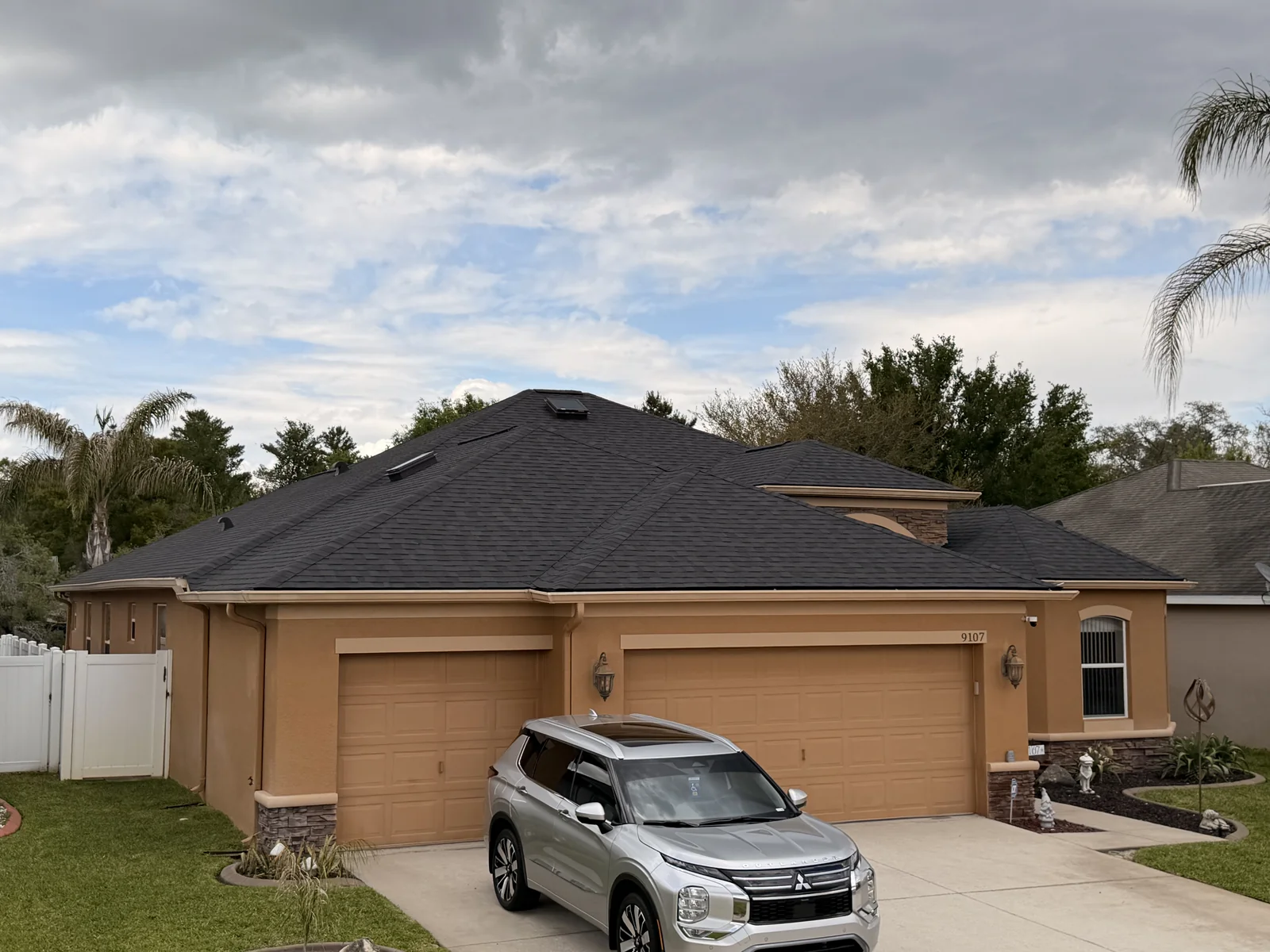
The technical scope is only half of a multi-family project. The other half is that people live under the work.
Vibration from tear-off and nailing travels through the structure and knocks pictures off walls in the units below. Notify residents to clear shelving in advance. Debris netting and ground protection around entries, walkways and landscaping should be specified rather than assumed. Parking relocation needs a plan and a date. Satellite dishes, solar attachments and unit-owner installed penetrations need an ownership decision before, not during, tear-off. Pets, night-shift workers and residents with medical equipment need a schedule they can see.
And put the emergency path in writing. If an active leak opens over an occupied unit mid-project, whose phone rings and how fast is someone on site. Protech Roofing runs emergency roof repair alongside scheduled association work for exactly that reason, because on a multi-family building the response window is measured against interior finishes and mold rather than against convenience.
The Paper Trail That Protects the Board
A board that follows the statute and cannot prove it is only slightly better off than a board that did not. Keep six things in the association record: the written specification every bidder priced; the list of contractors solicited, including those who declined or did not respond; all bids received as submitted; minutes reflecting the discussion and the stated basis for the award, especially if the lowest bid was not selected; the executed written contract, since 718.3026 requires the contract be in writing; and licenses, insurance certificates and permits for the awarded contractor.
That file answers nearly every question an owner, an attorney or a subsequent board will ask. It costs one folder and it is the cheapest liability reduction available to a Florida board.
A Realistic Timeline
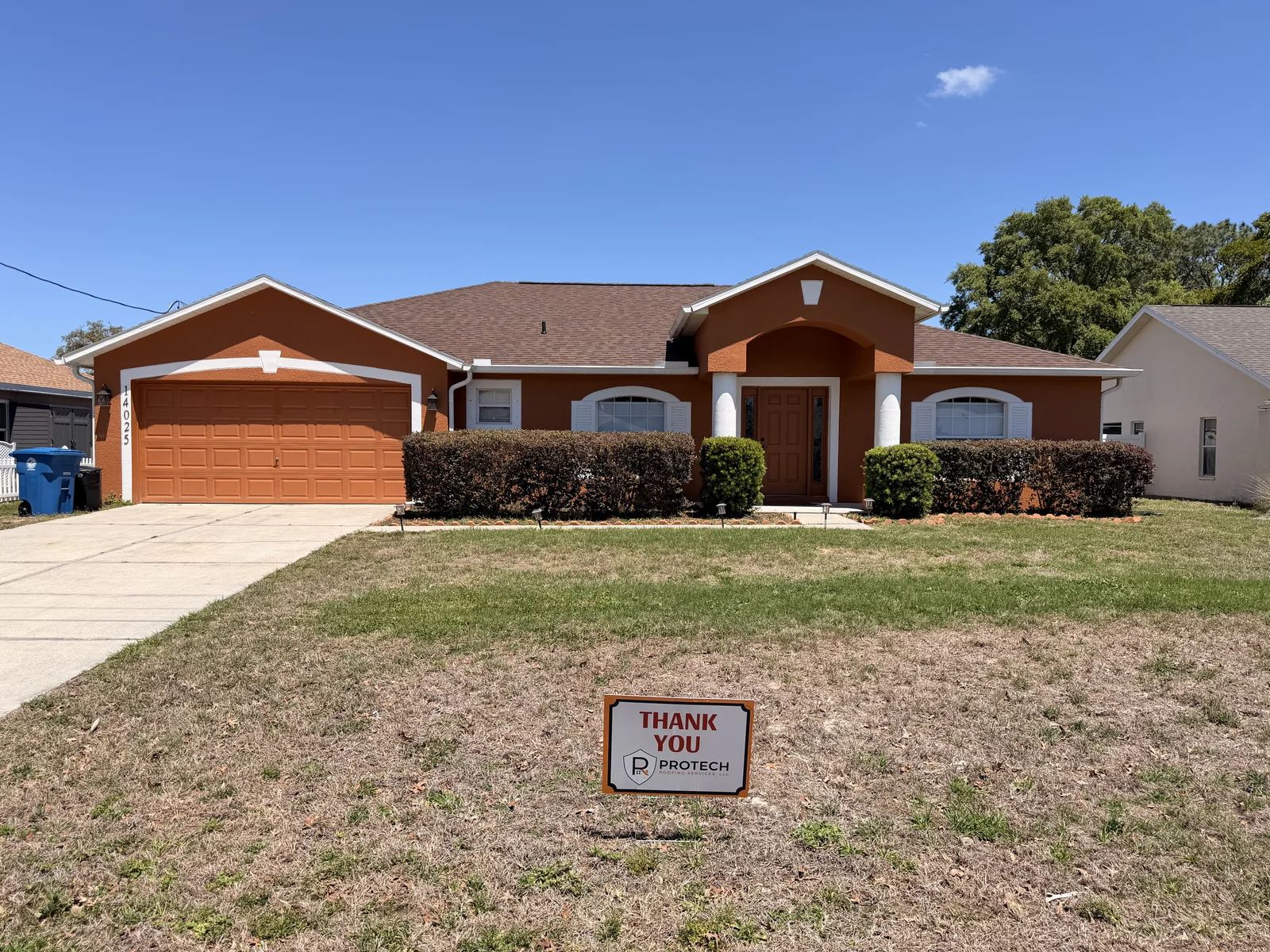
Associations chronically underestimate the calendar, then compress the roofing and blame the roofer. From decision to finished project, a well-run multi-family replacement runs like this: four to eight weeks for condition assessment and specification, three to five weeks to solicit and receive comparable bids, two to six weeks for board review and the award meeting, two to six weeks for permitting depending on jurisdiction and building type, then the work itself, which for a single mid-size building is typically one to three weeks of production weather permitting.
Call it four to six months from the first serious board conversation to a finished roof, and start earlier than feels necessary. Boards that begin in March are choosing their contractor. Boards that begin in August, after the first storm scare, are taking whoever is available.
Protech Roofing works association and multi-building roofs across Hernando, Pasco, Pinellas, Polk and Marion counties. If your board is scoping a specification, comparing bids or trying to sequence a phased program against a SIRS number, call the office at (352) 605-0696 or reach us through our contact page. Local association work in the Spring Hill and Brooksville corridor is detailed at Spring Hill, and larger low-slope and mixed-assembly programs sit under commercial roofing.
FAQ
Frequently Asked Questions
Does Florida law require a condo association to get three bids for a roof replacement?
+
Does the board have to accept the lowest roofing bid?
+
What is a SIRS and why does the roof matter so much in it?
+
Can owners still vote to waive reserves for the roof?
+
When does a Florida condo building need a milestone inspection?
+
How much does a multi-family roof replacement cost in Florida in 2026?
+
How long should a board budget for the whole process?
+
Related Articles
More guides for Florida homeowners
How Long a Roof Replacement Takes in Florida: 2026 Guide
A Florida shingle re-roof takes one to three days of physical work and about two to four weeks from contract to closed permit. Here is what happens each day, how metal and tile change the schedule and what causes delays.
Read ArticleBest Shingles for Florida: Impact-Rated Class 4 Guide
The best shingle for a Florida home is usually a Class H architectural shingle installed as a full system. Here is how 3-tab, architectural and Class 4 impact-resistant shingles compare on cost, wind, insurance and lifespan.
Read Article
Metal Roof Cost in Florida 2026: Per-Sqft Guide
Metal roofs in Florida run about $8 to $23 per square foot installed, depending on the system. Here is what standing seam, stone coated steel and exposed fastener panels cost, what a typical home pays and how to compare quotes.
Read ArticleReady When You Are
Get your free roof inspection today.
No-pressure, written estimate. Same-week scheduling across Hernando County. Call us now or request a visit online.