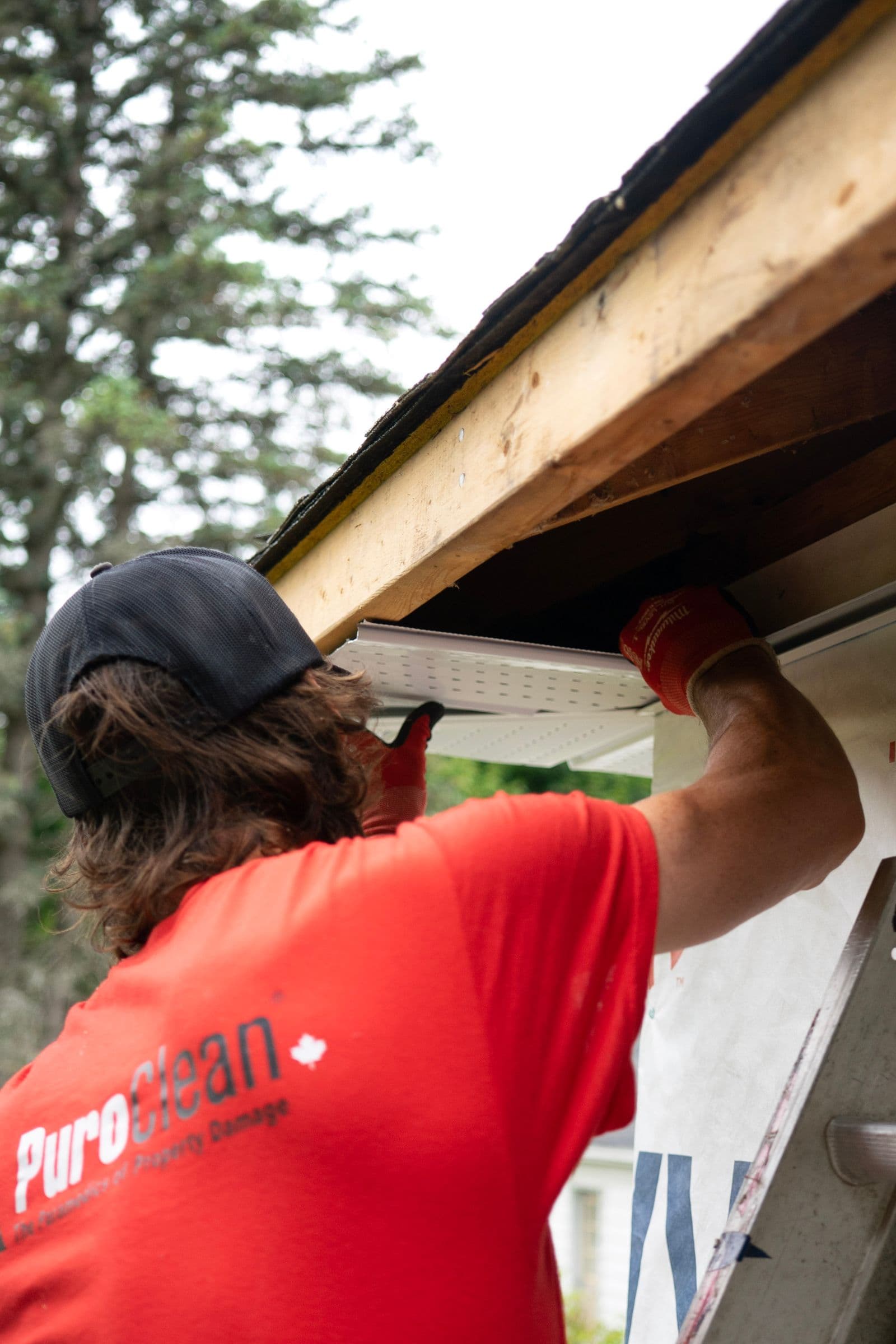
Clearwater, FL
Gutter Installation in Clearwater, FL
Seamless gutter installation in Clearwater, FL. Salt-grade aluminum, copper, super gutters for lanais. Call (352) 605-0696.
Call (352) 605-0696Cross the Memorial Causeway and the math behind gutter installation in Clearwater, FL changes before you've finished the bridge. One side runs 130 mph code and oak-canopy debris. The other side runs 150 mph code, chloride salt fog every morning, and a 5-to-10 foot surge memory from Milton. That bi-context split, barrier island versus mainland, is the single fact that drives every spec sheet we write across Clearwater Beach, Island Estates, Sand Key, Harbor Oaks, Skycrest, Morningside, Oak Grove, and Countryside. Protech Roofing covers all of it out of Brooksville. Ring (352) 605-0696 and we'll set a free site visit.
You Are Viewing
Gutter Installation for homeowners and businesses in Clearwater, part of Pinellas County, FL, Florida.
Why Clearwater Beach and Mainland Homes Have Different Gutter Needs
Two zip codes, two engineering problems. That's how we frame Clearwater on the first phone call. The bridges over the Intracoastal aren't just a commute. They're a code boundary, a salt-exposure boundary, and a wind-zone boundary all stacked on top of each other, and pretending a single spec works on both sides of them is the fastest way to a callback in three years.
Picture the barrier strip first. Clearwater Beach, Island Estates, and Sand Key sit inside the 150 mph wind zone under Florida Building Code 8th Edition. Salt mist coats every horizontal surface by sunrise. Open-Gulf exposure pushes rainfall intensity higher than a sheltered lot would ever see. And Milton's October 9, 2024 surge reached 5 to 10 feet across Island Estates and parts of Clearwater Beach, which means the next eave-mounted system has to survive both downward rain and upward salt water. Spec sheet for that profile is heavier, beefier, and chemistry-aware from the first measurement.
Now picture the mainland. Skycrest, Morningside, Oak Grove, Countryside, and the inland reach of Harbor Oaks sit inside the 130 mph zone. Live oak and laurel oak canopy dominates the debris picture instead of salt. Birdcage screen pool enclosures cover the back of most Countryside lots, and a properly sized super gutter usually lives on the cage already. Seamless aluminum in .032 gauge handles these jobs without drama, and most installs button up before sunset.
So the question we ask homeowners isn't "what gauge do you want." It's "where exactly does your house sit relative to the salt belt, the surge maps, and the wind-zone line." Once that's answered, every other decision falls into place. Material, fastener metallurgy, hanger spacing, downspout diameter, discharge strategy, even the order the crew tackles the elevations on install day. None of it is a template. All of it is geography first.
Aluminum vs Copper vs PVDF Steel for Clearwater Salt Coast
Forget generic material brochures. Material picks in Clearwater are chemistry decisions, and the deciding variable is your distance from open salt water. Inside a 1,500-foot buffer from the Gulf, the Intracoastal, or the bay side of Old Tampa Bay, chloride salt deposits do measurable damage to aluminum alloys with the wrong coating chemistry, and they accelerate galvanic corrosion at every dissimilar-metal contact point. Step beyond that buffer and you're back in normal Florida territory where standard aluminum behaves predictably for 25 years.
For mainland addresses, .032-gauge seamless aluminum is the default we quote. Either 5-inch K-style for shorter fascia runs or 6-inch K-style where carrying capacity matters, both brake-formed continuously on-site so no field seam ever sees water. Aluminum's natural oxide layer protects it from rust, the alloy holds up against UV cycling, and the cost stays within reach for most Skycrest and Morningside budgets. Pricing on this configuration sits around $9 to $14 per linear foot once you fold in downspouts, hidden-hanger hardware, and splashblocks.
For barrier addresses, PVDF-coated steel is what earns its keep. Polyvinylidene fluoride coatings, sold commercially as Kynar 500 or Hylar 5000, are the same fluoropolymer family we trust on coastal standing seam metal roofs. They shrug off chloride attack for 30-plus years. Steel's higher mass also resists wind-driven debris better than aluminum, which mattered when Milton flung patio furniture and palm fronds horizontally during the October 9 landfall. Pricing for PVDF steel runs $16 to $24 per linear foot installed, profile dependent. We don't quote bare galvanized anywhere in Clearwater. Salt eats galvanized coatings within a decade, full stop.
Copper occupies the top of the menu. We install it on Harbor Oaks Mediterranean-Revival homes where the architecture asks for it, on select Sand Key contemporary builds where the homeowner wants the patina story, and on the occasional Countryside custom where the budget allows. Copper develops the soft green oxidation you see on historic civic buildings, never needs paint, and effectively outlasts the structure underneath. Installed pricing sits at $30 to $48 per linear foot depending on profile, miter count, and downspout work. On Harbor Oaks waterfront elevations facing the Intracoastal, copper is often the only material that won't surrender at the flashing-to-gutter transition within 12 to 15 years.
Fastener metallurgy deserves its own sentence here. On mainland aluminum we drive 304 stainless screws, which handle inland humidity for decades. On barrier installs we step up to 316 marine-grade stainless across every screw, bracket, and clip, plus Type 304 mesh on any guard package the homeowner adds. Mixing aluminum gutter with galvanized hardware inside the salt belt is a guaranteed galvanic failure, often inside five years. The metal nobody sees from the curb is the metal that decides the lifespan.
Super Gutter Installation on Clearwater Birdcage Lanais
Countryside has one of the highest super gutter densities in Pinellas. Drive any street in Countryside Lakes, Coachman Ridge, or the older Countryside subdivisions and you'll see Tropicana Screen-style birdcage enclosures wrapping pool decks on three out of four lots. Almost every one of those cages either has a super gutter today or needs one before the next rainy season. The super gutter is the oversized channel bridging the house roof edge and the top rail of the screen frame, and its job is simple. Stop runoff from cascading into the lanai before it ever leaves the roofline.
Cleaning protocols and install protocols collide at this exact junction. Many Countryside super gutters already carry an integrated screen-top mesh that the original cage builder installed. That mesh keeps oak debris out, but it also makes our install access tighter when we replace a failed channel. Pull the wrong fastener at the wrong angle and you'll tear cage screening that costs the homeowner $400 to $900 to patch. Our crews carry a Tropicana-compatible bracket kit specifically for these retrofits, and we coordinate with whichever screen company services the cage so the warranty stays clean across both trades.
Channel dimensions on a Clearwater super gutter run 7 to 8 inches wide, several inches deep, and form a continuous run that ties into one or two outlets at the cage end. Slope tolerance is unforgiving. We pull just under 1/4 inch of fall per 10 feet, no more, no less, because a flat super gutter holds standing water that drowns the cage during the next afternoon thunderstorm. Material upgrade matters too. We move from .032 aluminum on standard eaves up to .040 stock on super gutters because the unsupported span is longer and the storm-volume peak is higher.
Downspout sizing matches the increased flow. Standard 2x3-inch outlets get replaced by 3x4-inch on super gutters, and most Countryside cages get two outlets instead of one so the redundancy carries the run during the August deluges. Cost band sits at $2,200 to $5,200 for a new super gutter install on a Countryside birdcage, with the high end reflecting retrofit work around an existing screen structure. The 20-plus-year service life makes the math work, especially compared to the $1,800-plus damage bill from a cage flood and the rotted cage anchor frames it leaves behind.
Sizing Downspouts for Barrier Island Storm Surge and Mainland Rainfall
Downspout work is where most Clearwater gutter systems quietly fail. Original tract installs on Island Estates used 5-inch K-style with one or two 2x3-inch outlets, a configuration that genuinely cannot keep pace with open-Gulf rainfall intensity. Documented overflow events on Island Estates aren't an HOA exaggeration. They're a sizing problem baked into the original spec, and they're why our standard quote on Island Estates leads with 6-inch K-style and 3x4-inch outlets as the baseline, not the upgrade.
Outlet count drives performance more than gutter width does. We map outlet placement before measuring linear footage, because dropping an extra outlet on a long fascia is the single most cost-effective improvement a Clearwater system can get. Island Estates installs typically end up with three to five outlets where the original spec had one or two. Sand Key condominium fascia runs often need outlets every 25 to 30 linear feet because of the steeper barrier-island roof pitches and the open-water rainfall exposure.
Discharge planning gets its own conversation. Mainland Skycrest, Morningside, and Oak Grove lots usually accept concrete splashblocks set into the mulch bed, sloped to throw water at least 4 feet clear of the slab. The neighborhood swales carry runoff from there, and the soil absorbs the rest. On Countryside lots with active landscaping or pavers along the slab edge, we trench buried 4-inch PVC out to a daylight discharge or a pop-up emitter near the property line. That buried-drain option adds $20 to $32 per linear foot but keeps the bed structure and slab perimeter completely dry.
Barrier-island discharge is where Clearwater gets its own playbook. Splashblocks on Island Estates and Clearwater Beach often can't carry runoff far enough because lot widths are tight and the seawall edge is close. So we trench PVC to a discharge point above the seawall coping, never below, because surge water during events like Milton pushed salt water back up downspout lines through homes that had below-coping discharges. That backflow soaks the gutter from inside and rots fascia from positions we can't reach without tearing down. On every barrier rebuild we now install a one-way backflow check valve at the discharge point, plus raise the daylight emitter above the highest historical surge mark we can document for the address. Sand Key condominium units get this engineered jointly with the building manager because the common-area drainage often shares paths across multiple units.
Pinellas Permits and HOA Review on Island Estates and Harbor Oaks
Two permit offices touch Clearwater work, and which one applies depends on whether your address sits inside city limits or in unincorporated Pinellas. City of Clearwater Building Division at 100 South Myrtle Avenue, phone 727-562-4567, handles the bulk of incorporated addresses. Pinellas County Building Division at 509 East Avenue, phone 727-464-3888, covers unincorporated pockets including parts of Island Estates and fringe-of-city lots. Standalone gutter installation typically clears both offices without a building permit because gutters get classified as exterior accessories rather than structural assemblies. That mirrors how most Pinellas jurisdictions treat the work.
HOA paperwork is where the real review lives. Island Estates Homeowners Association runs an active architectural committee that reviews every visible exterior change, including gutter material, gutter color, downspout placement, and discharge endpoint location. We've shepherded enough Island Estates submittals to know the format the board wants. Elevation photos from each side of the house. Material samples with manufacturer codes. Color chips matched to the existing fascia. Downspout discharge diagrams showing where water exits the property. Review windows typically run 14 to 30 days, and we hold off ordering custom-color material until the approval letter sits in the homeowner's file.
Harbor Oaks adds a historic layer. The neighborhood is listed on the National Register of Historic Places, and the Clearwater Historic Preservation Board reviews any scope that changes visible exterior features on contributing structures. Mediterranean-Revival homes in Harbor Oaks with copper gutter, distinctive color, or any change to the original fascia profile trigger an ARC-style preservation review that we manage as part of the estimate. Approval timelines on Harbor Oaks historic submittals can run 30 to 60 days, so we build that into project scheduling from day one.
Countryside, Coachman Ridge, and several adjacent HOAs maintain their own design guidelines focused on visible color and downspout placement. White and bronze aluminum are pre-approved across nearly all of them, so most installs move without paperwork delay. Custom colors, copper, or anything that visibly changes the fascia profile usually needs formal review. Sand Key condominium boards add yet another layer because gutter work on multi-unit buildings demands building-wide coordination. We've handled phased Sand Key projects where boards approved full replacement across multiple units over a single rainy-season window. Multi-unit work isn't difficult. It just takes longer lead time than a single-family install.
What a Gutter Installation Day Looks Like in Clearwater
Mainland install days and barrier-island install days look like different jobs. Mainland Skycrest, Morningside, or Oak Grove install with 100 to 160 linear feet of gutter typically buttons up in 6 to 8 hours. Countryside install with a super gutter component or four-to-six outlets can stretch into a day and a half. Barrier-island work on Clearwater Beach or Island Estates runs a day and a half to two days because access, fastener metallurgy, and material gauge all add time to the sequence.
Logistics start before the crew rolls. For barrier addresses, we pre-stage 316 stainless fasteners, PVDF coil stock or pre-fabbed copper runs (since neither brake-forms cleanly on a driveway machine), and the cage-compatible bracket kit if a super gutter component is on the work order. Bridge access and toll-pass coordination get scheduled the day before, because parking on Island Estates and Sand Key streets is tighter than mainland driveways and the crew needs a staging zone that doesn't block neighbors. Mainland mornings are simpler. Trailer pulls into the driveway, brake machine sets up, coil gets loaded, walkthrough happens with the homeowner.
Crew arrival lands between 7:30 and 8:30 most mornings. First task is a walkthrough with the homeowner confirming every outlet location, every miter, every splashblock endpoint or buried-drain daylight point. After signoff, the brake machine forms each continuous run on-site for aluminum jobs, which is the entire reason these are called seamless gutters. A 60-foot run leaves the machine as one piece, gets walked to the eave by two installers, and hangs in position before any end cuts happen. For copper and PVDF steel runs, we shop-fabricate sections in advance and bring them to site already formed.
Hanger spacing changes by location. Mainland installs use hidden hangers every 24 to 30 inches into the sub-fascia. Barrier installs tighten that to 18 to 24 inches because the wind-load math doubles inside the 150 mph zone. Spike-and-ferrule hangers don't appear on any Clearwater job we run because the heat cycle loosens them and salt exposure shortens their working life further. Every screw on a barrier job is 316 marine stainless or copper-coated stainless. Every screw on a mainland job is 304 stainless. The fastener choice matters more than most homeowners realize because mixing metals inside the salt belt invites galvanic corrosion that surfaces years later as failed brackets and sagging runs. We close the day with a hose test on every section, walk the homeowner perimeter-by-perimeter to confirm flow, fix anything that drips or pools, and hand over a written warranty document plus a care guide for hurricane-season prep.
Cost Ranges for Gutter Installation in Clearwater
Pricing in Clearwater follows the same mainland-versus-barrier-island split that drives material picks. Mainland numbers first. A baseline seamless aluminum install on a Skycrest, Morningside, or Oak Grove home, roughly 100 to 160 linear feet of 5-inch K-style with two or three 2x3-inch outlets and concrete splashblocks, lands between $1,200 and $2,300 all in. Bumping the profile to 6-inch K-style adds roughly $2 per linear foot and doubles carrying capacity, which is the right call on any home with longer fascia runs or steeper roof pitch.
Countryside and similar mainland HOA pricing climbs to $2,600 to $4,800 once you fold in longer fascia runs, four-to-six outlet counts, and the super gutter component on the birdcage. Super gutter pricing alone sits at $2,200 to $5,200 depending on cage dimensions. Substituting buried drains for splashblocks adds $20 to $32 per linear foot for trenching and PVC work. Gutter guards installed during the same job add $6 to $14 per linear foot depending on which guard system the homeowner selects.
Barrier-island pricing carries a 25 to 50 percent premium over the equivalent mainland configuration, and that premium reflects real cost differences. Heavier material gauge. 316 stainless fasteners. Tighter hanger spacing. Copper or PVDF flashing details where the gutter meets the roof line. Bridge access and tight-street logistics. A typical Island Estates seamless aluminum install lands at $2,600 to $4,500. The PVDF-coated steel equivalent runs $3,600 to $6,200. Full copper on a waterfront Harbor Oaks elevation sits at $8,000 to $15,000 just for the copper itself, before any historic preservation board coordination, heavier brackets, or upsized downspouts get factored.
Every quoted price includes our standard warranty, on-site brake forming where the material supports it, hidden hanger hardware, downspouts and elbows, splashblocks or buried-drain endpoints, and the closing hose test. We don't bid sight-unseen because linear footage, fascia condition, salt-belt distance, and access all move the final number. A free site visit runs about 30 minutes, ends with a written quote in hand, and includes color samples and a target install date before we leave the driveway. Helene and Milton in 2024 pushed dozens of Clearwater homeowners into the rethinking-drainage conversation, and we're still working through that backlog. Scheduling early in the dry season buys flexibility on the calendar.
More in this area
Other roofing services in Clearwater
FAQ
Frequently Asked Questions
Does my Clearwater Beach or Island Estates address need a special gutter spec compared to mainland Clearwater?
+
Why do I need 316 stainless instead of regular galvanized hardware on a barrier-island Clearwater install?
+
My Countryside birdcage already has a super gutter from Tropicana Screen. Can you replace it without damaging the screen frame?
+
Will Milton-style surge water damage my new gutter system on Island Estates?
+
Does Harbor Oaks historic district review actually slow down a gutter project?
+
From the Blog
Stay informed about roofing in Florida.
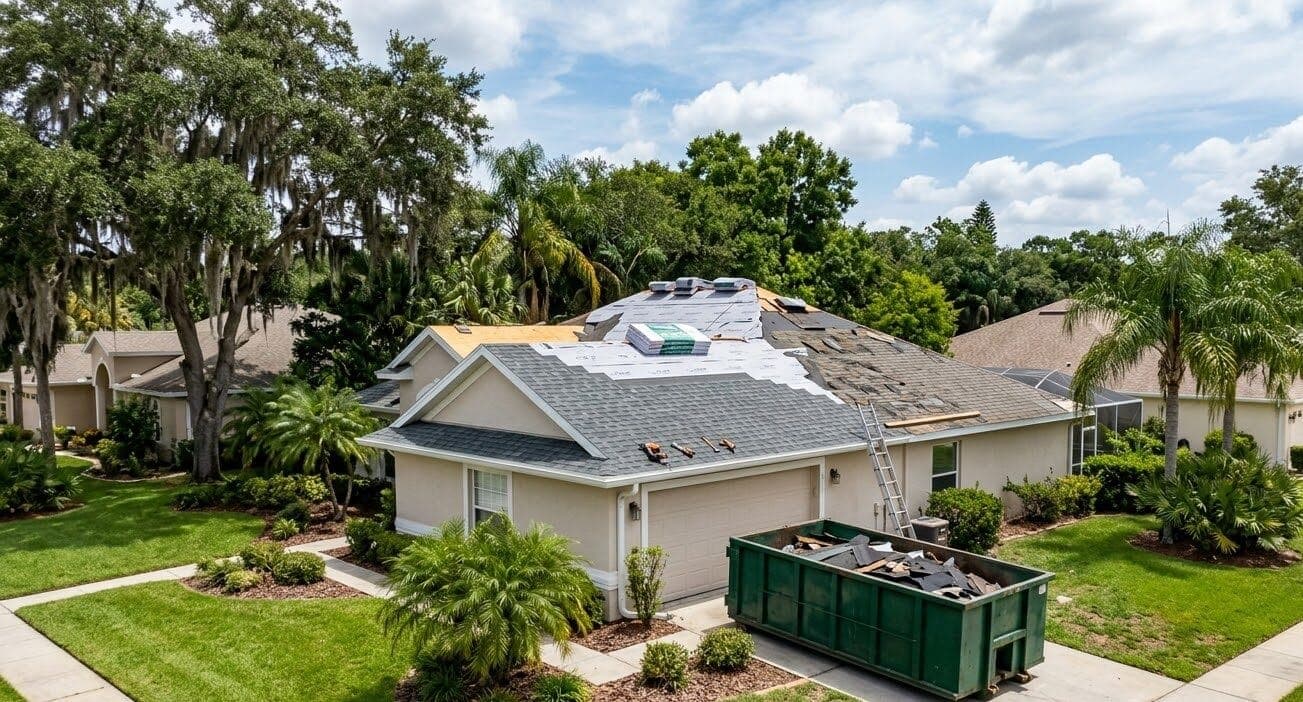
Skylights in Florida: Install, Leaks and Hurricane Ratings
A skylight is a deliberate hole in the one assembly built to keep water out. Florida code puts it through a 9 pound 2x4 at 34 mph and 9,000 pressure cycles. Here is what that means for specifying one, why they leak here, and what replacement runs in 2026.
Read Article
Gutters for Florida Homes: Seamless vs Sectional Guide
Seattle gets 38 inches of rain a year and runs 5-inch gutters. Tampa gets 52.6 and overflows, because 30 of those inches fall in four months and mostly in short bursts. Gutters are sized on inches per hour, not inches per year. Here is the sizing math, what seamless actually buys you, and the two spec lines that matter more than the word seamless in a hurricane state.
Read Article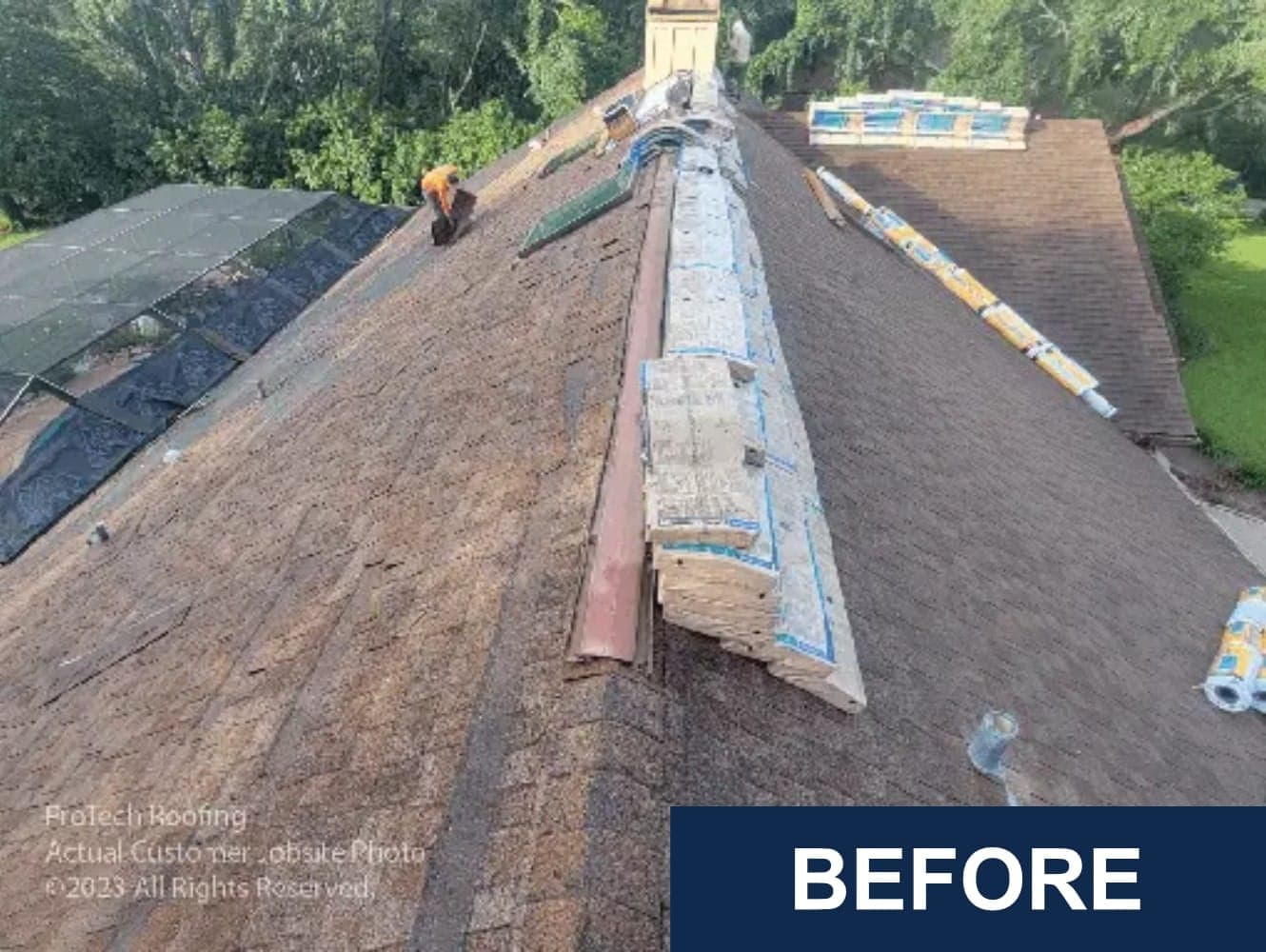
The Ultimate Guide to Roofing in Clearwater, FL (2026)
2026 guide to roofing in Clearwater, FL: coastal salt and wind, costs, condo and HOA rules, insurance, and how to choose a local contractor.
Read ArticleReady When You Are
Get your free roof inspection today.
No-pressure, written estimate. Same-week scheduling across Hernando County. Call us now or request a visit online.