Blog
Section 179 and Your Commercial Roof: How Florida Businesses Write Off a New Roof in Year One
Call (352) 605-0696A Brooksville warehouse owner gets two numbers on the same roof. Depreciated the ordinary way, a $400,000 commercial roof returns about $10,256 of deduction per year for thirty nine years. Elected under Section 179, the same roof can return the entire $400,000 in the year it goes on. Same roof, same contractor, same invoice. The difference is a single election on a tax return, and a set of conditions that most building owners have never had explained to them. This is a plain English walk through of what the tax code actually says about commercial roofs in 2026, what changed when Congress rewrote Section 179 in 2025, and the Florida specific wrinkle that changes the answer at the state level. It is written by a roofing contractor, not a CPA, so treat it as the vocabulary you need before the conversation with your accountant, not as a substitute for it.
The 2026 Numbers, and Where They Came From
Section 179 of the Internal Revenue Code lets a business deduct the full cost of qualifying property in the year it is placed in service, instead of spreading that cost across a depreciation schedule. For a long time the ceiling was modest enough that a commercial roof would blow straight through it. That changed.
The One Big Beautiful Bill Act, enacted July 4, 2025, amended Section 179(b)(1) to set the maximum expensing amount at $2,500,000 with a $4,000,000 investment phase out threshold, for tax years beginning after December 31, 2024. Both figures are indexed for inflation starting with tax years beginning after December 31, 2025, and this is the change that matters most: the increase is permanent, not another temporary provision scheduled to lapse.
Applying the inflation adjustment, the IRS published the 2026 figures in Revenue Procedure 2025-32:
- Maximum Section 179 deduction, tax years beginning in 2026: $2,560,000.
- Phase out threshold: $4,090,000 of total Section 179 property placed in service during the year.
- How the phase out bites: dollar for dollar, above the threshold. Place $4,300,000 in service and your $2,560,000 ceiling drops by $210,000 to $2,350,000. The deduction does not go below zero.
For the overwhelming majority of commercial roofs in Hernando, Pasco, Citrus and Pinellas counties, those ceilings are not the constraint. A 20,000 square foot flat roof replacement in this market lands well inside them. The constraints that actually decide the answer are further down.
Why a Roof Is a Special Case in the Tax Code
Here is the part that surprises people, including some building owners who have already been through a replacement. A roof is not eligible for bonus depreciation. It never has been, and the 2025 law that made 100 percent bonus depreciation permanent did not change that.
The reason is definitional. Bonus depreciation applies to property with a recovery period of 20 years or less, and the way most building improvements get there is by qualifying as Qualified Improvement Property. QIP is defined as an improvement to the interior portion of a nonresidential building, placed in service after the building was first placed in service. A roof is not interior. It fails the definition before you even get to the exclusions.
So absent any election, a new commercial roof is nonresidential real property, depreciated straight line over 39 years. On a $400,000 roof that is roughly $10,256 per year, and if you sell the building in year eight you never see most of it.
Section 179(f) is the carve out. It lets a taxpayer elect to treat certain improvements to nonresidential real property as Section 179 property even though they fall outside QIP, and it names them specifically: roofs, heating, ventilation and air conditioning property, fire protection and alarm systems, and security systems. The improvement has to be placed in service after the date the building itself was first placed in service.
Read those two paragraphs together and the practical conclusion is sharp. For a commercial roof, Section 179 is not one option among several. It is the only route to a first year write off. There is no bonus depreciation fallback if you miss it.
The Four Conditions Your Roof Has to Clear
The ceiling is generous. The conditions are where deals fall apart.
- Nonresidential real property. Section 179(f) reaches improvements to nonresidential buildings. A roof on an apartment building is residential rental property and does not qualify under this provision. Mixed use gets complicated fast and is a question for your CPA, not your roofer.
- Placed in service after the building was. The roof on a brand new building is part of the building's original cost, not a later improvement. This provision is for re roofs and for roofs added after the building went into service.
- Used in the active conduct of a trade or business. Section 179 property must be used more than 50 percent in an active trade or business. Passive rental activity is the classic failure point here. Rental income can count toward the business income test when the activity rises to an active trade or business under Section 162 and the owner meaningfully participates, but a hands off passive holding generally does not. Noncorporate lessors face additional restrictions under Section 179(d)(5) that are easy to trip over.
- The business income limitation. This is the one that catches most owners. Your Section 179 deduction cannot exceed your aggregate taxable income from the active conduct of your trades or businesses, computed before the Section 179 deduction itself. Section 179 cannot create or increase a net operating loss. If your roof costs more than your income, the excess is not lost, it carries forward indefinitely to a year when you have income to absorb it. But it does not do what you expected in the year you wrote the check.
That last condition is why the honest answer to "can I write off my new roof this year" is always "how profitable was the year." A $400,000 roof on a business with $150,000 of taxable income yields a $150,000 deduction now and a $250,000 carryforward, not a $400,000 deduction now.
What 39 Year Depreciation Actually Costs You
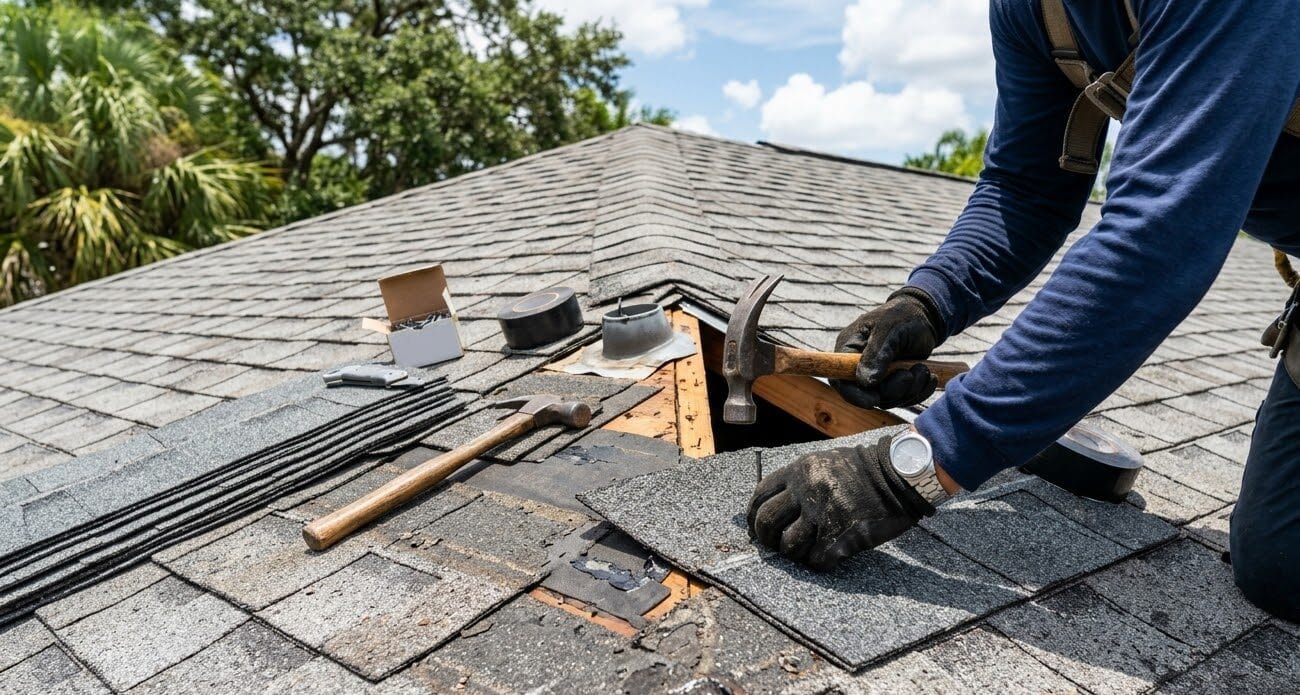
It is worth seeing the two schedules side by side, because the gap is wider than most owners assume. Take a $400,000 commercial roof and a business in the 21 percent federal corporate bracket.
- 39 year straight line: about $10,256 of deduction per year, worth roughly $2,154 of federal tax reduction per year. To collect the full benefit you have to own the building until 2065.
- Section 179 election: the full $400,000 in the year placed in service, worth roughly $84,000 of federal tax reduction, in that year.
- The real difference: not the total, which is the same $400,000 of deduction either way. It is timing, and timing is money. Eighty four thousand dollars today funds the next capital project. The same amount dribbled out at $2,154 a year does not fund anything.
There is also a holding period argument that rarely gets made. The median commercial building does not stay with one owner for 39 years. If you sell in year ten under straight line depreciation, you have deducted about $102,000 of a $400,000 roof and the rest gets folded into basis at sale. The Section 179 election front loads the benefit into the years you actually own the asset, which for most owners is the entire point. Recapture rules apply on disposition, so this is a timing advantage and a planning question, not free money, and your CPA will model it properly.
The Florida Wrinkle Nobody Tells You About
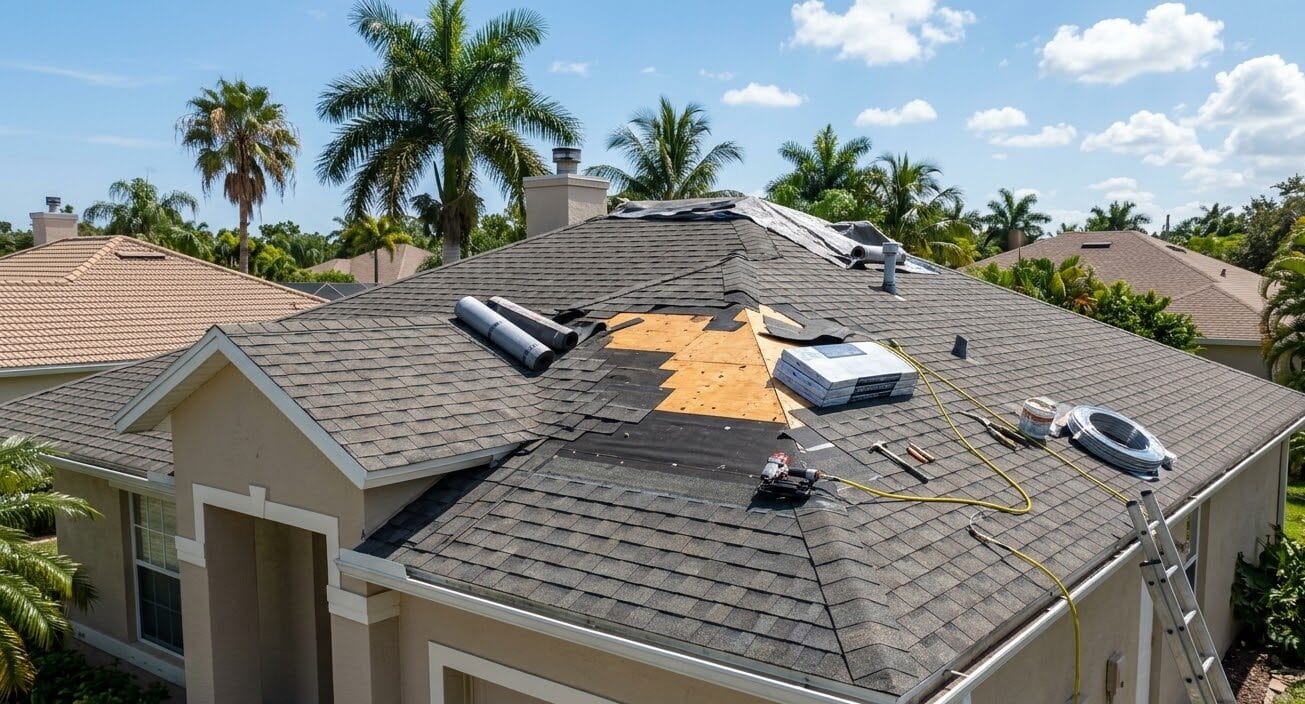
Florida has no personal income tax, which leads a lot of owners to assume state tax treatment is irrelevant here. For Florida C corporations and LLCs that elected corporate treatment, it is not. Florida levies a corporate income tax at 5.5 percent, with the first $50,000 of net income exempt, and Florida does not simply accept every federal deduction as written.
Section 220.13(1)(e), Florida Statutes, is the decoupling provision, and it treats the two federal acceleration tools very differently. That contrast is the useful finding:
- Bonus depreciation: added back. For property placed in service after December 31, 2007 and before January 1, 2027, Florida requires an addition to taxable income equal to 100 percent of any amount deducted federally as bonus depreciation. The taxpayer then recovers it as a subtraction of one seventh of the addback in the year of the addition and each of the six following years. In other words, Florida takes seven years to give back what the federal return gave immediately.
- Section 179: no longer added back. The Florida Section 179 addback, which applied to amounts above $128,000, was written for taxable years beginning after December 31, 2007 and before January 1, 2015. It does not apply to a tax year beginning in 2026. A Section 179 deduction taken federally flows through to the Florida return without the seven year clawback.
Put the two halves of this article together and something useful falls out. A roof cannot take bonus depreciation, which is the tool Florida penalizes. A roof can take Section 179, which is the tool Florida currently leaves alone. For a Florida C corporation, the roof is one of the cleaner accelerated deductions on the books, precisely because the accelerating mechanism it is forced to use is the one the state does not claw back.
If you operate as an S corporation, a partnership, or an LLC taxed as a disregarded entity, none of the above applies to you at the state level, because those entities are not subject to Florida corporate income tax and Florida has no personal income tax to pass the item into. Your analysis is federal only. Confirm your entity's actual filing posture with your accountant before you rely on any of this.
Repair Beats Section 179 When You Can Get It
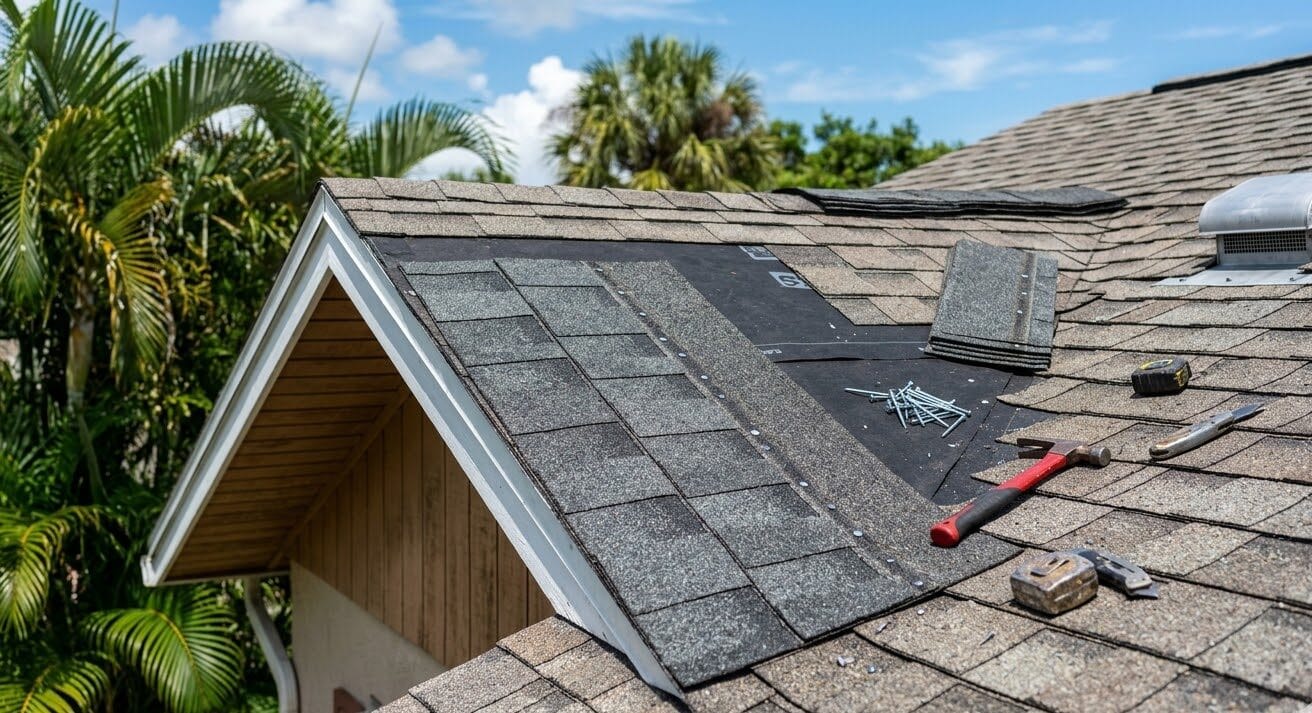
Section 179 is the answer when the work is a capital improvement. The better question to ask first is whether it is a capital improvement at all, because a deductible repair under Section 162 is superior to a Section 179 election on nearly every axis. A repair is not subject to the business income limitation, does not create recapture exposure on sale, and does not consume any part of your annual Section 179 ceiling.
Treasury Regulation 1.263(a)-3 draws the line with the BAR test. You capitalize if the work is a Betterment, an Adaptation to a new use, or a Restoration of the unit of property. For roofing the restoration prong is almost always the decisive one, and specifically the question of whether the work replaces a major component or substantial structural part of the building structure. The regulations give two contrasting examples that are worth knowing by heart:
- Capitalize: an owner discovers rot and replaces the entire roof, decking, insulation, asphalt and coatings included. That is a major component performing a discrete and critical function. Capitalized, and a candidate for Section 179.
- Deduct: an owner replaces only the worn membrane with a comparable membrane, leaving decking and insulation in place. The membrane alone is not a significant portion of the roof or a substantial structural part of the building. Currently deductible.
This is exactly why the scope of work on the proposal matters so much, and why a roof coating and restoration deserves a real conversation with your CPA rather than a reflexive capitalization. A coating applied over a sound existing membrane as maintenance can be a current deduction. The same coating specified as one line of a full tear off and rebuild rides along with the capital project. Same product, different tax outcome, decided by scope.
There is one more door for smaller owners. The safe harbor for small taxpayers at Regulation 1.263(a)-3(h) lets a qualifying taxpayer skip the improvement rules for an eligible building entirely, when total spending on repairs, maintenance and improvements for that building during the year does not exceed the lesser of $10,000 or 2 percent of the building's unadjusted basis. Qualifying means average annual gross receipts of $10 million or less for the three preceding years, and an eligible building means unadjusted basis of $1 million or less. It is an annual election made on a timely filed return. The numbers are small enough that it will not cover a re roof, but it will cover a year of planned maintenance, which is a good argument for running the kind of preventive program we lay out in the Florida commercial roof maintenance calendar instead of deferring until only a replacement will do.
The Deduction Most Owners Leave on the Table
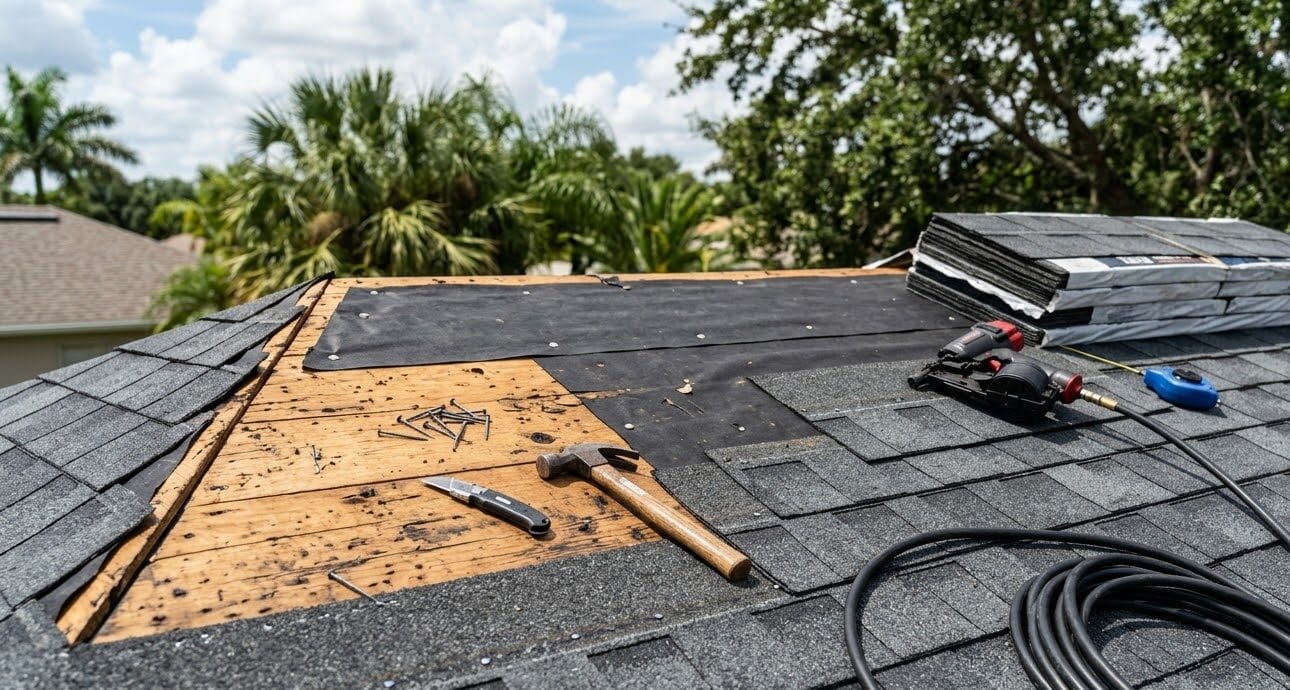
When you replace a roof, the old roof does not vanish from your depreciation schedule on its own. Its remaining undepreciated basis sits there, quietly, while you also start depreciating the new roof. That is double capitalization, and for decades taxpayers were stuck with it.
Regulation 1.168(i)-8(d)(2) fixed that with the partial disposition election. It lets a taxpayer recognize the disposition of a portion of a building or its structural components, and take a loss on the remaining basis of the part that was removed, rather than continuing to depreciate a roof that is now in a dumpster.
Three things to know about it. It is an annual election, available for tax years beginning on or after January 1, 2014. It is made by reporting the gain or loss on a timely filed original return, including extensions, for the year of the disposition. And it requires that somebody be able to identify what portion of the building's basis was attributable to the old roof, which is a cost segregation or reasonable allocation exercise, not a guess.
The reason to mention it in a roofing article is timing. The election has to happen on the return for the year of the tear off. Owners who find out about it two years later have missed it. If you are budgeting a full commercial roof replacement, tell your CPA before the crew mobilizes, not at tax time.
A Worked Example on a Brooksville Warehouse
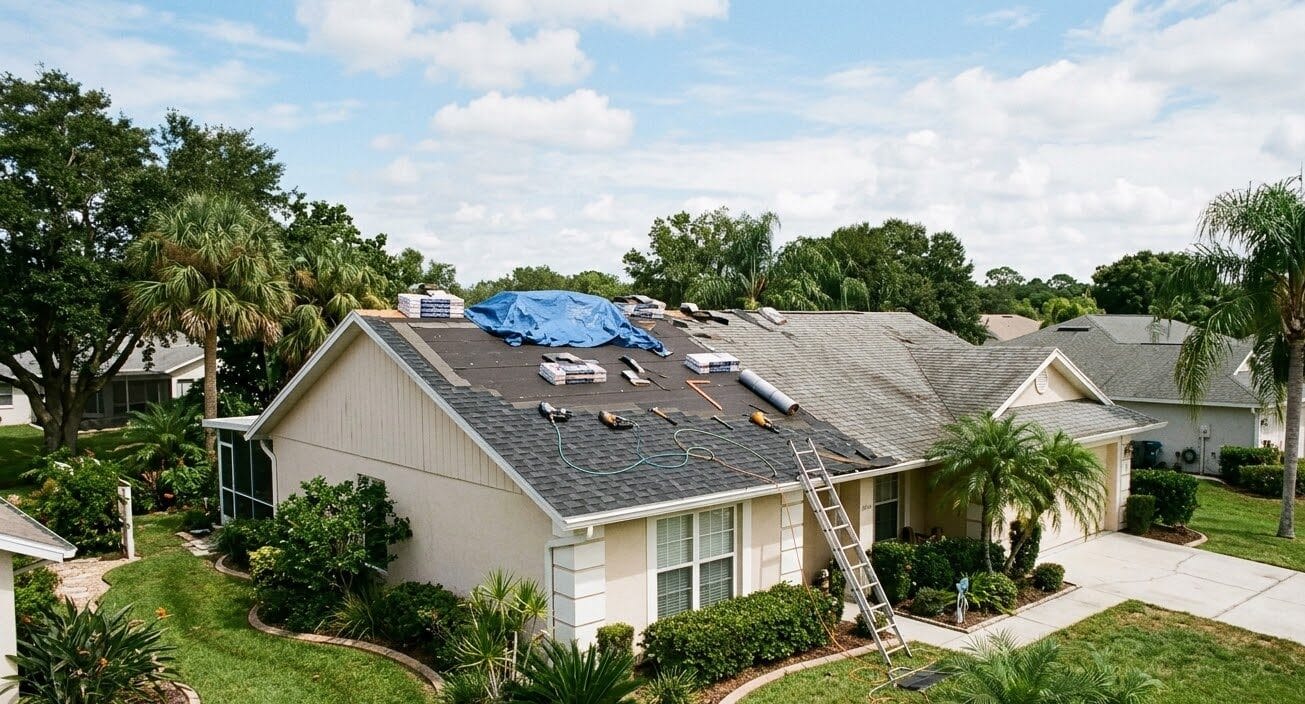
Numbers make this concrete. Assume a light industrial building in Hernando County, owned by a Florida C corporation, with $600,000 of taxable income before any of this. The 20 year old TPO membrane is failing and the owner is quoted $340,000 for a full tear off, new insulation, new membrane.
- Is it capital? Full tear off including decking level work and insulation is a restoration of a major component. Capitalize. Section 179 is in play.
- Does it clear the ceiling? $340,000 is far below the 2026 limit of $2,560,000, and total Section 179 property for the year is nowhere near the $4,090,000 phase out threshold. No reduction.
- Does it clear the business income limitation? $600,000 of active business income comfortably absorbs a $340,000 deduction. Full amount usable this year, no carryforward.
- Federal effect: $340,000 deducted rather than $8,718 under 39 year straight line. At 21 percent, roughly $71,400 of federal tax deferred into this year instead of trickling out to 2065.
- Florida effect: no Section 179 addback applies for a tax year beginning in 2026, so the deduction reduces Florida taxable income too. At 5.5 percent that is roughly $18,700, and it is not clawed back over seven years the way a bonus depreciation deduction would have been.
- The item most owners miss: the old TPO system still carrying undepreciated basis. A partial disposition election on the same return writes that remainder off as a loss instead of leaving it to depreciate against a roof that no longer exists.
Change one variable and the answer changes. Make the taxable income $200,000 instead of $600,000 and the deduction is capped at $200,000 with $140,000 carried forward. Make the building an apartment complex and Section 179(f) does not reach it at all, which is why multi family roofing projects get analyzed on an entirely different track.
What Your Roofing Proposal Needs to Say
Your CPA makes the tax call, but they can only work with what the paperwork says. A proposal written for a homeowner will not support the analysis above. Ask for these on any commercial document.
- Scope broken out by component. Decking, insulation, membrane or covering, flashings, edge metal, rooftop penetrations, each priced. This is what lets your CPA apply the major component test instead of guessing at a lump sum.
- Repair work separated from replacement work. If the job includes both, do not let them merge into one line. Merged scopes get capitalized wholesale, and the repair portion loses its current deduction.
- A stated placed in service date. Substantial completion and the date the roof was ready and available for its intended use. This is the date the whole election hangs on.
- Whether the building is nonresidential. Obvious to you, not obvious in a file three years later during an examination.
- Permit and final inspection records. Independent third party confirmation of the completion timeline.
- License number on the document. Protech Roofing holds Florida license CCC1335878.
Timing: Placed in Service Beats Paid For
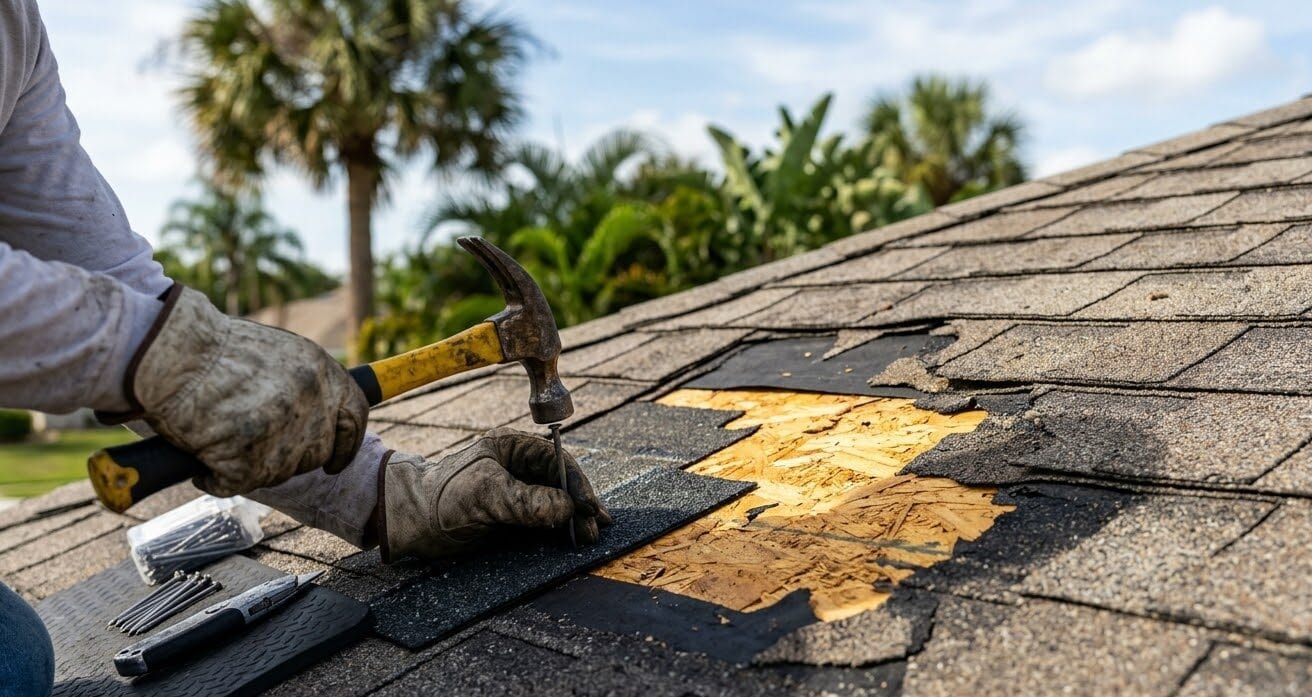
Every December a handful of owners call wanting a roof deducted for the year that is about to close, and discover the standard is not when the check cleared. Section 179 turns on when the property was placed in service, meaning ready and available for its intended use. A signed contract in December and a deposit in December do not create a December deduction if the roof goes on in February.
In Central Florida that runs into two seasonal realities. The first is weather. Adhered membrane systems and most coatings have temperature and dry time requirements, and the practical installation window is not infinite even in a mild winter. The second is the permitting queue. A commercial re roof needs a permit and a final inspection in Hernando, Pasco and Citrus counties alike, and December into January is not when municipal queues are fastest.
The workable version of year end tax planning on a roof starts in the third quarter, not the fourth. If a placed in service date inside the tax year is worth real money to you, say so at the estimate stage so the schedule can be built around it. A documented roof inspection in the summer is usually what turns a vague suspicion that the roof is done into a scoped project that can actually be scheduled and finished on time.
The Short Version
A commercial roof gets no bonus depreciation, ever, because it is not interior and therefore not Qualified Improvement Property. Section 179(f) is the only path to a first year write off, and for tax years beginning in 2026 the ceiling is $2,560,000 with a $4,090,000 phase out threshold, both permanent and inflation indexed under the 2025 law.
Four conditions decide whether you get it: nonresidential building, improvement placed in service after the building was, active trade or business use, and enough active business income to absorb the deduction. Before electing, check whether the work is a deductible repair instead, because a repair beats the election. And on any tear off, ask about the partial disposition election on the old roof while the return for that year is still open.
At the state level, Florida stopped requiring a Section 179 addback for tax years beginning in 2015 and later, while it still adds back bonus depreciation on property placed in service before January 1, 2027 and returns it one seventh at a time. The roof, uniquely, is stuck with the tool Florida leaves alone.
One more time, plainly: this is contractor's context, not tax advice, and every number above should be confirmed against your own return by your own CPA. What we can do is give you a scope of work and a documented timeline they can actually use. For a commercial assessment in Brooksville and Hernando County, or a scoped quote on commercial flat roofing anywhere we serve, call Protech Roofing at (352) 605-0696.
FAQ
Frequently Asked Questions
Can I deduct a commercial roof replacement in one year?
+
Does a commercial roof qualify for 100 percent bonus depreciation?
+
Does Florida allow the Section 179 deduction on a commercial roof?
+
Is a roof repair better than a Section 179 deduction on a replacement?
+
What is the partial disposition election and why does it matter on a re roof?
+
Does signing the contract in December get me the deduction for that year?
+
Related Articles
More guides for Florida homeowners
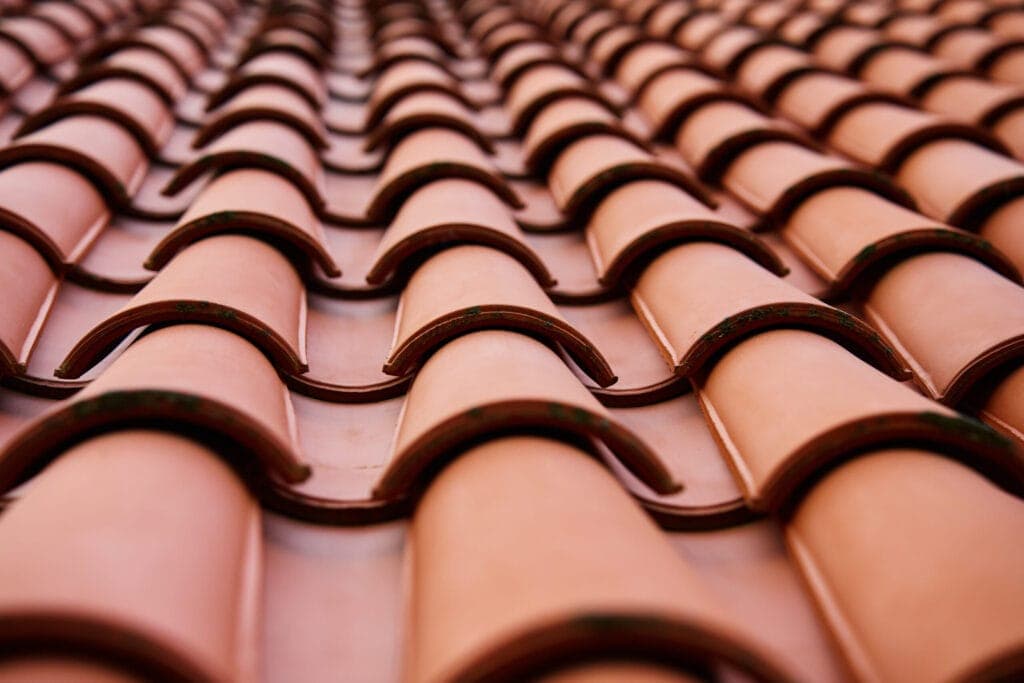
Florida Tile Roof Problems: Repair vs Re-Roof (2026)
Tile lasts for decades, the underlayment under it does not. Here are the tile roof problems Florida homeowners see most, what each repair costs in 2026, and how to tell when a repair is enough and when it is time to re-roof.
Read Article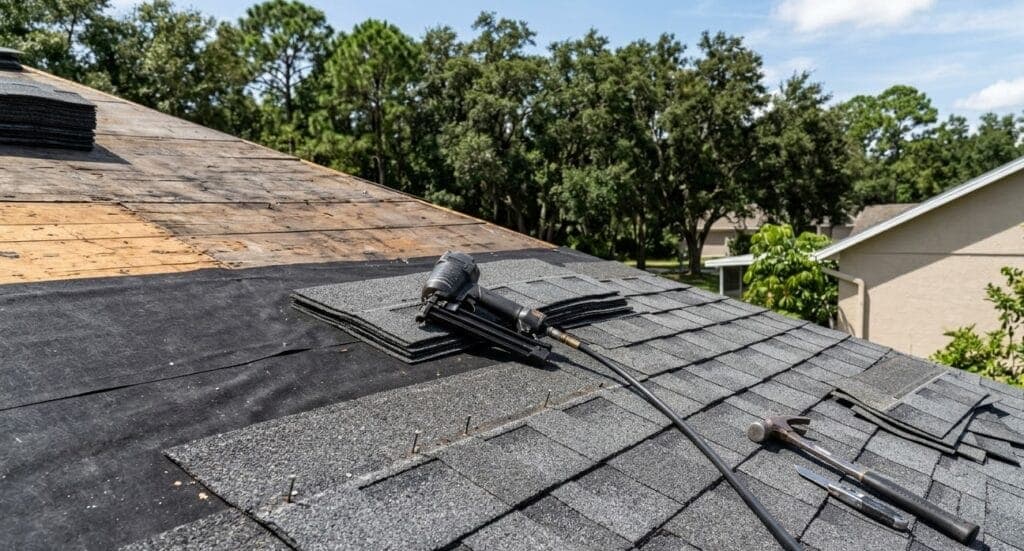
Solar Roofing in Florida: Solar Shingles vs Panels (2026)
Every solar system on a Florida roof is either bolted to the roof or is the roof. Here is how panels and solar shingles compare in 2026, what changed with the federal credit, and why the cheapest solar project often starts with a re-roof.
Read ArticleChimney Flashing Leaks in Florida: Find the Real Cause
Roofs do not leak in the field, they leak at the terminations, and the chimney is the hardest termination on the roof. Here is what Florida code requires, the five failures behind almost every chimney leak, and what a correct reflash costs in 2026.
Read ArticleReady When You Are
Get your free roof inspection today.
No-pressure, written estimate. Same-week scheduling across Hernando County. Call us now or request a visit online.