St. Petersburg, FL
Gutter Cleaning in St. Petersburg, FL
Gutter cleaning in St. Petersburg, FL. Protech Roofing clears oak debris, salt buildup, and storm debris, with post-hurricane service. Call (352) 605-0696.
Call (352) 605-0696If you've climbed a ladder to peek into your gutters after a sticky August week in St. Pete and found a black gritty paste lining the bottom of the channel, you've already met the problem that makes gutter cleaning in St. Petersburg, FL a different beast than the inland market. The salt air glues debris into a crust, the oak canopy in Old Northeast and Kenwood throws catkin mats into every run, and post-storm cleanup after Helene and Milton stayed on our schedule deep into the dry season. Protech Roofing runs cleaning crews across Pinellas County from Snell Isle waterfront to Disston Heights ranches. Call (352) 605-0696 to schedule a cleaning visit or set up a maintenance plan.
You Are Viewing
Gutter Cleaning for homeowners and businesses in St. Petersburg, part of Pinellas County, FL, Florida.
The St. Petersburg Gutter Cleaning Schedule for a Salt-Heavy Climate
Most cleaning companies push the same three-window calendar they'd push for Atlanta or Charlotte. That's not quite right for St. Pete. You're sitting on a peninsula where salt air bonds debris into a paste, where 50-plus inches of annual rain washes more material into the gutter than the inland market sees, and where two hurricane seasons in a row have changed the maintenance baseline. We recommend cleaning at minimum three times a year on St. Pete homes, and four times a year if you've got mature oaks overhead or you're inside the surge zone.
The schedule we run with most homeowners looks like this. Late February to early April catches the spring pollen drop and the live oak catkins that release across the Old Northeast and Kenwood canopy. Late June handles the early summer storm debris that's already starting to clog before the heavy August downpours. Mid-to-late October is the post-hurricane-season pass, and it's the most important visit of the year because that's when you find everything from shingle granules to entire palm fronds in the channels. A fourth pass in January catches the late dry-season blow-in and resets the gutters before the next pollen cycle.
For waterfront homes on Snell Isle, Coffee Pot Bayou, and the edge of Shore Acres, we usually add an early September check-in if a storm has formed in the Gulf. Salt spray from sustained onshore winds can lay down a crust in 48 hours that takes hours to scrub out if it sets up dry. Knocking it down while it's still soft is much faster and cheaper than waiting until October.
And don't fall into the trap of waiting until you see overflow. By the time water is sheeting over the front lip of the gutter during a storm, the debris has been backing things up for weeks. Soft material packs into the downspout outlet, blocks half the flow, and the channel ponds. Ponded water accelerates the salt corrosion problem from the inside out. A scheduled cleaning is always cheaper than the gutter replacement that follows ignoring the maintenance for two or three years.
Salt Crust and Algae Buildup Specific to St. Petersburg Coastal Gutters
Salt crust is the St. Pete signature problem and it doesn't look like normal gutter gunk. When we pop the cover on a Snell Isle waterfront install, we typically find a white-to-grey crystalline coating bonded to the interior face of the gutter, especially at the downspout outlets where the last bit of water evaporates after each storm. That crust is sodium chloride combined with calcium and magnesium from the bay air. It traps organic material against the gutter wall and creates a chemical environment that accelerates pitting on aluminum and rusts plain steel hangers.
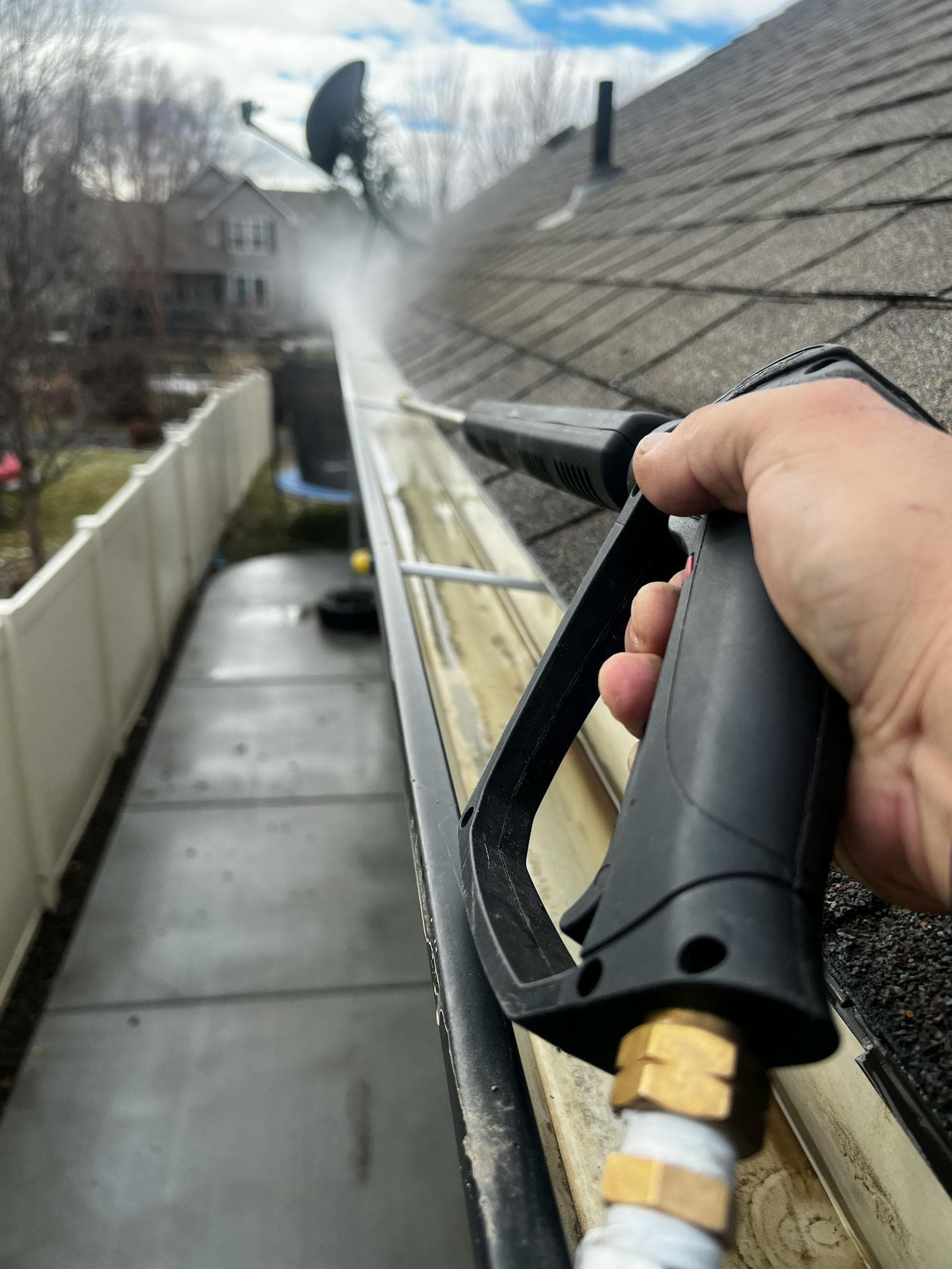
Cleaning a salt-crusted gutter isn't a leaf-scoop job. We hand-scrape with plastic blades to avoid scratching the gutter finish, then rinse with low-pressure water to flush the loosened crust out the downspouts. On really heavy buildup, especially on east-facing Snell Isle and Coffee Pot eaves that catch the worst onshore exposure, we use a mild biodegradable cleaner that breaks the salt-organic bond without attacking the gutter material itself. We don't use pressure washers on gutter interiors because the spray will breach hidden hangers and force water back through the sub-fascia.
Algae and mildew are the secondary problem and they thrive in the humid microclimate inside a partially blocked gutter. By late summer, you'll often see dark green or black slime coating the bottom of the channel between the salt crust patches. That biofilm holds water against the gutter wall, doubles the corrosion rate, and feeds mosquito larvae if any pooling persists. Part of every cleaning visit on a St. Pete coastal home is biofilm removal with the same biodegradable cleaner and a stiff plastic brush.
For homeowners who want to extend cleaning intervals, we sometimes apply a marine-grade gutter coating after cleaning. It's not magic, and it doesn't replace the need to clean. But it slows the salt bond chemistry and makes the next cleaning visit faster and easier. We talk through whether a coating makes sense at the first cleaning visit based on what we find in the gutters and how often the homeowner wants us back.
Oak Debris Patterns Across Old Northeast and Kenwood
Old Northeast and Historic Kenwood are St. Pete's heaviest tree-canopy neighborhoods, and the live oaks overhead aren't shy. We've cleaned bungalow gutters in Kenwood that had three inches of compacted oak debris bridging the entire channel by mid-summer. The catkin drop in March and April is the most aggressive load of the year. Catkins are the small worm-like pollen structures that fall in dense mats and pack into gutters as a sticky brown felt that's nearly impossible to scoop with a standard tool.
The catkin mats compound with whatever else is in the gutter, which is usually fine shingle granules and dust. When the mat dries between rains, it hardens into something that feels like compressed mulch. We pry it loose in sheets with flat plastic scrapers, then bag it for disposal because the volume off a typical Kenwood bungalow can fill multiple contractor bags. After the bulk material is out, we flush with low-pressure water to clear what's left, and we run a snake or rod through any downspout that's slow.
Old Northeast has a similar oak load with the added wrinkle of older bungalow gutter systems that often have tighter K-style profiles, narrow downspouts, and original 4-inch channels on the smallest cottages. Tight profiles clog faster, and we usually recommend an upgrade to 5-inch or 6-inch during a future re-roof if the homeowner is staying in the home long-term. In the meantime, we clean more often (four visits a year is normal in Old Northeast) and we install or upgrade screens on the worst-affected runs as a stopgap.
Acorn drop in October and November adds another wave. The acorns themselves bounce off most gutters but the broken caps and stems pack into outlets and downspout elbows. We've pulled handfuls of acorn caps out of a single downspout cleanout on a Crescent Heights home after October. The October cleaning visit catches this load before it sits through winter and sets into a hardened plug.
Post-Milton and Post-Helene Gutter Cleanup in St. Pete
Helene's surge on September 26, 2024 and Milton's direct hit on October 9, 2024 left St. Pete homeowners dealing with a kind of gutter debris that doesn't show up in normal years. Shingle granules, asphalt fragments, snapped branch sections, palm frond mats, and pieces of neighbor's fascia and siding all ended up in gutters across the city. The post-storm cleanup wave ran for months and we're still finding storm legacy material in gutters that haven't been cleaned since.
Shingle granule load is the slow killer that most homeowners don't notice. Hurricane wind strips granules from shingle surfaces in sheets, and those granules wash into gutters with every subsequent rain. A heavy granule load gradually fills the bottom of the channel with a coarse sand that holds moisture against the gutter wall and accelerates corrosion. Post-Milton, granule loads were among the heaviest we've seen in years. If you haven't had a post-storm cleaning visit since October 2024, schedule one now.
Larger debris like branch sections and palm fronds require a different approach. Frond mats packed into super gutter sections or wide K-style runs can weigh enough to actively pull the gutter away from the fascia. We tag those during the walkthrough and pull them carefully so we don't stress the hangers further. If we find hanger damage during cleanup, we re-secure with stainless screws and longer bracket spans rather than just clearing the debris and walking away.
Storm cleanup pricing is higher than routine cleaning because the labor scope is unpredictable until we're on the ladder. We give homeowners a starting estimate based on linear footage and house type, then a final number after the walkthrough. Most storm-cleanup visits on a typical St. Pete bungalow or ranch land between $300 and $700 depending on debris volume and how many downspouts need rodding. Multi-story Snell Isle and Coffee Pot homes can run higher because of access and time.
What We Pull Out of St. Petersburg Gutters
Every St. Pete cleaning visit shows us a different mix of what the eaves have been catching since the last service. The most common items are live oak catkins (March-April), oak leaves and acorn caps (October-November), shingle granules (always, accelerated post-storm), palm frond fragments (Shore Acres, Disston Heights, anywhere with mature palms), salt crust deposits (waterfront), and dust-pollen-pollen-rain mats that bind everything together.
We also pull surprises. Tennis balls in gutters near schools and parks. Frisbees lodged at miter joints. Squirrel nests that were starting to plug the downspout outlet. Bird's nests inside enclosed gutter sections. Roof shingle pieces that worked loose during high wind events but never made it to the ground. And after the 2024 hurricane season, we were pulling neighbor's awning fragments, pool screen shreds, and pieces of building materials from upwind properties that ended up in gutters miles from where they started.
The unusual finds are part of why we recommend regular service even on homes with gutter guards. Guards stop most leaves but they're not perfect, and the smaller particles plus the surprises that work their way under or through the guard system still need periodic clean-out. A gutter that hasn't been opened in five years usually has issues we'd rather find during a routine visit than during a hurricane warning.
We bag everything and haul it away as part of the visit. We don't dump debris in the homeowner's yard or street curb. The bag rate is included in the cleaning price, which is one of the small details that separates a real maintenance company from a handyman on Craigslist who'll leave a pile of wet sludge next to the AC unit.
Cleaning Two-Story Snell Isle and Waterfront Homes Safely
Snell Isle, Coffee Pot Bayou, and the older two-story waterfront homes on Beach Drive and Coquina Key have eave heights that don't work for a standard 24-foot extension ladder. We're often working off 32-foot or 40-foot ladders, sometimes off the back of a roof on the lower slopes, and occasionally with a small lift if the access doesn't allow ladder placement. That's not a job for a homeowner with a single ladder and a Saturday afternoon.
Safety on two-story St. Pete waterfront properties starts with the access plan. We walk the perimeter before the ladder comes off the truck, identify any hazards like soft ground around irrigation, low-voltage wires running through the eave area, irregular grade slopes, and overhead branches that could shift under wind. Then we set the ladder with proper outrigger stabilizers, tie off if we're going to be moving along a long run, and we work in two-person teams on anything taller than the second story.
Tile roofs add complexity. Mediterranean Revival homes on Snell Isle Boulevard and the higher-end Coffee Pot Bayou waterfront often have barrel tile that doesn't tolerate foot traffic well. We use roof boards to spread load when we have to step onto the tile, and we plan ladder positions to minimize tile contact. Cracked tile from a careless cleaning visit costs more to repair than the cleaning itself, so prevention is the whole game.
For homeowners who want the visit but don't want a crew on the roof for liability or insurance reasons, we offer a from-the-ground option using telescoping vacuum systems. It's not as thorough as a ladder visit for heavy debris, but it's a reasonable maintenance pass for homes that get regular service and just need a routine pollen and dust clear-out. We talk through which option makes sense at the estimate visit based on debris volume and roof access.
Bundling Gutter Cleaning With Roof Inspection in St. Petersburg
Most St. Pete homeowners think of gutter cleaning and roof inspection as two separate visits. We bundle them because we're already up there. While the crew is clearing the gutters, the lead tech walks the roof, checks the shingle or tile condition, looks at the flashing around penetrations, photographs any concerns, and writes up a short condition report you get the same day. The bundled visit costs less than booking them separately and you get a full eave-and-roof check in one trip.
The bundled inspection is especially useful in the post-storm window. We see things during a cleaning visit that even a focused inspection from the ground would miss. Lifted shingle tabs that haven't started leaking yet. Hairline cracks in tile at high-stress points. Pipe boot rubber that's UV-cracked and three months from a leak. Salt corrosion on metal flashing that's not visible from below. Catching those during a routine cleaning visit is the difference between a minor repair and an emergency call after the next big storm.
For homeowners with insurance carrier requirements, the bundled visit can also satisfy the annual roof condition documentation that some carriers are starting to request as part of renewal underwriting. We provide a written report with photos that homeowners can submit to their agent. That documentation can also feed into a wind mitigation update if anything has changed since the last inspection. The Florida insurance market is tight enough that documentation helps you stay covered.
If the inspection turns up something that needs repair, you're not obligated to book the work with us. We provide the report, walk you through what we found, and give you a written estimate for any recommended repairs. You can shop the estimate or schedule with us, whichever you prefer. We'd rather earn the next visit by being straight with you about what we see than push a sale you don't need. That's the whole point of bundling: better information for the homeowner, fewer surprises in the next storm season.
More in this area
Other roofing services in St. Petersburg
FAQ
Frequently Asked Questions
How often should I clean gutters on a St. Petersburg home?
+
What does salt crust look like in St. Petersburg coastal gutters?
+
Do you handle post-hurricane gutter cleanup in St. Petersburg?
+
Why are oak catkins such a problem for Old Northeast and Kenwood gutters?
+
Can you clean gutters on a two-story Snell Isle waterfront home safely?
+
From the Blog
Stay informed about roofing in Florida.

Gutters for Florida Homes: Seamless vs Sectional Guide
Seattle gets 38 inches of rain a year and runs 5-inch gutters. Tampa gets 52.6 and overflows, because 30 of those inches fall in four months and mostly in short bursts. Gutters are sized on inches per hour, not inches per year. Here is the sizing math, what seamless actually buys you, and the two spec lines that matter more than the word seamless in a hurricane state.
Read Article
Box Gutter Solutions for Commercial Roofs in Central Florida
Complete guide to box gutter systems for commercial flat roofs in Central Florida. Types, materials, sizing for Florida rainfall, common problems, repair costs, and maintenance. Call (352) 605-0696.
Read ArticleReady When You Are
Get your free roof inspection today.
No-pressure, written estimate. Same-week scheduling across Hernando County. Call us now or request a visit online.