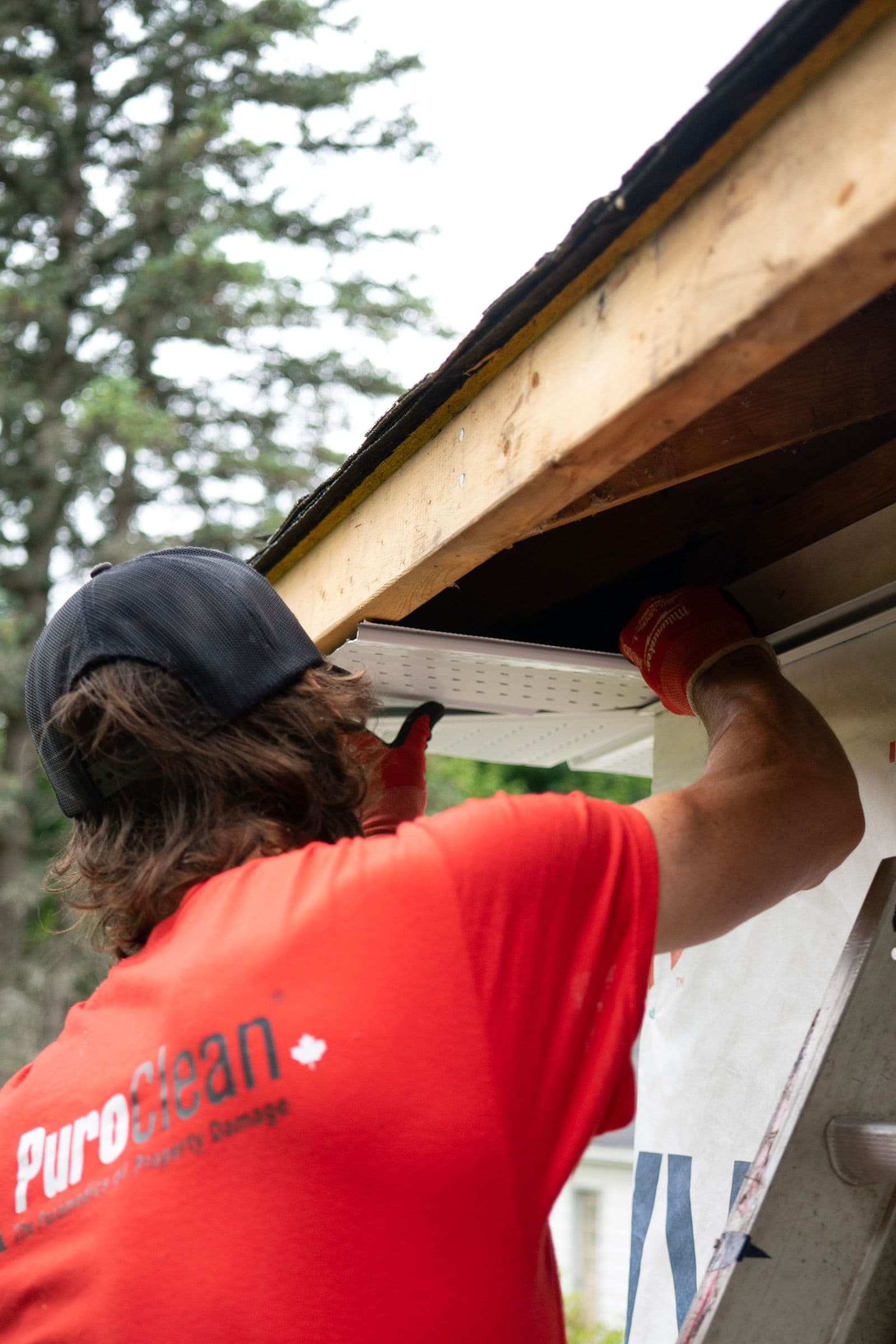
St. Petersburg, FL
Gutter Installation in St. Petersburg, FL
Seamless gutter installation in St. Petersburg, FL. Salt-grade aluminum, copper, coastal downspouts. Call (352) 605-0696.
Call (352) 605-0696If you've watched a thunderhead roll in off Tampa Bay and seen sheets of water cascade off your eaves into the mulch beds along your Shore Acres or Old Northeast home, you already know why gutter installation in St. Petersburg, FL is a different animal than the inland market. The salt air, the 50-plus inches of annual rainfall, and the surge-prone barrier zones all push the spec sheet in directions a generic aluminum install won't survive. Protech Roofing handles seamless aluminum, copper, and PVDF-coated steel gutter work across Pinellas County, from Snell Isle waterfront to the bungalow grids of Historic Kenwood. Call (352) 605-0696 for a free on-site measurement and a written quote.
You Are Viewing
Gutter Installation for homeowners and businesses in St. Petersburg, part of Pinellas County, FL, Florida.
Why Salt-Coast St. Petersburg Homes Need Premium Gutters
St. Petersburg isn't a normal Florida market for drainage work. You've got Tampa Bay on the east, the Gulf influence on the west, and a peninsula geometry that funnels salt-laden air across every block from downtown to Disston Heights. That salt doesn't just sit on your finish. It bonds with humidity, settles into every cut edge and lap seam on a gutter, and starts pitting the surface within the first season. Cheap .027-gauge aluminum off a big-box truck won't hold up here. We've stripped enough failed two-year-old installs off Allendale Terrace homes to know what doesn't work.
And the rainfall load is no joke either. St. Pete pulls down 50-plus inches a year, most of it concentrated in a brutal June-through-September window where individual cells can dump two inches in 20 minutes. If your gutters aren't sized to move that volume, water overshoots the front lip, sheets back behind the fascia, and you're looking at rotted sub-fascia inside three or four summers. We see this constantly on Crescent Heights and Disston Heights homes built in the mid-century block era with original 4-inch gutters still hanging on.
Then there's the storm dimension. Hurricane Helene's surge in September 2024 and Milton's direct hit in October 2024 didn't just damage roofs. They taught a whole generation of St. Pete homeowners that the eave-to-grade water management system is part of the storm package, not a cosmetic afterthought. Properties that drained cleanly came out of the recovery cycle in much better shape than ones where the downspouts dumped right at the slab edge.
A premium gutter install on a St. Pete home isn't an upgrade you do for curb appeal. It's structural protection for the stucco, the bottom plates, the slab edge, and the foundation perimeter. We treat it that way from the first estimate visit, and we spec the materials, the gauge, and the downspout placement to actually survive the climate they're going into.
Aluminum vs Copper vs PVDF Steel for St. Petersburg Coastal Properties
Material selection on a St. Pete install starts with how close the home is to open salt water. There's a real difference between a Disston Heights ranch sitting four miles inland and a Snell Isle waterfront with the gutters hanging 50 feet from the seawall. We don't quote both houses on the same material. For inland homes, we run .032-gauge seamless aluminum in 5-inch or 6-inch K-style, and that's the workhorse of our St. Pete book. It's rust-proof, it brake-forms on-site into continuous runs with no field seams, and it holds up to UV and humidity for 20-plus years when it's installed and maintained correctly.
On waterfront and near-waterfront addresses, particularly Snell Isle, Coffee Pot Bayou, and the east-facing edge of Shore Acres, we step up to copper or PVDF-coated steel. Copper is the gold standard for salt resistance. It develops the green patina over five to eight years that turns into a permanent corrosion-resistant skin, and it doesn't care about chloride exposure the way aluminum does. The trade-off is cost, roughly three times an aluminum install, and Old Northeast and Granada Terrace homes also need historic ARC sign-off before we order the material.
PVDF-coated steel is the middle path we recommend more and more often on St. Pete waterfront. The PVDF coating, sometimes branded Kynar 500 or Hylar 5000, is a fluoropolymer paint system that's been engineered specifically for coastal and marine environments. It carries 30-year color and chalk warranties from manufacturers like Sherwin-Williams and PPG, and it holds against salt spray at levels that would chew through bare aluminum in a single year. It costs more than aluminum but less than copper, and you don't lose any architectural flexibility because it's available in dozens of factory colors.
We don't install galvanized steel without a coating system in St. Pete. The zinc layer fails fast on cut edges, and once rust takes hold inside a seam there's no fixing it. If a homeowner brings us a quote with bare or basic-painted galvanized for a Snell Isle or Shore Acres property, we'll walk them through why that's a five-year material on this coast. The conversation usually ends with a re-spec to either PVDF steel or copper.
Sizing Downspouts for Shore Acres and Coffee Pot Bayou Flooding
Downspout sizing is where most generic installs fail in St. Pete, and Shore Acres is exhibit A. The neighborhood sits in a low pocket northeast of Snell Isle and took serious surge during Helene in 2024. Many homes are being raised or rebuilt right now, and the roof framing changes that come with elevation work open a window to redo the entire drainage system. We're sizing downspouts on those rebuilds at 3x4-inch as the default, not 2x3-inch. The peak intensity of a St. Pete summer cell can easily overwhelm a 2x3 on any run longer than about 25 linear feet of gutter.
Coffee Pot Bayou homes have a different challenge. The lots are deeper, the runs are longer, and the slope from the back of the house down to the bayou edge means downspouts on the rear elevation are dumping water that wants to sheet straight toward the foundation if it isn't routed properly. We map the discharge points before we start the install, and we'll often use buried 4-inch PVC drain lines from the back-of-house downspouts out to a pop-up emitter at the property edge, well away from the slab. That adds $15 to $25 per linear foot but it keeps the foundation perimeter dry through every wet season.
For Snell Isle, the math changes again. Larger Mediterranean Revival homes with steeper tile roofs concentrate enormous water volume at a few collection points. We've installed systems on Snell Isle Boulevard properties where a single eave run is feeding 4,000 square feet of roof area, and the only way to make that work is two downspouts on the run, both 3x4-inch, with sloped tie-ins to buried drains. Anything less and the gutter overflows at peak storm intensity every single time.
We also account for the high water table across most of east St. Pete. Buried drain lines have to maintain positive slope to a discharge point that won't back up during king tide events. So we walk the property at high tide on the day of the estimate when we can, and we mark every elevation change. That's the kind of detail that separates a real St. Pete install from a generic Florida gutter quote.
Pinellas Permits and Historic District Review in Old Northeast
Pinellas County and the City of St. Petersburg don't require a separate building permit for standard gutter installation on most homes. That keeps the paperwork side simple for the vast majority of our jobs. What does trigger paperwork is the historic district overlay, and Old Northeast is the big one. The Granada Terrace and Historic Roser Park districts have similar rules. Any visible exterior change on a contributing historic structure needs review by the Community Planning and Preservation Commission through the Certificate of Appropriateness process.
For gutter work specifically, COA review focuses on color, profile, and material visibility. White and bronze aluminum in half-round or K-style profiles usually clear review without much friction because they don't change the architectural character of a 1920s bungalow or Mediterranean Revival home. Copper almost always passes review because it's historically appropriate for the era. What gets pushback is bright finishes, oversized industrial K-style on small bungalows, or any guard system that's visibly bulky from the street.
We handle the COA application as part of the project on every historic district install. The package needs photos of all four elevations, a material spec sheet, color samples, and a written description of the work. Lead time is usually four to eight weeks depending on the commission calendar. We don't order materials until the COA is approved, because changing a spec after the fact restarts the whole review.
Outside the historic districts, the install moves much faster. Disston Heights, Kenwood (the non-historic sections), Crescent Heights, Allendale Terrace, and Shore Acres are all standard permit-free zones for gutter work. We still pull a roofing permit if the gutter install is part of a re-roof package, because the eave detail interacts with the new roof edge. But standalone gutter jobs in those neighborhoods can usually be scheduled within two to three weeks of signoff.
Salt Corrosion Failure Modes on St. Pete Gutters
When we strip a failed gutter system off a St. Pete home, we see the same handful of failure patterns over and over. The first one is pitting on the interior face of the gutter, usually starting at the lap seams and the downspout outlets. Salt collects in those low spots, mixes with standing water from the next rain, and starts eating the aluminum from the inside out. By year five or six on a thin-gauge install, you've got pinhole leaks that streak the fascia.
The second pattern is hanger corrosion. A lot of bargain installs use plain steel screws and brackets, and the salt humidity attacks the screw heads first. Once a screw rusts through, the gutter sags, the pitch goes flat, and water ponds inside. Ponded water accelerates everything else. We use stainless screws and powder-coated or aluminum hidden hangers on every St. Pete install for exactly this reason. The hanger spec is part of the warranty math, not a cost-cutting line item.
The third one is downspout band failure. The straps that hold the downspout against the wall corrode in the splash zone where rain hits the band and dries with salt residue. When the bands fail, the downspout pulls away from the wall, the elbow joints stress, and you get gaps where water spills behind the downspout instead of through it. We install stainless or marine-grade bands on every St. Pete property regardless of price tier because the failure mode is so predictable.
Finally, there's the fascia damage that gets revealed when we tear off an old system. Salt-driven gutter leaks usually hide rot behind them. So part of our install process on St. Pete homes is a full fascia inspection before we hang anything new. If we find soft spots or punky wood, we coordinate with the homeowner on fascia repair or replacement before the new gutters go up. Hanging premium gutters off rotted fascia is a waste of both jobs.
What a Gutter Installation Day Looks Like in St. Petersburg
Most St. Pete gutter installs are a one-day job. A typical Kenwood bungalow or Disston Heights ranch with 100 to 140 linear feet of gutter and three to four downspouts wraps in 6 to 8 hours. Snell Isle and Coffee Pot waterfront homes with longer runs, taller eave heights, and buried drain components can stretch into a day and a half. We schedule the crew, the brake machine, the materials, and any historic district paperwork so everything lines up when we pull into the driveway.
The crew arrives between 7:30 and 8:30. First step is a walkthrough with the homeowner to confirm every downspout location, every miter, and every discharge endpoint. Then the brake machine gets set up in the driveway and the coil stock gets loaded. Each continuous run forms on-site from the brake, which is why we call these seamless. A 50-foot run comes off the machine as a single piece, gets carried to the eave, and goes up with hidden hangers spaced every 18 to 24 inches on the salt coast (tighter than inland Florida) for extra strength against wind and water load.
For waterfront and Snell Isle installs, we pre-stage stainless fasteners, marine-grade bands, and any custom flashing pieces before crew arrival. Tile-roof transitions on Mediterranean Revival homes need the gutter integrated under the existing drip edge or starter course without breaking the roof's water management plane. That coordination is what keeps a copper install from telegraphing leaks down through the soffit two summers later.
Final step is the hose test. We run water through every section, watch for backflow at the outlets, confirm the slope is throwing water cleanly toward the downspouts, and walk the property with the homeowner around the entire perimeter. If anything needs adjustment, we fix it before we pack up. Signoff includes a written warranty document, a care guide that covers cleaning schedules for the salt-heavy environment, and a hurricane-season checklist so the homeowner knows what to look for before and after a storm.
Cost Ranges for Gutter Installation in the St. Petersburg Market
Real numbers help homeowners budget without surprises. Standard seamless aluminum installs on a typical Disston Heights or Crescent Heights ranch with 100 to 140 linear feet of 5-inch K-style, three to four 2x3 or 3x4-inch downspouts, and splashblocks run $1,400 to $2,800 in St. Pete. Upgrade to 6-inch K-style with all 3x4 downspouts for the heavy rainfall load and you're at $1,800 to $3,400. Both include .032-gauge stock, hidden hangers, stainless fasteners, and the hose test signoff.
PVDF-coated steel is the middle tier for waterfront and near-waterfront homes. Expect $4 to $7 per linear foot above the aluminum price for materials and labor, which means a Shore Acres rebuild with 160 linear feet ends up in the $3,800 to $5,200 range for a full coastal-spec system. The 30-year color warranty on the coating is what justifies the upgrade. You're not paying for looks, you're paying for the chemistry that survives the salt.
Copper is the premium tier and lives in its own cost world. A full copper system on a Snell Isle Mediterranean Revival or an Old Northeast historic home runs $6,500 to $14,000 just for the copper, plus any COA filing costs and the heavier brackets that copper requires. Buried drain lines from each downspout out to a property-edge discharge add $15 to $25 per linear foot. Gutter guards installed at the same time as the gutter run $4 to $9 per linear foot depending on the system the homeowner picks.
All of these prices include our standard warranty, on-site brake forming, hidden hanger system with stainless fasteners, downspouts and elbows, splashblocks or buried drain endpoints if specified, and the hose test signoff. We don't bid sight-unseen because the linear footage, fascia condition, access constraints, and historic district status all affect the final number. A free estimate visit takes about 30 to 45 minutes, and the homeowner walks away with a written quote, color samples, and a target install window. The post-Milton and post-Helene rebuild wave has stretched our calendar, so the earlier in the dry season you schedule, the more flexibility we've got.
More in this area
Other roofing services in St. Petersburg
FAQ
Frequently Asked Questions
Does St. Petersburg or Pinellas County require a permit for gutter installation?
+
What gutter material lasts longest on St. Petersburg coastal homes?
+
Why do you recommend 3x4-inch downspouts in Shore Acres and Coffee Pot Bayou?
+
How long does gutter installation take on a typical St. Petersburg home?
+
Do gutter installs need ARC review in Old Northeast or Granada Terrace?
+
From the Blog
Stay informed about roofing in Florida.
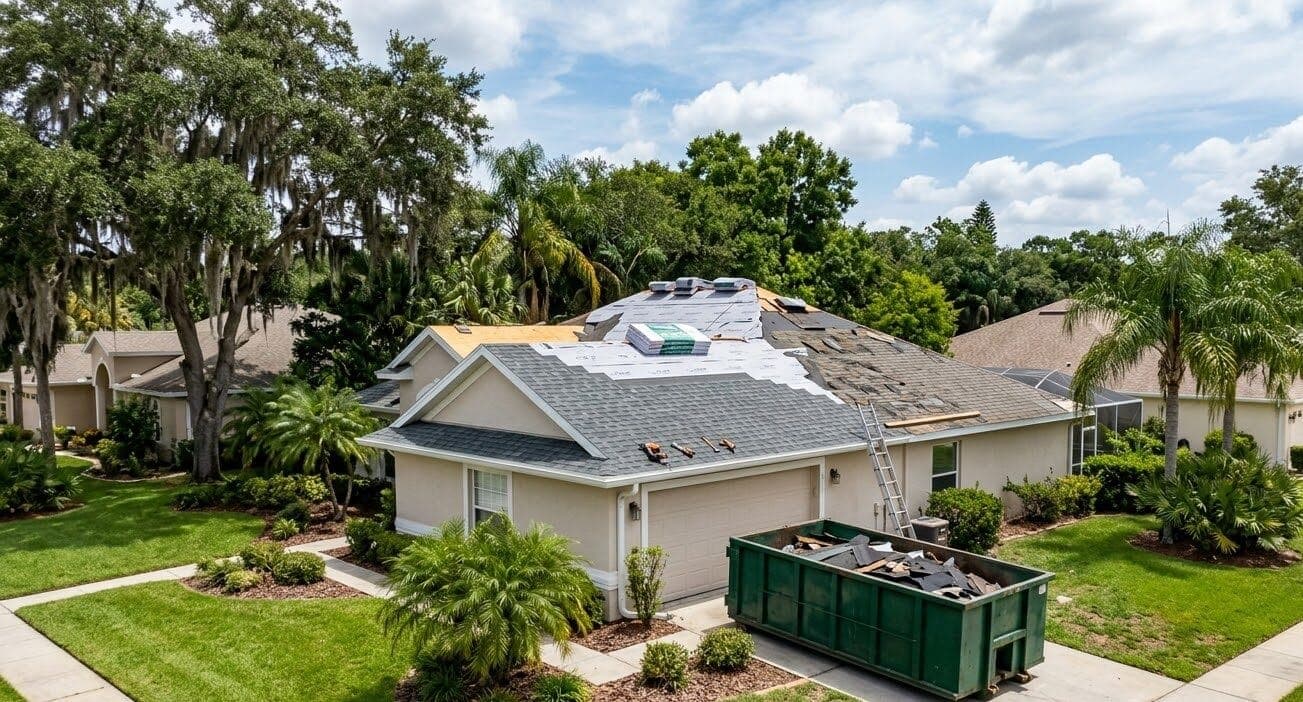
Skylights in Florida: Install, Leaks and Hurricane Ratings
A skylight is a deliberate hole in the one assembly built to keep water out. Florida code puts it through a 9 pound 2x4 at 34 mph and 9,000 pressure cycles. Here is what that means for specifying one, why they leak here, and what replacement runs in 2026.
Read Article
Gutters for Florida Homes: Seamless vs Sectional Guide
Seattle gets 38 inches of rain a year and runs 5-inch gutters. Tampa gets 52.6 and overflows, because 30 of those inches fall in four months and mostly in short bursts. Gutters are sized on inches per hour, not inches per year. Here is the sizing math, what seamless actually buys you, and the two spec lines that matter more than the word seamless in a hurricane state.
Read Article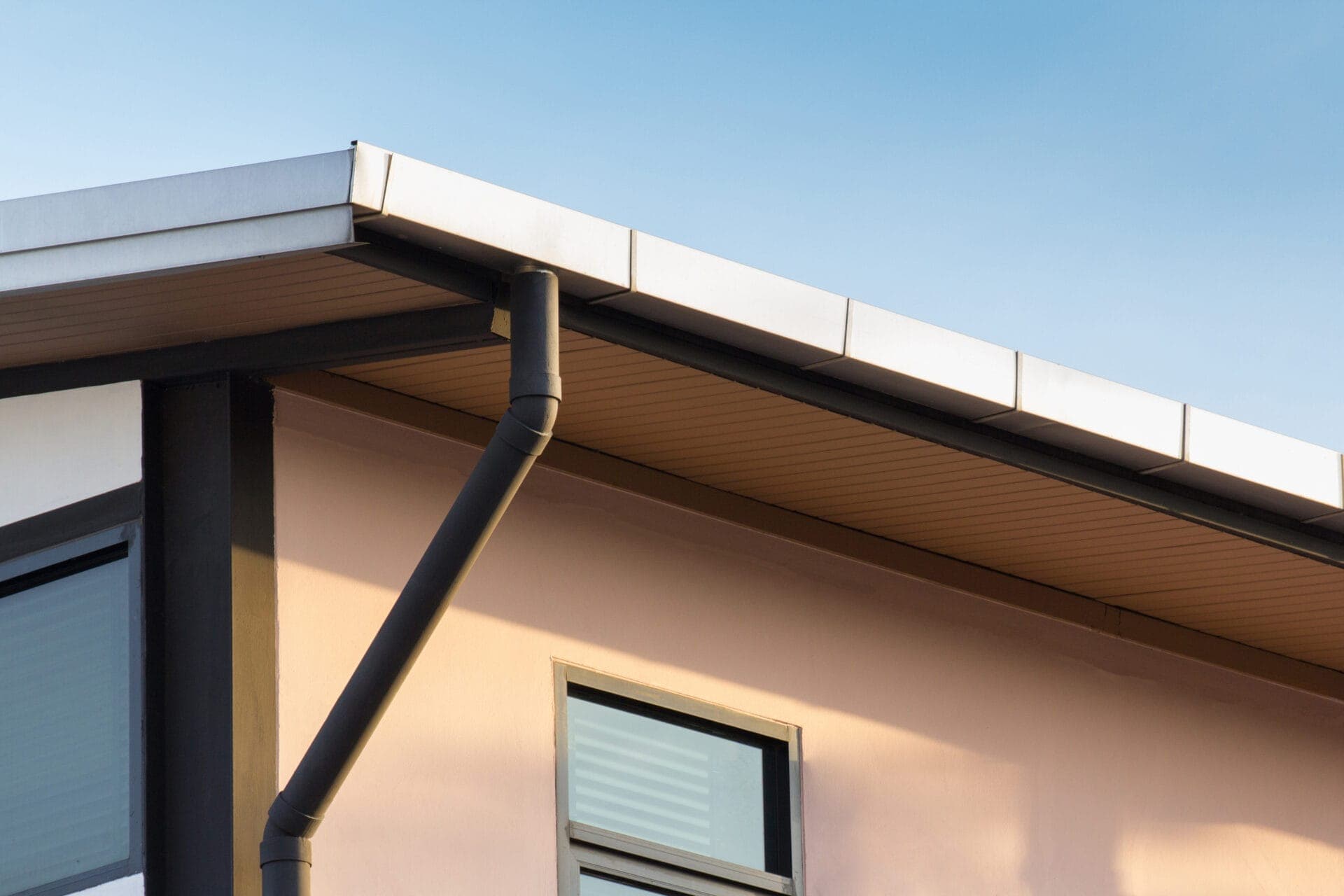
Box Gutter Solutions for Commercial Roofs in Central Florida
Complete guide to box gutter systems for commercial flat roofs in Central Florida. Types, materials, sizing for Florida rainfall, common problems, repair costs, and maintenance. Call (352) 605-0696.
Read ArticleReady When You Are
Get your free roof inspection today.
No-pressure, written estimate. Same-week scheduling across Hernando County. Call us now or request a visit online.