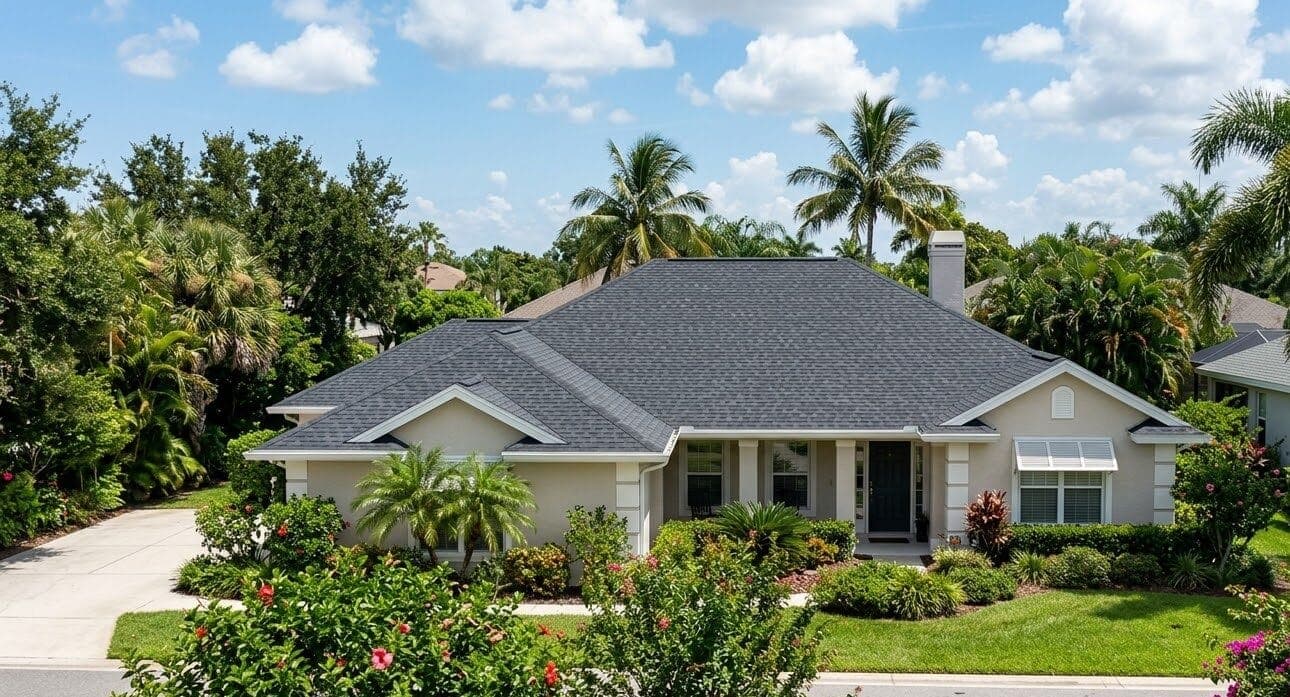
Citrus County, FL
Roofing in Hernando, FL, Citrus County
Roofing contractor for Hernando, FL in Citrus County. Repair, replacement, leak detection, storm claims, and county permits handled. Call (352) 605-0696.
Call (352) 605-0696Hernando, FL Is in Citrus County, Not Hernando County
If you searched for roofing in Hernando, some of your results were probably about Hernando County. Those are two different places. Hernando, Florida (ZIP code 34442) is a census-designated place in the northeast part of Citrus County. It used to be an incorporated city and stopped being one in the 1970s, so it has no city building department. Building permits, inspections, and code enforcement for a home in Hernando all come from Citrus County.
This is easy to get wrong. We'd rather you hear it from us than from a contractor who shows up with the wrong county's paperwork. Protech Roofing's headquarters is at 9035 Jayson Dr in Brooksville, and Brooksville is in Hernando County. That's a separate county with its own building office and its own rules. When we work on a roof in Hernando, FL, the permit comes from Citrus County, and we plan the job around that from the first visit.
Citrus County is part of the service area listed on our site, along with Hernando, Pasco, Sumter, Polk, Hillsborough, and Pinellas counties. Protech is rated 4.9 on Google. If you live a little farther out, we have separate pages for Inverness and Crystal River. This page covers Hernando itself: the homes here, the rules that apply to them, and what working with a roofing contractor in Hernando actually looks like.
Not sure which county your house is in? Check your property tax bill or your homestead exemption paperwork. If it says Citrus County, everything on this page applies to you. That one detail decides which office issues the permit, which inspectors come out, and whose records show what was done to your roof.
Who Lives in Hernando, and the Questions That Come With It
The 2020 Census counted 9,284 people living in 4,355 households in the Hernando census-designated place. The median age was 58.3, and 37.5 percent of residents were 65 or older. That makes Hernando older than most of Florida, and it shows in the conversations we have about roofs.
The questions are practical. Is the roof actually failing, or does it just look tired? Can it be repaired, or does it need to come off? What exactly am I paying for? Who deals with the county? Those are the right questions. A roofing company in Hernando should answer every one of them before asking you to sign anything.
We answer them with an inspection. We look at the roof covering, the flashing at walls, pipes, and vents, the decking wherever we can see it, and the attic if we can get into it. Then we explain what we found in plain language, show you the images, and put our recommendation in writing. If a repair will do the job, we say so. If the roof has worn to the point where repairs just put money into a failing system, we explain why and show you the evidence. You shouldn't have to take a roofer's word for the condition of your own house.
The census also counted 5,386 housing units, about a thousand more than there were households. In census terms, that gap means housing that wasn't anyone's usual home on census day, which includes seasonal homes and houses between owners. If your Hernando home sits empty part of the year, a slow leak can run for months before anyone sees a stain. Have the roof inspected before you leave and again when you come back. That's a simple way to find water on the roof before it shows up in the ceiling, the insulation, or the drywall.
Manufactured Homes Are a Big Part of Hernando's Housing
The American Community Survey for 2017 to 2021 counted about 3,607 single-family units and about 2,495 mobile or manufactured homes in the Hernando CDP. The median home value in that survey was $147,000. Those numbers are a few years old, but the picture still holds: manufactured homes make up a large share of the housing here, and many owners are weighing the cost of a roof against the value of the house under it.
A manufactured home roof is a different job from a site-built roof. Many manufactured homes have a low-pitch roof and a lighter roof structure, so the right fix depends on what's actually up there. On some homes, the answer is a repair at the seams and fasteners. On others, it's a reflective roof coating over a sound existing roof. On others still, it's a metal roofing system. A coating won't cure a roof with soft decking or water already in the structure, and we won't sell one as if it would. Coating over a wet roof only hides the problem for a while.
On any home, the approach is the same. We find out how the roof is built and where water is getting in, or is likely to. Then we recommend the option with the lowest total cost over the years you plan to stay. For someone who plans to keep the house for decades, that can point one way. For someone planning to sell in a few years, it can point another. We'll ask, because the answer changes the recommendation.
For site-built homes in Hernando, we install and repair shingle roofs, metal roofs, and stone coated steel tile, and we handle tile repairs on concrete and clay tile roofs. We won't tell you what most roofs in Hernando are made of, because we haven't seen a reliable count. We'll tell you what yours is made of and what shape it's in.
A House Built After 2000 Can Still Have a Pre-2009 Roof
A ZIP-level profile of 34442, based on 2023 American Community Survey data, puts about 57 percent of housing units in the ZIP as built in 2000 or later. About 25 percent were built in the 1980s and 1990s, about 16 percent in the 1960s and 1970s, and about 3 percent in the 1940s and 1950s. Those figures cover the whole ZIP code, not just the Hernando CDP, but they show the area has houses of every age.
When a roof gets damaged, the year your house was built isn't the number that matters most. What matters is when the roof was built or last replaced. Here's why.
Florida has a long-standing rule for roof repairs. When 25 percent or more of a roof section is repaired or replaced, the work can require bringing the whole roof system up to the current Florida Building Code. In 2022, Senate Bill 4-D added an exception in Florida Statute 553.844(5). If your existing roof was built, repaired, or replaced under the 2007 Florida Building Code or later, only the part being repaired has to meet the current code, even when the repair crosses 25 percent. Local governments can't change that exception by ordinance, and it applies to shingle, metal, and tile roofs alike.
The catch is the date. The 2007 code didn't take effect until March 1, 2009. A house built in 2003 or 2007 that still has its original roof was permitted under an older code, so that roof doesn't get the exception. Owners are often surprised by this, because a house from the 2000s feels new. Under the statute, its roof can still be treated as an older roof.
In practice, it plays out like this:
- Roof installed or replaced under the 2007 code or later. A large repair can stay a repair. Only the repaired area has to meet today's code.
- Roof installed before the 2007 code took effect. Repairing 25 percent or more of a section can require bringing the full system up to current code. In many cases, that makes replacement the more sensible choice.
- Not sure when the roof was done. The property's permit history usually answers it, and it's one of the first things worth checking.
That's why we don't quote a large storm repair over the phone. Whether your job is a roof repair or a total roof replacement can depend on a permit date from years ago. We'd rather find that out before writing the estimate than after the old roof is off.
The Citrus County Permit, Start to Final Inspection
Because Hernando is unincorporated, Citrus County issues the reroof permit. Protech pulls that permit for your job and sees the project through final inspection. That's included in the service. You don't have to arrange it, and you don't have to chase it after the crew leaves.
In general terms, here's what that involves. Florida reroof permits generally require proof that the contractor is licensed, which is one reason a proper permit ties your job to a licensed roofing contractor of record. Larger improvement projects in Florida may also call for a Notice of Commencement under Florida Statute 713.13. That's a recorded document that formally marks the start of the work. Forms, fees, and timing vary by jurisdiction, and we won't quote Citrus County's numbers on this page. We handle them on every job and tell you what applies to yours.
The permit gets your roof a second set of eyes. A county inspector checks the work against the code, and passing the final inspection closes the permit. A closed permit is the record that your roof was installed under permit and passed inspection. That record matters later: when you sell the house, when an insurer asks about the roof, and when a future repair falls under the 25 percent rule above, because the permit date shows which code your roof was built to.
No matter who you hire, watch for these warning signs:
- A contractor who asks you, the homeowner, to pull the permit yourself. That puts your name on the work and the responsibility on you.
- A contractor who says a full reroof doesn't need a permit.
- A contractor who can't tell you which county issues your permit. In Hernando, it's Citrus County.
If you ever want to know where your permit stands during a job, just ask us.
How to Check a Roofing Contractor's License in Florida
Roofing is a licensed trade in Florida, regulated by the Construction Industry Licensing Board under the Department of Business and Professional Regulation (DBPR). There are two kinds of roofing license. A certified roofing contractor can work anywhere in the state. A registered roofing contractor can only work in the local jurisdiction that issued the registration. Both are legitimate. What matters is that the license covers the place where your house is.
You can look up any contractor's license on the DBPR's public license search. Ask the roofer for the license number and look it up yourself. Check three things: the name on the license matches the company you're dealing with, the license is active, and it's a roofing license. Do the same with us. We'd rather you check than take our word for it.
Florida takes licensing seriously. Under Florida Statute 489.128, an unlicensed contractor can't enforce a contract it signed, and it loses the right to file a lien or a claim against a bond. The rule also applies to businesses that don't have a qualifying agent licensed for the scope of the work. The state wrote that rule to keep unlicensed work out of homes, and it shows how much licensing matters to the people who wrote the code.
This check matters even more after a storm. That's when out-of-area crews and door knockers show up, and when homeowners are most likely to sign quickly. A two-minute license lookup is the simplest protection you have, and it costs nothing.
Wind and Rain in Citrus County: What Recent Storms Showed
Hurricane season runs from June 1 through November 30. Two recent events show what Citrus County can get.
When Hurricane Idalia came ashore in August 2023, the National Weather Service office in Tampa Bay reported gusts of 60 to 70 mph in Citrus County, with a gust of 64 mph measured near Crystal River. Storm surge reached 7.01 feet above mean higher high water at the mouth of the Crystal River, and up to about 5.2 inches of rain fell near Inverness. Hernando is inland, and we haven't found a source that reports Idalia damage in Hernando specifically, so we won't claim any.
Two months later, on October 12, 2023, an EF-2 tornado hit Crystal River with winds the NWS estimated at 125 mph. That was a separate event from Idalia, and it didn't hit Hernando either. We mention both for one reason: severe wind has reached Citrus County more than once in recent years, and it doesn't only come with a named hurricane.
Water is the other half. In west central Florida, the rainy season runs from June through September, and lightning peaks in July. The heaviest rain usually falls from July into early September, then tapers off from mid-September into early October. A roof with a small flashing gap or a cracked pipe boot can stay dry all spring and start leaking in the first week of summer storms.
That's why we find the leak before we price the repair. Our leak detection starts with thermal imaging to spot suspect areas. Then we press moisture meters against the decking, insulation, and framing to measure what's actually wet. When needed, we run controlled water testing, with one technician on the roof and another watching from the attic. The images become part of your inspection record. A ceiling stain is often several feet from where the water gets in, and repairing the wrong spot is money spent for nothing.
The practical takeaway: get the roof looked at in spring, before the rainy season and hurricane season begin. A roof inspection in April or May gives you time to make repairs on your schedule instead of the weather's. If you'd rather not think about it every year, our regular maintenance service puts the roof on a routine.
Storm Claims, Wind Mitigation, and the My Safe Florida Home Grant
If a storm damages your roof, the first step is documenting the damage accurately. Protech provides storm damage inspections at no charge. We check shingles for wind lift and hail bruising, examine flashing around penetrations and in valleys, assess soffit and fascia for wind damage, and look in the attic for signs of water getting in. Many homeowners ask us to be there when the insurance adjuster comes. If we are, we point out every area documented in our inspection report so nothing gets missed. Our insurance claims assistance and storm damage restoration pages explain that work in more detail.
If the roof is leaking now, we can tarp it to stop the water while the claim moves forward. Our emergency roof repair page covers that.
Once a roof is replaced, we recommend scheduling a wind mitigation inspection right away. A new roof built to the current Florida Building Code will typically qualify for the highest available credits, and those credits can lower what you pay for wind coverage.
Then there's the My Safe Florida Home program. It offers a free wind mitigation inspection, and it can provide grant money for eligible hardening improvements. Those include secondary water resistance, better attachment of the roof deck, stronger roof-to-wall connections, and protection for openings. Published reports describe grants of up to $10,000, matched at $2 from the state for every $1 from the homeowner. To be eligible, the home has to be your homestead, the insured value has to fall under a cap (sources report different figures, with $500,000 the most often cited), and the home has to be in a wind-borne debris region. Funding depends on what the Legislature appropriates each year, and the program has reopened as new money arrived.
We won't tell you that you qualify or how much you'll get. Only the program can tell you that. Check eligibility and current funding on the program's official site. If you're approved, we can talk through which eligible roof improvements make sense for your house.
Every Roofing Service Available in Hernando, and How to Start
Protech is a full-service roofing contractor. In Hernando and the rest of Citrus County, that includes:
- Residential roofs: roof repair, total roof replacement, shingle roof installation, metal roofing systems, stone coated steel tile, tile repairs, and roof coating.
- Inspection and upkeep: roof inspection, regular maintenance, and leak detection and repair.
- Storms and insurance: emergency roof repair, storm damage restoration, insurance claims assistance, and help with the My Safe Florida Home program.
- Gutters: gutter installation, gutter cleaning, and gutter protection.
- Commercial and larger buildings: commercial roofing, commercial flat roofing, multi-family roofing, and new construction.
Getting started is simple. Call (352) 605-0696 and tell us where the house is and what you're seeing. We'll set up an inspection, walk the roof and the attic, and give you our findings and recommendation in writing. If you go ahead, we pull the Citrus County permit, do the work, and see the job through final inspection. At the end, you have a closed permit and a roof whose history you know.
Roofing By Area
Roofing services near Roofing in Hernando
FAQ
Frequently Asked Questions
Is Hernando, FL in Hernando County?
+
My house was built in 2005. Does the newer roof repair exception cover it?
+
Can a manufactured home in Hernando get a new roof or a roof coating?
+
How do I check that a roofer is licensed in Florida?
+
What happens after I call Protech about a roof in Hernando?
+
From the Blog
Stay informed about roofing in Florida.
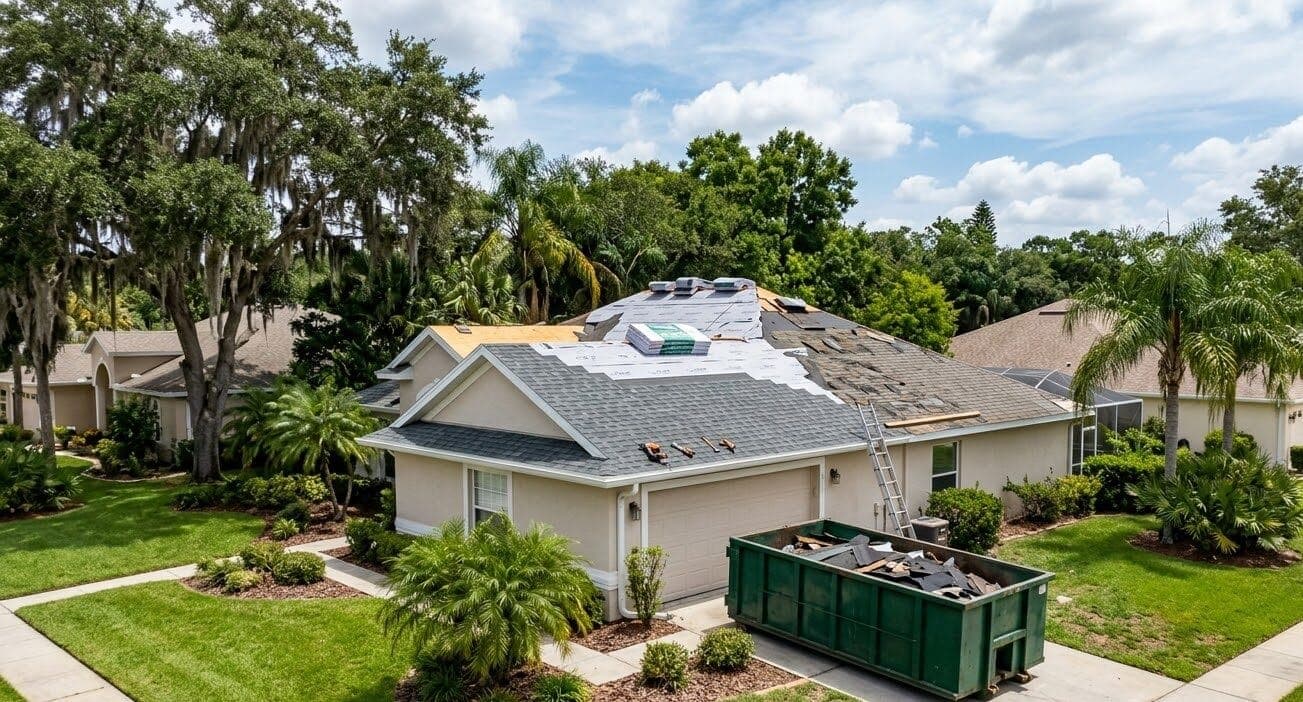
Commercial Roofing in Hernando County, FL: 2026 Systems & Cost Guide
2026 guide to commercial roofing in Hernando County. TPO, PVC, modified bitumen, metal, and built-up systems compared with real per-square-foot costs, lifespans, repair vs. replacement decisions, and the most common Florida failure points.
Read Article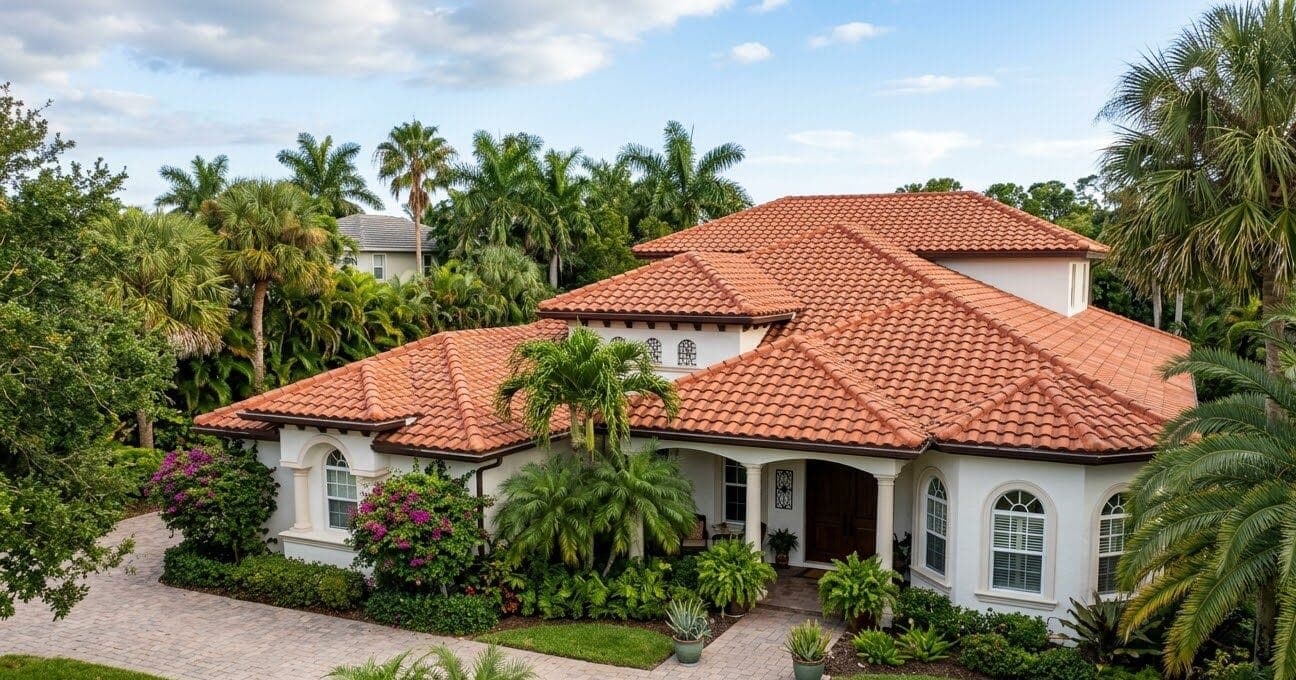
Do You Need a Permit for Roof Replacement in Hernando County, FL?
Yes, Hernando County requires a permit for roof replacement. Complete 2026 guide to what work needs a permit, costs, the 25 percent rule, inspections, and what happens if you skip it.
Read Article
What Hernando County Homeowners Say About Protech Roofing
Real reviews from homeowners in Hernando County who chose Protech Roofing for their roof replacement and repair projects in Brooksville and Spring Hill.
Read ArticleReady When You Are
Get your free roof inspection today.
No-pressure, written estimate. Same-week scheduling across Hernando County. Call us now or request a visit online.