
Clearwater, FL
Gutter Protection in Clearwater, FL
Gutter protection in Clearwater, FL. Micro-mesh and reverse curve guards for salt-coast homes. Call (352) 605-0696.
Call (352) 605-0696Gutter protection in Clearwater, FL is where homeowners burn the most money on the wrong product. Cheap big-box gutter guards installed on a Clearwater Beach or Island Estates home corrode out within three years. The same guards on a Harbor Oaks tile roof can fail historic preservation review and have to come back off. Protech Roofing installs salt-rated stainless and marine-grade guard systems across Clearwater Beach, Sand Key, Island Estates, Harbor Oaks, Morningside, Skycrest, Oak Grove, and Countryside out of our Brooksville headquarters. Call (352) 605-0696 for a guard system that actually survives the coast.
You Are Viewing
Gutter Protection for homeowners and businesses in Clearwater, part of Pinellas County, FL, Florida.
Why Cheap Gutter Guards Fail Fast on Clearwater's Barrier Island Coast
Gutter protection in Clearwater, FL has a brutal failure pattern on the barrier islands, and it's the same story we've heard from dozens of Clearwater Beach, Island Estates, and Sand Key homeowners. They bought a guard system from a big-box install crew, sometimes paid $4,000 to $8,000 for the job, and watched the product corrode, warp, or detach inside three years. The product itself wasn't wrong for every market. It was wrong for the barrier island. Salt chemistry is unforgiving.
The most common failures we see on cheap Clearwater barrier-island guards. First, galvanized steel mesh corrodes through within 18 to 36 months in salt air. The original galvanized coating protects steel for years in dry inland air. In Clearwater Beach salt deposits, it fails fast and the mesh starts shedding rust into the gutter below, which then bonds with organic debris into a hardened crust that's harder to remove than the original leaves the guard was supposed to keep out. Second, low-grade aluminum frames warp from the heat-and-cool cycle when they were spec'd for a milder climate. Third, plastic foam inserts compress and disintegrate from constant UV exposure (no amount of UV stabilizer in cheap foam survives Clearwater summers).
Fourth, and this one bites the most, the fasteners. Guards installed with galvanized screws on aluminum gutters in salt air create galvanic corrosion between the dissimilar metals. The screw head corrodes, the surrounding aluminum pits, and the guard pulls loose in the next thunderstorm. We've removed entire guard systems from Island Estates and Clearwater Beach properties where the only thing wrong was the fastener choice, but the resulting damage to the gutter underneath required full replacement.
Mainland Clearwater (Skycrest, Morningside, Oak Grove, Countryside) escapes most of these failure modes because the salt load is lower and standard aluminum or galvanized guards perform reasonably. But the oak debris problem on the mainland creates its own failure pattern that we'll cover below. Different zones, different failures, different right answer.
Micro-Mesh vs Reverse Curve vs Foam for Clearwater Homes
There are three families of gutter guards on the residential market, and they perform very differently in Clearwater's climate. We install all three depending on the property, and we walk every customer through the tradeoffs so the choice fits the home and not the marketing.
Micro-mesh systems use stainless steel mesh with hole sizes around 50 microns, fine enough to block oak catkins, pine needles, shingle granules, and most fine debris. The mesh sits over a frame that mounts to the gutter or attaches to the roof drip edge. Micro-mesh is the right answer on most mainland Clearwater oak-canopy properties (Harbor Oaks, Morningside, Skycrest, Oak Grove) because the fine mesh actually stops the catkin felt that defeats coarser guards. The trade-off is cost (micro-mesh runs $8 to $14 per linear foot installed) and maintenance reality (the mesh surface can develop a pollen film that needs periodic rinsing). On barrier-island Clearwater addresses we specifically install 316-grade stainless micro-mesh, not 304, because 316 contains molybdenum that resists chloride pitting. 304 stainless will pit and rust in salt air. We've seen it happen.
Reverse curve systems use a solid covered surface with a curved nose that lets water cling around the lip into the gutter while debris bounces off and falls to the ground. The original design (LeafGuard, Gutter Helmet, etc.) works on architectural shingle roofs with moderate debris loads. Reverse curve guards struggle in heavy oak canopy because the catkin felt sticks to the curved surface and bypasses the design. On Clearwater they're a fit for some Countryside and Sand Key contemporary homes with limited canopy and standard shingle roofs. Cost runs $9 to $16 per linear foot installed.
Foam inserts (the cheapest option, often sold at big-box stores) drop into the gutter channel and let water filter through while leaves sit on top. We don't recommend foam guards anywhere in Clearwater. Foam absorbs water, retains organic material, attracts mosquitoes and ants, and disintegrates from UV and heat within two to three years. The bargain is illusory because removal and gutter cleaning after foam failure costs more than the foam saved. If a homeowner has foam guards already installed, we remove them as part of any new guard install and we credit the labor.
Stainless and Marine-Grade Guard Materials for Salt-Air Survival
Material spec on Clearwater Beach, Island Estates, Sand Key, and waterfront Harbor Oaks guard installs is non-negotiable. Standard products that work in Brooksville don't survive on a barrier-island address, and we've replaced enough failed installs to know exactly what does work. The right spec is 316-grade stainless steel mesh, marine-grade anodized aluminum frame, and stainless or copper fasteners. Anything less is a 3-year guarantee of corrosion.
316 stainless mesh contains roughly 2 to 3 percent molybdenum, which dramatically improves chloride resistance compared to 304 stainless. The cost difference between 304 and 316 mesh is modest at the manufacturer level. The performance difference on the Clearwater coast is years of service life. We require 316 on every barrier-island install and on waterfront Harbor Oaks properties along the Intracoastal. Mainland Skycrest, Morningside, Oak Grove, and Countryside addresses can run 304 because the salt load is low enough that the molybdenum upgrade isn't needed.
Marine-grade anodized aluminum frame holds up to salt exposure for decades when the anodizing layer is intact. We specifically check the anodizing on every guard product we quote, because some manufacturers use thin anodizing that wears through at the fastener points and exposes the aluminum to chloride attack. Frames with thicker anodizing layers (Type II or Type III hard anodizing) carry the chloride resistance the coast demands. We document the anodizing spec on every barrier-island install.
Fastener choice on barrier-island guards is stainless steel or copper, never galvanized. Galvanic corrosion between dissimilar metals in salt air is the silent killer of guard systems. A stainless mesh attached with galvanized screws fails at the screws, not the mesh. We've removed otherwise-good guard systems from Clearwater Beach properties where the only fault was the fastener spec. The replacement install with stainless fasteners costs the same as the original, and it actually lasts.
Hurricane Wind Survival of Guards in Clearwater's 150 mph Beach Zones
Clearwater's wind picture splits between 130 mph mainland and 150 mph barrier-island design speeds under the Florida Building Code 8th Edition 2023. That difference matters on gutter guard selection because the lighter, edge-mounted guard systems that survive 130 mph thunderstorms in Skycrest can lift off and become projectiles in 150 mph hurricane winds on Clearwater Beach. We've watched it happen during named-storm cleanups.
For 130 mph mainland Clearwater installs, most micro-mesh and reverse curve guards rated for residential use perform adequately if they're installed with proper fastener density. We tighten fastener spacing on Skycrest, Morningside, and Oak Grove installs to roughly one fastener every 12 to 16 inches along the back edge of the guard, which exceeds most manufacturer minimums and adds wind resistance. The lid-style guards that snap into the gutter without screws are not our recommendation on any Clearwater install because they have no positive attachment to resist wind uplift.
For 150 mph barrier-island installs on Clearwater Beach, Island Estates, and Sand Key, we move to guard systems specifically rated for high-velocity hurricane zones with documented wind testing. We tighten fastener spacing to 8 to 12 inches, switch to stainless or copper screws, and add edge sealant along the front lip of the guard where wind-driven rain could otherwise drive between the guard and the gutter. We document every install with photos so the homeowner has evidence the guard meets code if a carrier asks during a claim.
Milton on October 9, 2024 was the test. We had multiple Clearwater Beach and Island Estates properties with guards we'd installed in the previous two years, and every one of those installs survived the storm intact. We had service calls from homeowners who'd bought cheaper guards elsewhere and whose systems peeled off during the eyewall. The wind test is real, and the spec sheet matters when the 150 mph zone shows up at your front door.
Gutter Protection on Super Gutter Birdcage Systems in Clearwater
Countryside super gutters on birdcage lanais are a unique gutter protection problem in Clearwater. The channel is wider, the debris load is heavier, and traditional micro-mesh guards designed for standard 5-inch K-style gutters don't fit the geometry of a 7 to 8-inch super gutter. We've seen plenty of failed attempts where a contractor cut standard guards to fit and ended up with gaps, lifted edges, and a system that worked worse than no guard at all.
The right answer on super gutter protection in Clearwater is purpose-built super gutter guards designed for the wider channel. These systems use a heavier-gauge frame, larger mesh panels, and specific bracket spacing matched to the .040-gauge aluminum super gutter underneath. We install them with stainless fasteners regardless of the address because the super gutter sits over the cage frame and any fastener failure drops debris into the cage. The cost runs $11 to $18 per linear foot of super gutter, which is higher than standard gutter guard pricing but reflects the specialized material.
The honest tradeoff on super gutter protection. Even with the right guard, a Countryside super gutter still needs more frequent maintenance than a standard gutter because the cage roof itself accumulates debris that washes into the channel during rain. We tell homeowners to expect twice-annual guard surface rinsing on top of an annual gutter cleaning. Guards reduce the cleaning frequency but they don't eliminate it. Anyone who tells you otherwise is selling something.
On Countryside birdcages where the homeowner is balancing cost against maintenance reduction, we sometimes recommend guards on the house-side super gutter run only, and standard cleanings on any cage-edge gutters that don't see the same debris load. That split approach saves money where it makes sense and concentrates the guard investment where the payoff is highest. We walk through the options on the estimate visit and let the homeowner decide.
Harbor Oaks Historic Review for Visible Gutter Guards
Harbor Oaks is on the National Register as a historic district, and the Clearwater Historic Preservation Board reviews scope that changes visible exterior features. Gutter guards typically fall under that review because they're visible from the street on most Harbor Oaks homes, particularly the 1920s Mediterranean-Revival houses with prominent tile rooflines along Druid Road and Magnolia Drive. Skipping the preservation board review and installing first is a mistake that's ended with guards being torn off at the homeowner's expense.
We coordinate the preservation board paperwork as part of any Harbor Oaks guard install. The submittal package includes elevation photos showing the current condition, product spec sheets for the proposed guard system, color samples for any visible components, and a written description of the install method. The board typically wants guards that are as close to invisible from the street as possible, which usually means low-profile micro-mesh systems with bronze or copper frames rather than the brighter aluminum finishes you'd see on a new tract home. Approval timelines run 30 to 60 days on most submissions.
On waterfront Harbor Oaks properties along the Intracoastal we layer the salt protocol on top of the historic preservation protocol. The guard has to be 316-grade stainless with marine-grade frame, stainless fasteners, and a finish that satisfies the preservation board's aesthetic requirements. Copper guards are sometimes the right answer on these addresses because copper meets both the chloride resistance requirement and the historic appearance standards. Cost is higher than standard installs, but the alternative (an install that fails preservation review and has to come back off) is more expensive in the end.
Other Clearwater HOAs (Island Estates, Countryside, Coachman Ridge, Sand Key) have their own design guidelines that govern visible guard installations. Most allow standard micro-mesh in pre-approved finishes (typically white or bronze) without formal review, but copper or unusual colors typically need board approval. We pull the HOA guidelines for every install and we know which neighborhoods need paperwork and which don't. The lead time on HOA-approved installs is longer than walk-up jobs, and we plan accordingly.
The Maintenance Reality of Gutter Guards in Clearwater
Here's the honest truth about gutter protection in Clearwater that the marketing brochures won't tell you. There is no such thing as a maintenance-free gutter guard. Every guard system on the market needs periodic attention, and the Clearwater climate (oak catkins on the mainland, salt crust on the barrier islands, hurricane debris everywhere) means even the best guards still need work. The question isn't whether you'll maintain your guards. It's how often, and what kind of work, and what the savings look like compared to cleaning the unprotected gutters underneath.
On a typical mainland Clearwater oak-canopy property with high-quality micro-mesh guards properly installed, we see the cleaning frequency drop from three or four full-channel cleanings per year to one or two surface rinses per year. The surface rinse is faster and cheaper than a full cleaning because we're not pulling debris out of the channel, just clearing the mesh surface. The annual maintenance savings typically run 50 to 70 percent compared to unprotected gutter cleaning. Over the life of the guard system, that adds up to meaningful money, especially on multi-story Harbor Oaks or Morningside homes where the cleaning labor is heavier.
On barrier-island Clearwater properties with proper 316-grade stainless guards, the maintenance reality is different. We still recommend annual surface rinsing to clear salt crust from the mesh, and we still do periodic channel checks because some debris does make it through. The annual maintenance cost drop is smaller (typically 30 to 50 percent) but the gutter protection benefit is higher because the consequences of clogged barrier-island gutters during a storm are worse than on the mainland. The salt protection that comes from keeping debris out of the channel also extends gutter life by 5 to 10 years compared to unprotected installs, which is real money on a $4,000 to $7,000 gutter system.
The Countryside super gutter math is its own calculation, and we walk through it on every estimate. The guard system costs more upfront, the maintenance savings are real but modest, and the primary benefit is preventing the cage flooding that an uncovered super gutter creates. If you've ever watched water cascade into your lanai during a thunderstorm and stayed up all night with a wet shop vac, you already know what that's worth. We don't oversell guards, we don't undersell them, and we tell every customer the realistic expected service life and maintenance schedule before they sign. Honest pricing, honest tradeoffs, and a system that actually survives the climate it's installed in. That's the standard.
More in this area
Other roofing services in Clearwater
FAQ
Frequently Asked Questions
Will gutter guards eliminate gutter cleaning on my Clearwater home?
+
What gutter guard material survives Clearwater Beach and Island Estates salt air?
+
Can gutter guards survive a 150 mph hurricane in Clearwater?
+
Do I need historic preservation board approval for gutter guards on a Harbor Oaks home?
+
How much do gutter guards cost on a Clearwater home?
+
From the Blog
Stay informed about roofing in Florida.

Gutters for Florida Homes: Seamless vs Sectional Guide
Seattle gets 38 inches of rain a year and runs 5-inch gutters. Tampa gets 52.6 and overflows, because 30 of those inches fall in four months and mostly in short bursts. Gutters are sized on inches per hour, not inches per year. Here is the sizing math, what seamless actually buys you, and the two spec lines that matter more than the word seamless in a hurricane state.
Read Article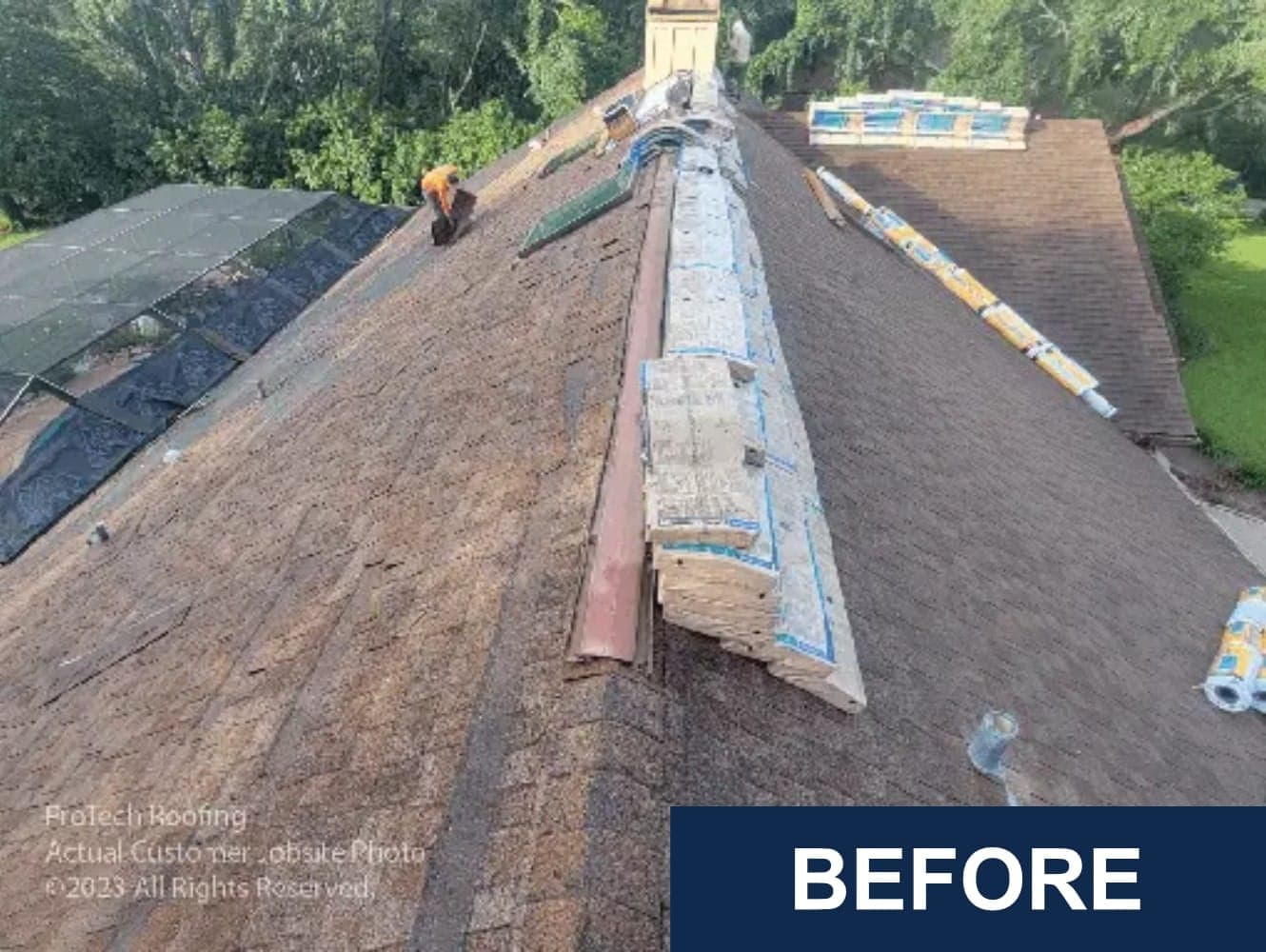
The Ultimate Guide to Roofing in Clearwater, FL (2026)
2026 guide to roofing in Clearwater, FL: coastal salt and wind, costs, condo and HOA rules, insurance, and how to choose a local contractor.
Read Article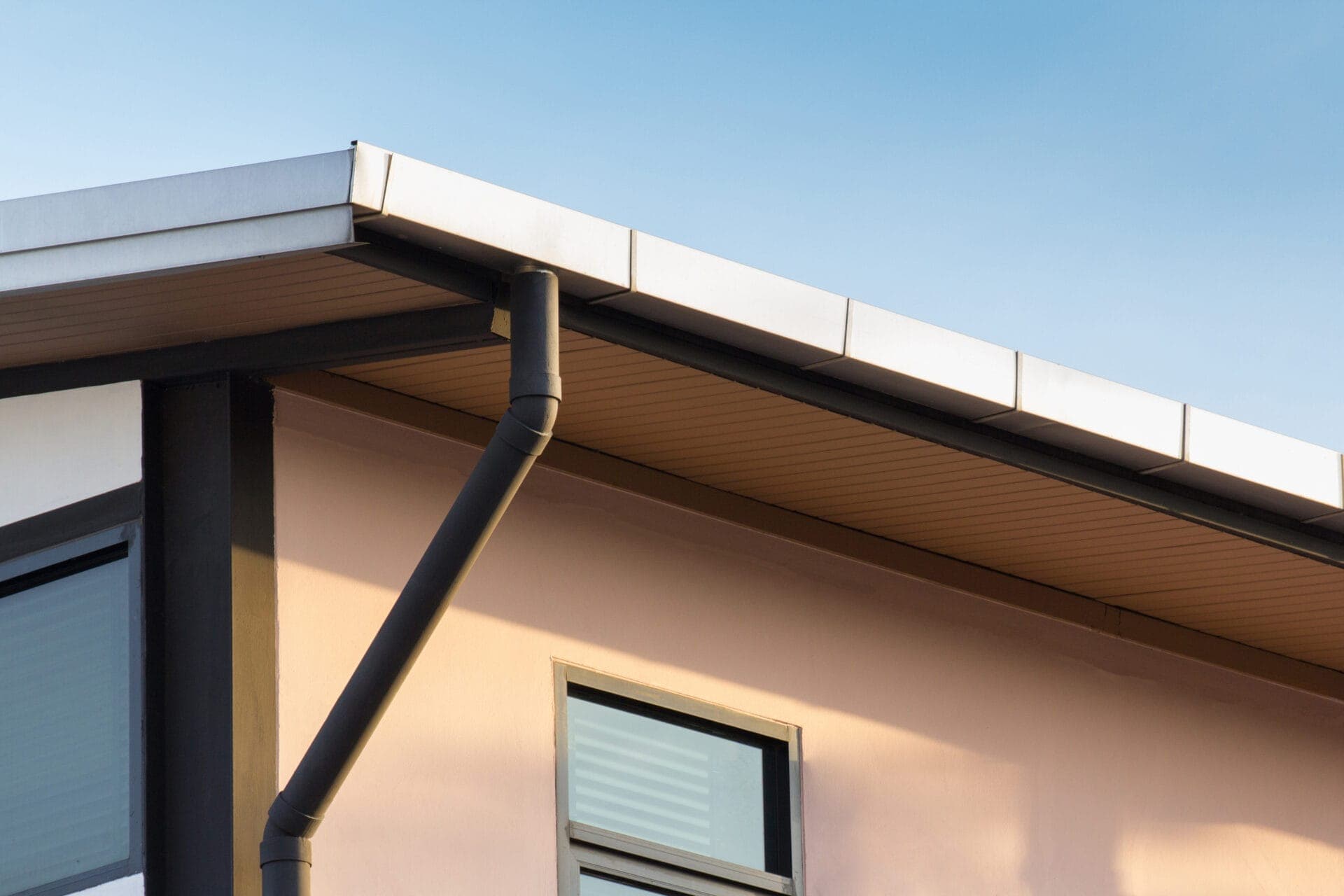
Box Gutter Solutions for Commercial Roofs in Central Florida
Complete guide to box gutter systems for commercial flat roofs in Central Florida. Types, materials, sizing for Florida rainfall, common problems, repair costs, and maintenance. Call (352) 605-0696.
Read ArticleReady When You Are
Get your free roof inspection today.
No-pressure, written estimate. Same-week scheduling across Hernando County. Call us now or request a visit online.