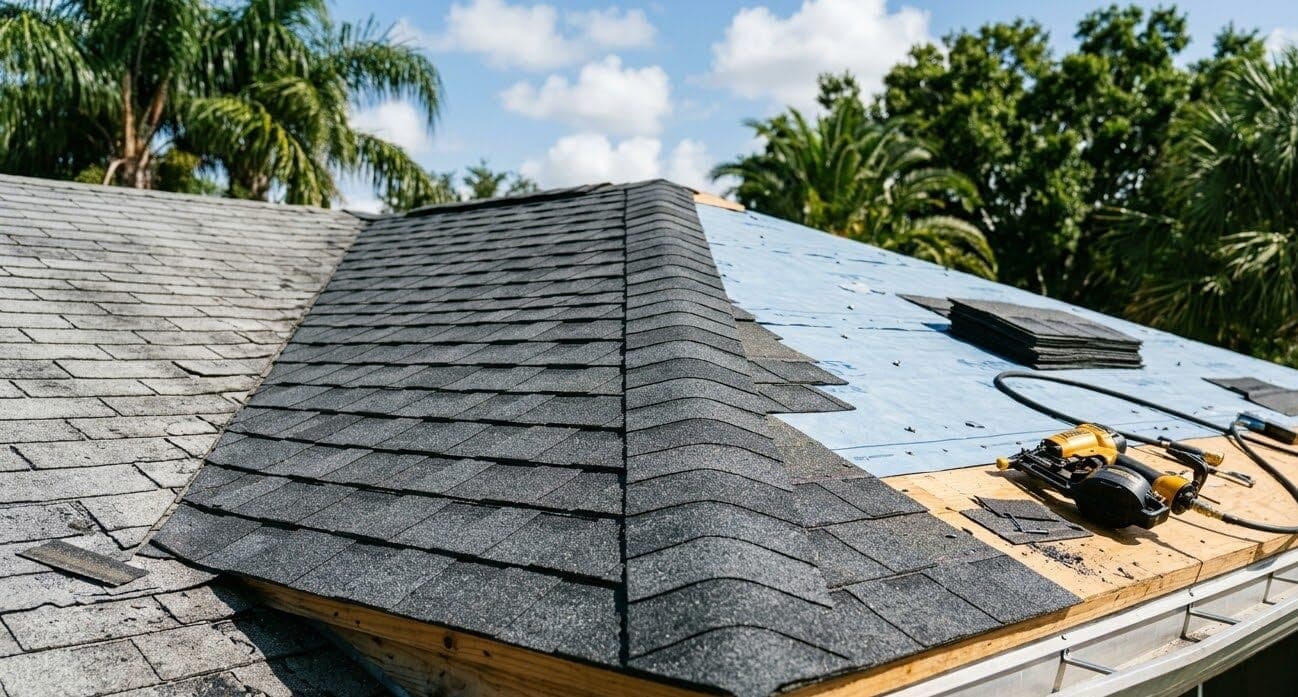
Citrus County, FL
Roofing Services in Homosassa, FL
Homosassa roofing contractor for repair, replacement, leak detection and storm damage. Citrus County permits handled. Call (352) 605-0696.
Call (352) 605-0696What the Nature Coast Climate Does to a Homosassa Roof
Roofs in Homosassa do not fail the way roofs fail in a dry climate. They fail from water, wind and salt, usually in that order, and usually over years rather than in one night.
The National Weather Service office in Tampa Bay, which covers Citrus County, defines the west central Florida rainy season as roughly May 25 through October 10. That is about four and a half months of near daily afternoon storm activity. A roof that has a small opening in April will have been rained on hundreds of times by October. This is why so many leaks in Homosassa get reported in late summer even though the actual defect started much earlier. The water finally found a path through the underlayment, ran along a rafter and showed up on a ceiling twelve feet from the real entry point.
Overlapping that is the Atlantic hurricane season, June 1 through November 30, with peak activity from mid August to mid October according to the National Hurricane Center. Peak season lands directly on top of the wettest part of the rainy season. A roof that is already saturated and already moving is the roof that takes the tropical wind.
Then there is the salt. Homosassa is a coastal community with canals, river frontage and open water to the west. Salt air does not attack shingles the way it attacks metal. It attacks the parts nobody looks at: fasteners, drip edge, valley metal, flashing at chimneys and plumbing boots, gutter hangers and the screws holding everything down. We regularly find roofs where the covering still looks acceptable from the street and the metal underneath it has lost its coating.
None of this is a reason to panic about your roof. It is a reason to have somebody look at the parts of it you cannot see from the ground, and to have that person be a licensed roofer rather than a handyman with a ladder.
Homosassa Housing Stock Is Mostly 1980s, and That Changes the Conversation
The median year of construction for homes in Homosassa is reported as 1985 by Census Reporter, using Census and American Community Survey data, and 1988 by Data USA. Either figure tells you the same thing: this is a community built largely in the 1980s.
That matters for a specific reason. A home from that era has almost certainly been re roofed at least once, and possibly twice, since it was built. So when we inspect a roof in Homosassa, the question is rarely "is this the original roof." The question is "who did the last one, what did they do underneath, and what did they leave."
What we look for on that kind of roof:
- Layers. Whether a previous crew tore off or went over the top of the old covering, which affects fastener holding power and what has to happen on the next replacement.
- Deck condition. Older plywood and board decking that has been wet repeatedly loses the ability to hold a nail, and a nail that does not hold is a shingle that lifts in the next storm.
- Fastening at the deck. How the sheathing itself is attached to the framing, which is one of the things a wind mitigation inspection reports on.
- Flashing details. Chimneys, skylights, wall to roof transitions and plumbing penetrations, which is where the majority of leaks we chase actually start.
- Ventilation. Undersized or blocked ventilation cooks a roof from the inside and shortens the life of everything above it.
Our roof inspection evaluates the condition of the shingles or tiles, the integrity of the underlayment, the condition of flashing at every penetration point, the health of the decking and the effectiveness of the ventilation system. On a house built in the 1980s, that last item is often the cheapest thing to fix and the one with the biggest effect on how long the next roof lasts.
How Roofing Permits and Inspections Work in Citrus County
Citrus County is not Hernando County. Different building division, different paperwork, different sequence. If you are calling roofers who mostly work in Spring Hill or Tampa, ask them directly how the Citrus County re roof process works, because the answer tells you whether they have actually done it.
The Citrus County Building Division requires a permit for re roofing. The process uses a Re Roofing Affidavit that has to be signed and notarized after the inspection of sheathing, fasteners and covering. Along with that, the county expects a Notice of Completion, product approval documentation for the materials installed, and photographs submitted through the contractor portal.
Read that again, because it is the part homeowners get surprised by. The affidavit is notarized after the sheathing, fastener and covering inspection, not before the job starts. That sequencing means the paperwork and the field work are tied together. A crew that installs first and worries about documentation later creates a problem that shows up at closing, at your insurance renewal, or the day you try to sell the house with an open permit on the property.
Protech pulls the permit for the job and conducts the final inspection. That is part of the service, not something we hand back to you with a phone number for the county. On our commercial work we handle the entire permitting and inspection process, and permit fees, plan preparation and inspection coordination are included in our project pricing. We do the same thing on residential: we pull the permits, schedule the inspections and see the project through final inspection.
Product approval is worth one more sentence. Florida requires that the specific assembly you install be approved for use. That is not a formality you satisfy by naming a brand. It is documentation tied to the actual system, and it becomes part of your permit record. When we write a proposal, the materials named in it are the materials that go on the approval paperwork.
Roof Repair, Leak Detection and Storm Damage in Homosassa
Most Homosassa calls start the same way. A stain on the ceiling, a drip during a hard afternoon storm, or a neighbor mentioning that shingles came off after a windy night.
The hard part of a leak is almost never fixing it. The hard part is finding it. Water enters at one point, travels along whatever surface is available, and appears somewhere else entirely. Guessing at the entry point and sealing the general area is how a roof gets "repaired" three times for the same leak.
Our leak detection and repair process starts with an on site inspection and a thorough visual examination of the roof. We inspect the attic where accessible, looking for daylight penetration, water staining on decking and moisture in insulation. After a thermal scan identifies suspect areas, we press a moisture meter directly against decking, insulation and framing to get precise moisture content readings. When thermal imaging and moisture meters point to a general zone but we need to confirm the exact penetration point, we spray water on specific areas of the roof in a systematic pattern while a second technician monitors the attic from inside. Those images become part of your permanent inspection record.
For active storm situations we handle emergency roof repair, including tarping to stop the water while the real scope gets determined. After the emergency work, one of our project managers conducts a full roof inspection and builds a detailed repair scope from what that inspection finds.
For wind and storm events, storm damage restoration covers the whole assembly rather than the obvious missing shingles. We check shingles for wind lift and hail bruising, examine flashing around penetrations and valleys, assess soffit and fascia for wind damage, and look for signs of water intrusion in the attic space. In a coastal community, soffit and fascia damage is frequently the real story and the shingles are the distraction.
Roof Replacement and the Systems We Install
When a Homosassa roof reaches the end of its service life, the material decision is worth more thought than most homeowners give it, because the salt environment changes the math.
Shingle roof installation remains the most common choice and works well here when the underlayment, the fastening pattern and the metal details are specified for a coastal exposure rather than treated as generic. The shingle is rarely what fails first on this coast. The details around it are.
Metal roofing systems come up constantly in conversations near the water, for good reason, and the specification conversation matters even more than with shingles. Panel type, fastening method and the coating system all behave differently within reach of salt air.
Stone coated steel tile is worth knowing about if you want the appearance of tile with a steel substrate. For existing tile roofs, tile repairs address broken or slipped tiles and, more importantly, the underlayment beneath them, which is the actual waterproofing layer on a tile roof and the thing that ages out first.
For full tear off and rebuild, total roof replacement covers the sequence from tear off through deck repair, underlayment, covering and final inspection. If your home is new construction or an addition, new construction roofing handles the roof as part of the build.
Commercial buildings in Homosassa get a different conversation. For flat and low slope assemblies, our recommendation for most commercial buildings in Central Florida is TPO for general use and PVC for restaurants, chemical environments, or owners who want the longest possible warranty. See commercial flat roofing and commercial roofing for how those projects run. We provide detailed written proposals that break out every cost component: tear off and disposal, deck repairs, insulation, membrane, flashings, drainage modifications, permits and warranty. Apartment and multi building properties fall under multi family roofing.
Whichever system you choose, the proposal names the materials, the attachment method and the scope. If a roofing proposal in Citrus County does not tell you what is going on your deck, it is not a proposal, it is a price.
Roof Age, Insurance and What Florida Law Actually Says
Homosassa homeowners get insurance letters about roof age more than almost any other roofing topic, and there is a lot of bad information circulating about what an insurer can and cannot do.
Florida Statute 627.7011 sets the rule. An insurer may not refuse to issue or refuse to renew a homeowners policy solely because of the age of the roof when that roof is less than 15 years old. For a roof 15 years or older, the policyholder may request an inspection at their own expense, and if that inspection indicates the roof has five years or more of remaining useful life, the insurer may not refuse to issue or refuse to renew solely because of roof age.
That statute is the single most useful thing a Homosassa homeowner with a 1980s house and a mid life roof can know. An inspection is not just a maintenance step. It can be the document that keeps a policy in place.
When there is actual storm damage, insurance claims assistance is part of what we do. We provide the storm damage assessment inspection at no charge, because an accurate picture of the damage from day one changes how the rest of the claim goes. Many customers ask us to be present during the adjuster inspection, and when Protech meets the adjuster at your property, we point out every area of concern documented in our inspection report so nothing gets overlooked.
One more step people skip. After we complete a roof replacement, we recommend scheduling a wind mitigation inspection right away, because a new roof built to current Florida Building Code standards will typically qualify for the highest available credits. The roof is already paid for. The credits are the part you have to go ask for.
My Safe Florida Home: The Real Eligibility Rules
The state My Safe Florida Home program offers a free wind mitigation inspection and a grant of up to $10,000 for improvements that harden a home against wind, roofing included. It is a real program and it is worth checking, but the eligibility rules are specific and a lot of Homosassa homeowners assume they qualify when they do not, or assume they do not when they would.
The requirements are: a homestead exemption on the property, a site built home permitted before January 1, 2008, an insured value of up to $700,000, and household income up to 120 percent of the county median.
Read those against Homosassa for a moment. A housing stock centered on the 1980s means the permit date requirement is satisfied for a large share of homes here. The two conditions that most often decide the answer are the homestead exemption and the site built requirement.
Our My Safe Florida Home page walks through the program in more detail. If you are within reach of it, this is worth resolving before you commit to a roof scope, because the program is built around specific wind hardening improvements and it is easier to plan them into a project than to add them afterward.
Sugarmill Woods, HOA Approval and Water Management
Homosassa includes Sugarmill Woods, a large planned development divided into villages such as Oak Village, which are deed restricted communities with an Architectural Control Committee responsible for approving alterations, including roofing questions.
If your home is in one of those villages, the practical consequence is a step before the roofing step. Approval from the HOA or ACC may be required before a roof is replaced or its appearance changed. We cannot tell you what the committee will approve, and we will not pretend to know their material or color rules. What we can tell you is to start that conversation early, because the approval process runs on its own schedule and it does not care that your roof is leaking.
This applies to those deed restricted villages, not to all of Homosassa. Plenty of homes here have no such requirement.
The other Homosassa specific issue is water on the ground, not just water on the roof. FEMA high risk flood zones in Citrus County are concentrated near Crystal River, Homosassa, Ozello and the Withlacoochee and Rainbow river areas, and FEMA has published updated Flood Insurance Rate Maps for Citrus County that expanded the areas classified as high flood risk compared to the previous maps.
Your roof is not going to stop a flood. What it can do is stop making the situation worse by dumping every inch of rainfall directly against your foundation. That is what gutter installation is actually for. We design the system, then present it with a detailed written estimate that breaks down every component. Gutter protection matters here because heavy tree cover fills gutters fast, and gutter cleaning keeps a working system working. We recommend a professional gutter inspection at least once per year.
How to Choose a Roofer in Homosassa
Start with the license, and understand why. Under Chapter 489 of the Florida Statutes, any person or company that installs, repairs, replaces or maintains a roof in Florida must hold a state roofing contractor license, either Certified (CCC) or Registered (CRC). There is no minimum job value that exempts the work. A small repair requires the same license as a full replacement. You can verify any contractor through DBPR at myfloridalicense.com, and it takes about a minute.
After the license, the questions worth asking are the ones that separate roofers who work in Citrus County from roofers who occasionally drive through it:
- Who pulls the permit, you or me? The correct answer is the contractor.
- Walk me through the Citrus County re roof affidavit. If the sheathing, fastener and covering inspection and the notarized affidavit are news to them, keep looking.
- What goes on the deck under the covering, by name?
- What happens if you open the roof and find bad decking, and how is that priced?
- Who closes the permit at the end?
Protech Roofing Services is based at 9035 Jayson Drive in Brooksville and works across Hernando, Citrus, Pasco, Sumter, Polk, Hillsborough and Pinellas counties, which means we know the requirements and inspection practices of each county building department rather than treating them as interchangeable. We are rated 4.9 on Google. We also serve nearby Inverness on the other side of the county.
Beyond repair and replacement, we handle roof coating and regular roof maintenance, which on this coast is the cheapest roofing money you will ever spend. Catching a lifted flashing in April is a different conversation than finding it in September.
To schedule an inspection or request an estimate in Homosassa, call (352) 605-0696. Tell us the address, what you are seeing and roughly when it started, and we will tell you what we need to look at.
Roofing By Area
Roofing services near Homosassa
FAQ
Frequently Asked Questions
Does Protech Roofing serve Homosassa, FL?
+
Do I need a permit to replace a roof in Homosassa?
+
Can my insurance company drop me because of my roof age?
+
When is the best time to have a roof inspected in Homosassa?
+
Do I need HOA approval for a new roof in Sugarmill Woods?
+
From the Blog
Stay informed about roofing in Florida.
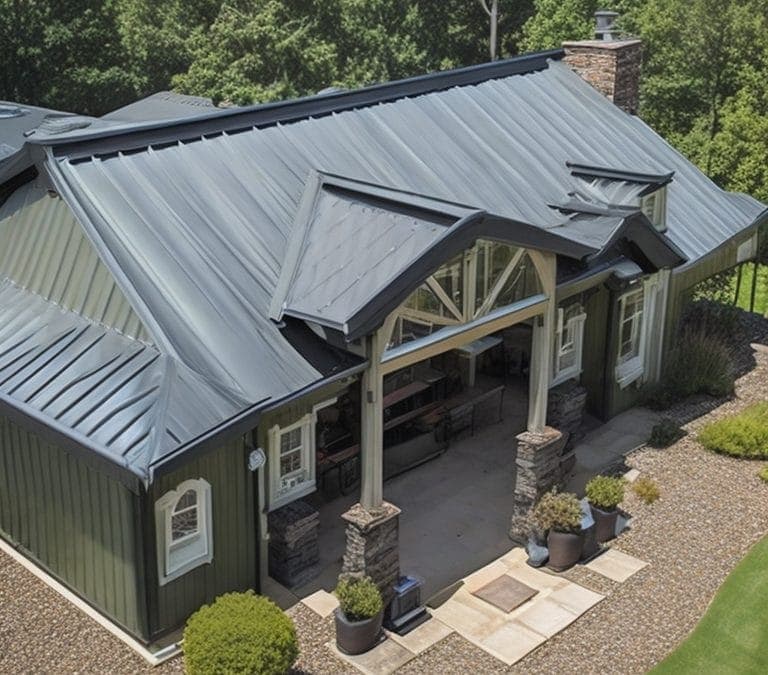
Best Roof Color for Florida Heat: Cool Roofs Explained
Florida test homes show a white shingle saves only 3 to 5 percent on cooling while reflective white metal or tile saves 18 to 26 percent. Here is how to choose a roof color that actually keeps your attic cooler.
Read Article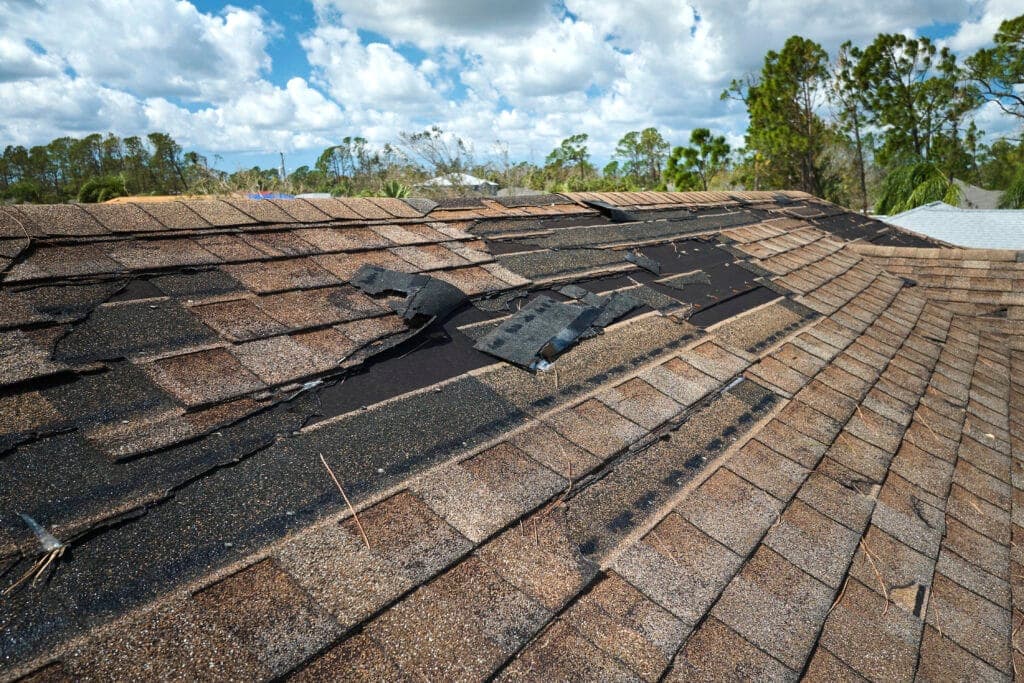
Roof Underlayment in Florida: The Hidden Layer Explained
Underlayment is the layer that decides what happens to your house when wind strips the shingles. Here is how felt, synthetic and peel-and-stick compare, what Florida code requires on a re-roof, and what each option costs in 2026.
Read Article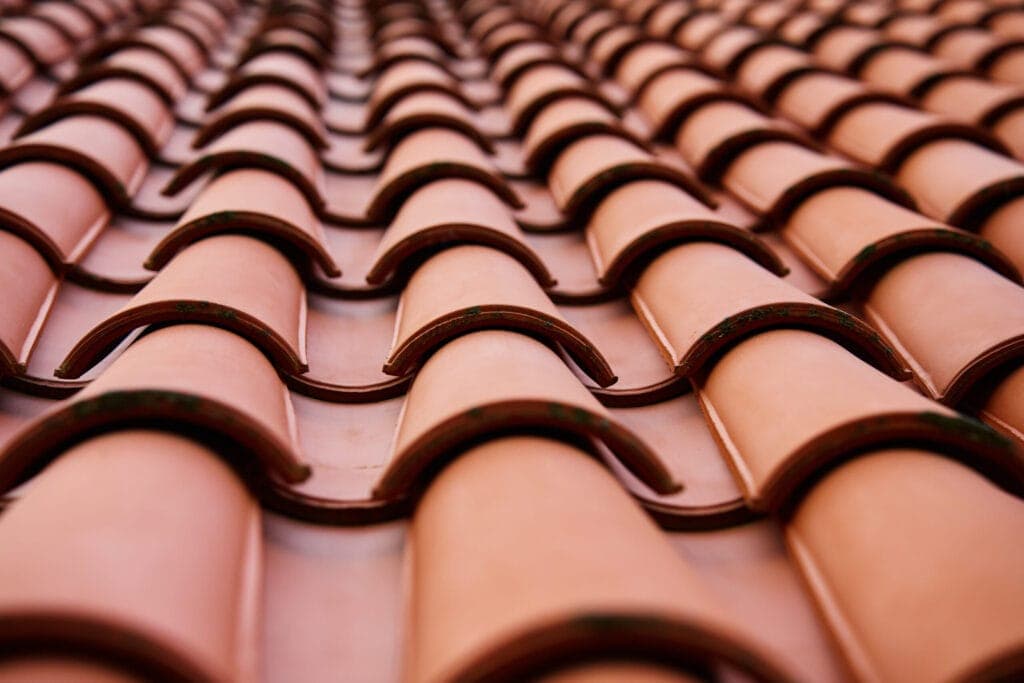
Florida Tile Roof Problems: Repair vs Re-Roof (2026)
Tile lasts for decades, the underlayment under it does not. Here are the tile roof problems Florida homeowners see most, what each repair costs in 2026, and how to tell when a repair is enough and when it is time to re-roof.
Read ArticleReady When You Are
Get your free roof inspection today.
No-pressure, written estimate. Same-week scheduling across Hernando County. Call us now or request a visit online.