Blog
Best Shingles for Florida: Architectural vs 3-Tab and What Class 4 Really Does for Your Premium
Call (352) 605-0696The best shingle for most Florida homes is a Class H architectural shingle installed as a complete high-wind system, with a Class 4 impact rating as a worthwhile upgrade in the right situations. This guide compares 3-tab, architectural and Class 4 shingles on cost, wind rating, insurance and lifespan for Hernando, Pasco and Citrus county homes.
What "Best Shingle for Florida" Actually Means
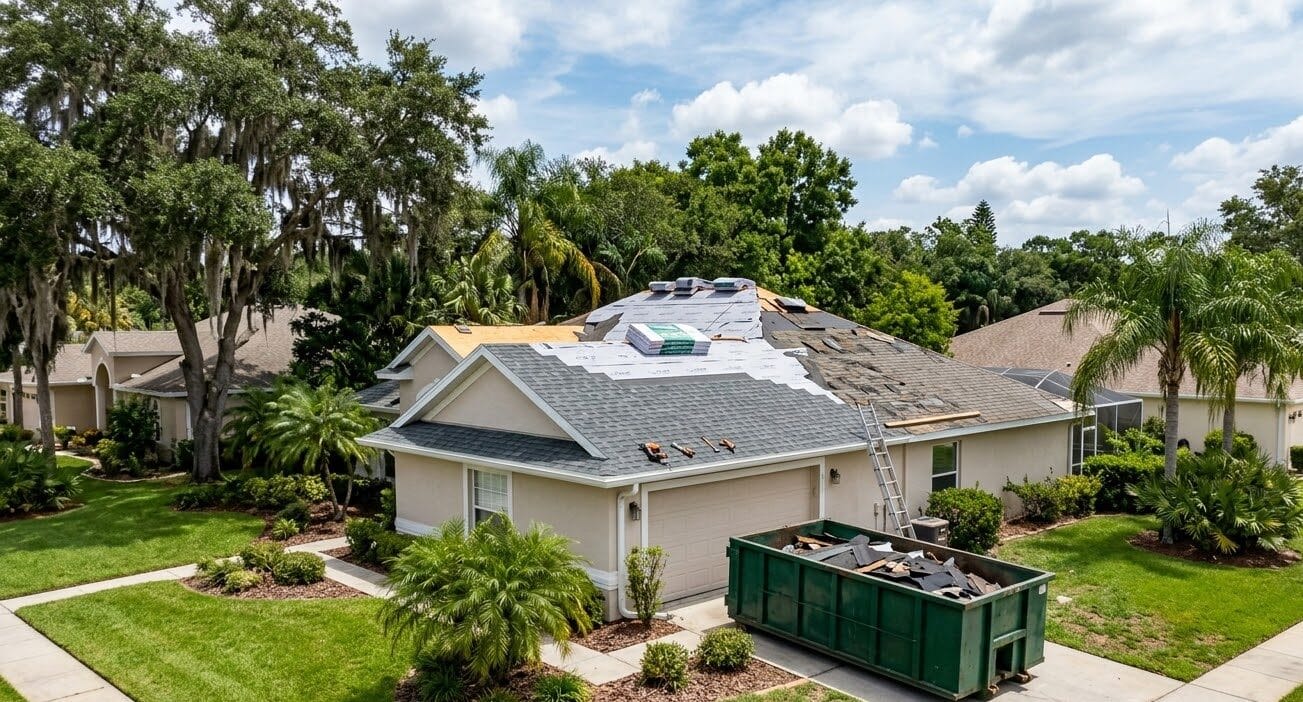
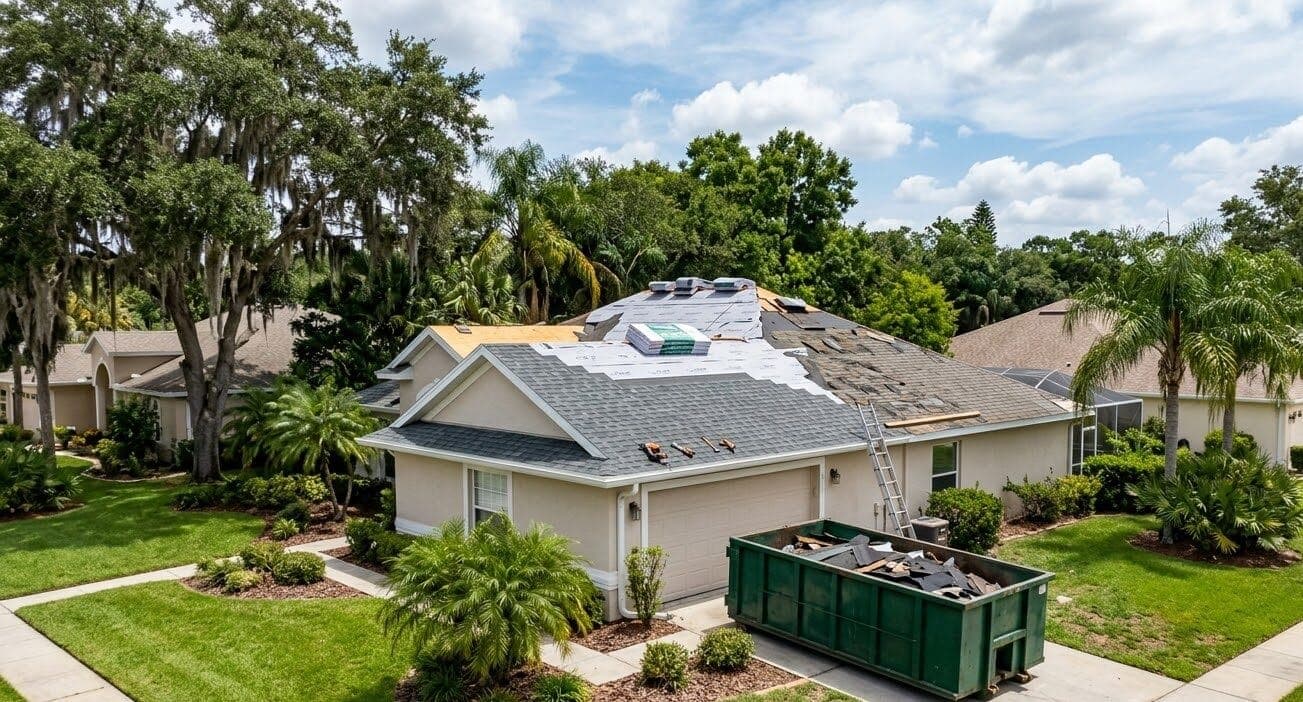
Ask ten roofers which shingle is best for Florida and you will hear ten brand names. That is the wrong place to start. Every major manufacturer sells a shingle that can pass the Florida Building Code, and every one of them can fail early when it is installed badly. The question that actually protects your home and your wallet is a different one: which type of shingle, with which ratings, fits the way Florida weather and Florida insurers treat a roof.
Three decisions do most of the work. The first is the style of shingle: a flat 3-tab or a thicker, laminated architectural shingle. The second is the wind rating, which is what the building code and your wind mitigation inspection care about. The third is the impact rating, the UL 2218 Class 1 through Class 4 scale, which is what the "impact resistant" label on a bundle refers to. Brand and color come after those three.
This guide walks through each decision for homeowners in Hernando, Pasco and Citrus counties. We will cover why 3-tab shingles have mostly disappeared from Florida re-roofs, what Class 4 really buys you here, where the insurance savings actually come from and how to read a quote so you know exactly what is going on your house.
Architectural vs 3-Tab Shingles in Florida
A 3-tab shingle is a single layer of asphalt-coated mat cut into three flat tabs. It is light, inexpensive and was the standard Florida roof for decades. An architectural shingle, also called laminated or dimensional, bonds two or more layers together. The result is heavier, thicker and more textured, and it is the shingle you see on nearly every new roof in our service area today.
The difference is not just looks. Thickness and weight help an architectural shingle resist wind lift and the daily heat cycling that ages a Florida roof. In our own published pricing, 3-tab roofs run about $2 to $5 per square foot installed with a typical Florida life of 10 to 15 years, while architectural shingles run about $5 to $9 per square foot and typically last 15 to 20 years here. Premium designer shingles sit above that, at roughly $9 to $17 per square foot.
- 3-tab: lowest upfront cost, flat appearance, shorter Florida life, fewer product lines still made and fewer high-wind installation options.
- Architectural: the default for Florida re-roofs, better wind and heat performance, longer warranties and wide availability in Class H wind ratings.
- Designer or luxury: extra-thick laminated shingles that imitate slate or shake; more weight and cost, chosen mainly for appearance.
Our recommendation is simple. Unless the roof is on a shed, a rental you plan to sell soon or a building where the budget truly cannot stretch, choose architectural. The price gap on a typical home is a few thousand dollars, and the extra years of life usually recover it. You can see full line-item numbers in our Florida roof replacement cost guide.
Wind Ratings Come First on a Florida Shingle Roof
In Florida, wind is the threat that decides whether a shingle is legal to install. Under the Florida Building Code, asphalt shingles classified as ASTM D7158 Class H, ASTM D3161 Class F or tested to TAS 107 are acceptable in all wind zones in the state. Most name-brand architectural shingles sold in Florida carry the D7158 Class H rating, which covers wind speeds up to 190 mph on the current ultimate design wind speed scale.
That has a practical consequence. You do not need to buy a premium product to "get enough wind rating" for Hernando, Pasco or Citrus. A standard Class H architectural shingle already clears the code across our region. What separates a roof that holds from one that peels is the installation: the nail count and placement, the starter strip at the eaves and rakes, the hip and ridge caps and the secondary water barrier under the shingles. We explain the testing and the 150 mph versus 190 mph confusion in our guide to wind uplift ratings for shingles.
The wind rating on the wrapper is only valid when the manufacturer installation instructions are followed, which usually means six nails per shingle in high-wind areas and the manufacturer starter and ridge products. Ask your contractor to write those details into the quote.
What a Class 4 Impact Rating Means
Impact ratings come from UL 2218. In the test, steel balls of increasing size are dropped on the shingle, and the rating reflects the largest ball the shingle survives without cracking, tearing or splitting. Class 4 is the top of the scale: the shingle has to withstand two impacts from a 2-inch steel ball dropped from 20 feet. Classes 1 through 3 use smaller balls.
Impact-resistant shingles reach that rating in two ways. Some use a rubberized asphalt, often called SBS modified, that flexes instead of cracking. Others add a reinforcing layer or a tougher mat. Major manufacturers all sell Class 4 lines; GAF, for example, lists Timberline AS II, Timberline UHDZ and Grand Sequoia AS as its Class 4 shingles and states they are approved under the Florida Building Code, and Owens Corning lists Duration FLEX as UL 2218 Class 4.
Here is the honest Florida context. The UL 2218 test was designed around hail, and hail is not the main reason roofs fail in Central Florida. Wind and wind-driven rain are. A Class 4 shingle still helps in a hurricane, because flying branches, roof tiles from the house next door and other debris hit roofs during storms, and a tougher shingle is less likely to crack and let water in. It is a real upgrade. It is just not a replacement for a correct high-wind installation.
Does a Class 4 Shingle Lower Your Insurance in Florida?
Sometimes, and you have to ask. This is the point where most sales pitches get ahead of the facts. In states with frequent hail, many insurers offer a dedicated discount for Class 4 roofs. In Florida, the main roof credits on a homeowners policy come from the wind mitigation inspection, and Florida law, section 627.0629 of the Florida Statutes, requires insurers to offer discounts for features that reduce windstorm loss, such as roof covering performance, roof deck attachment, roof-to-wall connections and a secondary water barrier.
A new shingle roof installed to the current Florida Building Code earns the roof covering credit on that inspection whether the shingle is Class 3 or Class 4. The bigger savings usually come from the items installed with the roof: deck nailing upgraded to current code, a sealed roof deck or secondary water barrier, and roof-to-wall connections. Some Florida carriers do add an impact-resistance credit, and roofing manufacturers and contractors quote figures that range from a few percent to well over 10 percent, but the amount varies widely by insurer and by policy.
- Before you buy: call your agent and ask in writing whether your carrier gives any credit for a UL 2218 Class 4 roof covering, and how much.
- When you buy: keep the product approval number, the manufacturer data sheet showing the Class 4 rating and the permit records.
- After install: schedule a new wind mitigation inspection so every qualifying feature is documented on the form your insurer uses.
If your carrier does not credit Class 4, the upgrade still buys durability against storm debris and, with some manufacturers, a stronger warranty. Just make the decision with real numbers instead of a promised discount.
How Much More a Class 4 Shingle Costs
Cost guides published in 2026 put Class 4 shingles at roughly 10 to 30 percent more than standard architectural shingles on an installed basis. On a typical 2,000 square foot roof in our area, where a standard architectural replacement often lands between $12,000 and $16,000, that premium usually works out to a few thousand dollars. Labor is close to the same, because Class 4 architectural shingles install much like standard ones; most of the difference is in the material.
Whether that premium pays back depends on three things: whether your insurer credits it, how long you plan to stay in the home and how exposed the house is to falling limbs and debris. A home under mature oaks in Brooksville or Spring Hill gets more value from impact resistance than a home in an open subdivision.
The Florida Insurance Rules Behind Your Shingle Choice
Shingle choice also affects how long your roof stays insurable. Under section 627.7011 of the Florida Statutes, an insurer may not refuse to issue or renew a homeowners policy solely because the roof is less than 15 years old. Once a roof reaches 15 years, carriers can require an inspection, and a report showing several years of remaining useful life can keep coverage in place.
That rule changes the math on cheap shingles. A 3-tab roof that looks tired at year 12 is close to the age where your carrier starts asking questions. A well-installed architectural roof is more likely to pass an inspection at 15 years and keep you insured without an early replacement. If you are buying a home or your renewal is coming up, a professional roof inspection tells you where your current roof stands before the carrier asks.
Florida also offers grant money through the My Safe Florida Home program, which can help pay for qualifying roof upgrades when funds are available. Our My Safe Florida Home service page explains how we help homeowners through the inspection and application.
Shingle Features That Matter in Florida Heat and Humidity
Beyond wind and impact ratings, a few features make a measurable difference under the Florida sun:
- Algae resistance: the black streaks on Florida roofs are algae. Shingles with copper or zinc-coated granules resist it, and most manufacturers offer algae warranties of 10 years or longer on their main lines.
- Color and reflectivity: lighter shingle colors and products with reflective granules keep the attic cooler. The effect is real but modest on a well-ventilated attic.
- Ventilation compatibility: a shingle warranty can depend on proper attic ventilation. Balanced intake and exhaust protects both the shingles and the warranty.
- System components: manufacturer starter strips, ridge caps, underlayment and ventilation sold as a system often qualify for an enhanced warranty.
Choosing Your Shingle: A Simple Florida Decision Guide
Putting it together, here is how we usually guide homeowners in our area:
- Most homes: a Class H architectural shingle from a major manufacturer, installed as a full system with a secondary water barrier and current-code deck nailing.
- Homes under large trees or in exposed spots: a Class 4 architectural shingle, especially if your insurer confirms a credit.
- Long-term owners: Class 4 or premium architectural plus the manufacturer enhanced warranty, so the roof is still insurable and covered well past year 15.
- Short-term owners or tight budgets: a standard architectural shingle installed correctly beats a premium shingle installed poorly every time.
If you are weighing shingles against metal, our total roof replacement team quotes both side by side so you can compare lifespan, insurance and cost on the same house.
Get a Shingle Roof Quote in Hernando, Pasco and Citrus Counties
Protech Roofing (license CCC1335878) installs architectural and Class 4 impact-resistant shingle roofs across Hernando, Pasco, Citrus and the surrounding counties. Our shingle roof installation quotes list the exact shingle, its wind and impact ratings, the underlayment and the deck nailing, so you can see what you are paying for and what your wind mitigation inspection will show. Homeowners can also start with our pages on roof replacement in Brooksville and roof replacement in Spring Hill.
Call (352) 605-0696 to schedule a free estimate. Tell us about your home, your trees and your insurance situation, and we will help you choose the shingle that makes sense for your roof and your budget.
FAQ
Frequently Asked Questions
What is the best type of shingle for Florida?
+
Are 3-tab shingles allowed in Florida?
+
Do Class 4 shingles lower insurance in Florida?
+
How much more do Class 4 shingles cost?
+
How long do architectural shingles last in Florida?
+
Does roof age affect insurance in Florida?
+
Related Articles
More guides for Florida homeowners
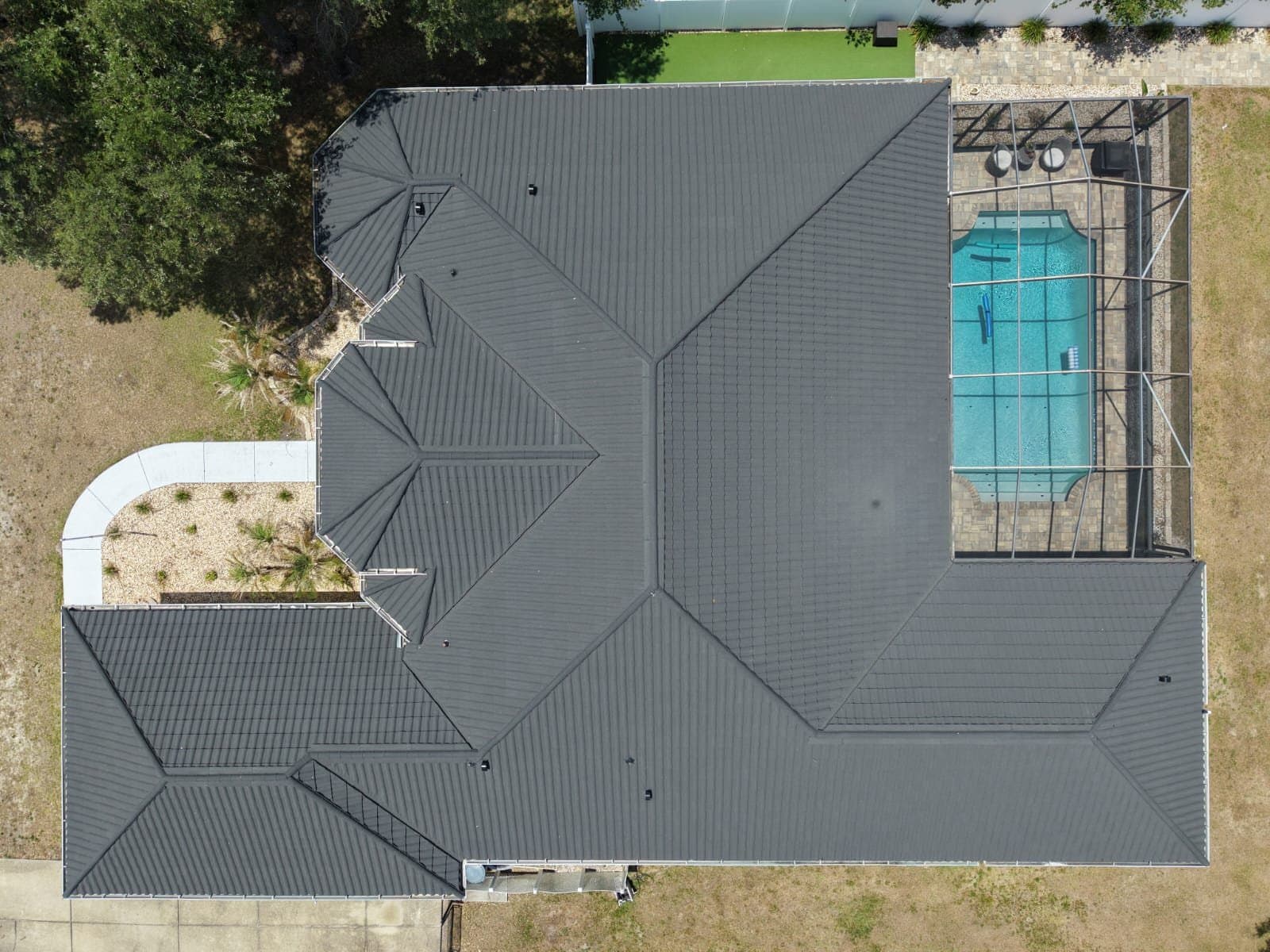
Metal Roof Cost in Florida 2026: Per-Sqft Guide
Metal roofs in Florida run about $8 to $23 per square foot installed, depending on the system. Here is what standing seam, stone coated steel and exposed fastener panels cost, what a typical home pays and how to compare quotes.
Read Article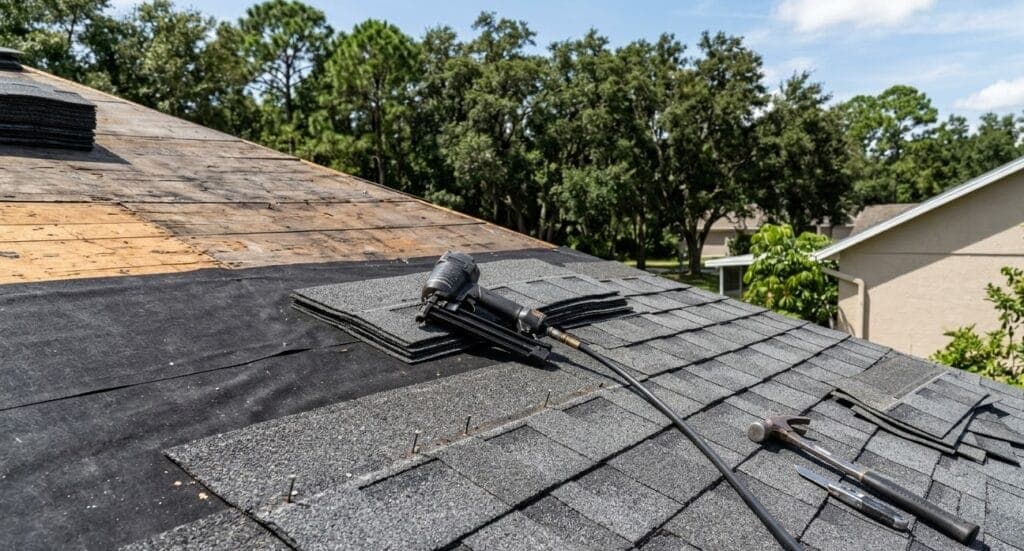
Roofing Warranties in Florida: What Voids Them
A new Florida roof usually carries two warranties: one from the manufacturer for the product and one from the contractor for the installation. Here is what each covers, what quietly voids them and how to keep your coverage.
Read Article
Best Roof Color for Florida Heat: Cool Roofs Explained
Florida test homes show a white shingle saves only 3 to 5 percent on cooling while reflective white metal or tile saves 18 to 26 percent. Here is how to choose a roof color that actually keeps your attic cooler.
Read ArticleReady When You Are
Get your free roof inspection today.
No-pressure, written estimate. Same-week scheduling across Hernando County. Call us now or request a visit online.