Blog
Pre-Purchase Roof Inspection in Florida: The Checklist Before You Close on a Home
Call (352) 605-0696In Florida, the roof rarely kills a purchase by leaking. It kills the purchase by being uninsurable, or insurable only at a premium that breaks the debt-to-income ratio your lender already approved. And the general home inspector you hired is not required to walk it. This is what a buyer should order, read and negotiate inside the 15-day inspection period.
Your Home Inspector Is Not Required to Walk the Roof

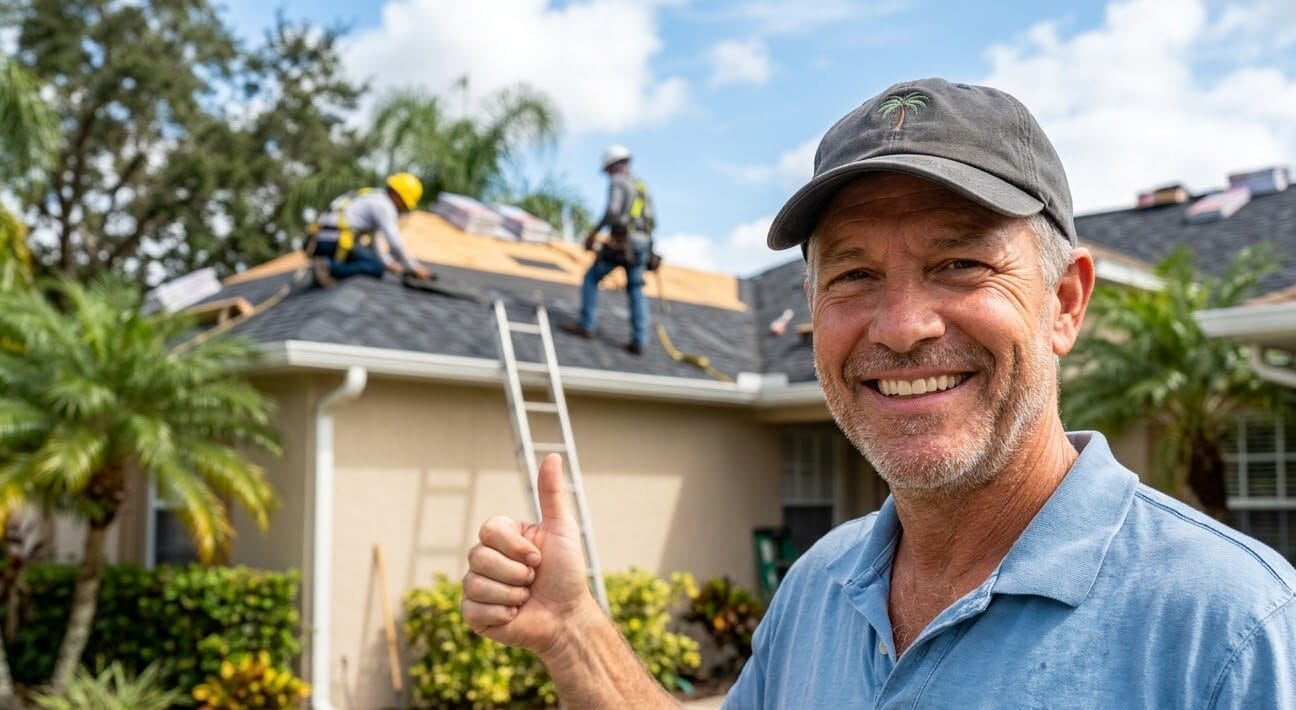
Most Florida buyers assume the general home inspection covers the roof the way a roofer would cover it. It does not, and the gap is written into the standards the inspection industry works from. The InterNACHI Standards of Practice say the inspector shall inspect the roof covering, flashings, skylights, chimney and penetrations from ground level or the eaves, and state plainly that the inspector is not required to walk on any pitched roof surface. The same standards excuse the inspector from anything unsafe, which on a wet tile roof in July is most of it.
So the typical Florida pre-purchase roof section is a set of photos taken from a ladder at the eave and a drone pass, written by a generalist who also inspected the panel, the water heater and the crawl space that afternoon. That is not a criticism of home inspectors. It is a description of the scope you actually bought. What it cannot tell you is the thing that decides your deal: whether an underwriter will write a policy on this roof, and for how long it has left.
That second question is where the money is. In Florida in 2026, the roof rarely kills a purchase by leaking. It kills the purchase by being uninsurable, or insurable only at a premium that breaks the debt-to-income ratio the lender already approved you on. The inspection you need is the one that produces a document an underwriter reads, not a paragraph in a 40-page PDF.
The 15-Day Clock Is the Real Constraint
The Florida FAR/BAR "AS IS" Residential Contract for Sale and Purchase gives the buyer an inspection period to investigate the property and cancel for any reason with the deposit refunded. If the parties leave the blank alone, the default is 15 calendar days from the effective date. Calendar days, not business days, so weekends and holidays burn clock. A deadline that lands on a Saturday, Sunday or national legal holiday rolls to the next business day, and that is the only mercy in the provision.
Fifteen days sounds generous until you lay out what has to happen inside it. General home inspection scheduled and performed. Wood-destroying organism inspection. A separate roof evaluation if the general report flags anything. An insurance quote, which requires the roof information. Sometimes a 4-point inspection, because the carrier asks for one before it will quote. Then you need time to read all of it and decide.
The sequencing mistake we see constantly: the buyer books the general inspection on day 8, gets the report on day 10, learns the roof is 19 years old on day 10, calls a roofer on day 11, and then discovers the insurance agent needs two more business days to come back with a number. That buyer is now negotiating on day 14 with incomplete information, which in practice means negotiating from a position of having to guess.
Book the roof evaluation and the insurance quote in parallel with the general inspection, not after it. On a house with a visibly older roof, book them on day one. The roof report costs a couple hundred dollars and the insurance quote costs nothing. Both are cheap relative to being wrong about a $14,000 line item on day 14.
Order the Insurance Quote in the Same Week as the Inspection
The FAR/BAR inspection period explicitly covers more than physical condition. It covers insurance availability and cost, flood zone designation, permit history, HOA restrictions and utilities. Buyers treat it as a condition contingency and leave the insurance half unused, which is backwards in this state, because insurance availability is the item most likely to blow up between inspection and closing.
Here is the chain that catches people. You need a bound policy to close. The carrier prices the policy off the roof. If the roof crosses the carrier age line, you get one of three answers: a decline, a quote with the roof on actual cash value rather than replacement cost, or a quote conditioned on a 4-point inspection that has not been done yet. Each of those answers changes either your monthly payment or your closing date, and you want to know which one you are getting while you still have the right to walk.
Carrier practice in 2026 is roughly this, and it varies by company rather than by law: most carriers want an inspection on roofs at 15 to 20 years and up, a number of them will not write new business on a roof past 20 years, and many move older roofs to actual cash value settlement instead of replacement cost. Around 25 years, the market thins out sharply. Citizens requires a 4-point inspection on homes over 20 years old, and on roofs it wants documented remaining useful life above 25 years for soft roofs and above 50 for hard roofs. We wrote the full underwriting breakdown in the guide to the Florida 4-point inspection and how an older home passes the roof section.
Ask your agent one specific question rather than "can you insure this house." Ask: at this roof age and material, will the policy settle the roof at replacement cost or actual cash value, and what does the premium look like both ways. The delta between those two answers on a 20-year-old shingle roof is the difference between a covered replacement after the next hurricane and a depreciated check that covers the tear-off.
What Statute 627.7011 Gives You, and Why the Roofer Matters
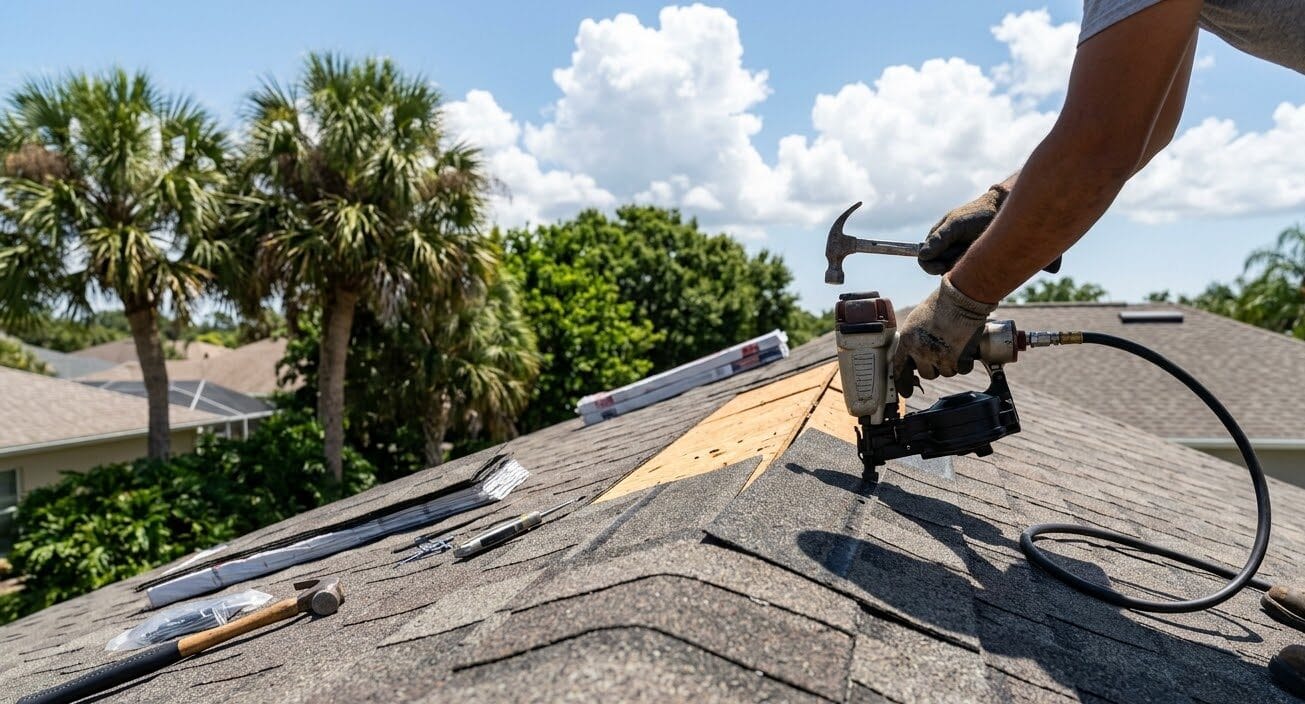
Florida law puts a floor under this. Section 627.7011, Florida Statutes, says an insurer may not refuse to issue or refuse to renew a homeowner's policy insuring a residential structure with a roof that is less than 15 years old solely because of the age of the roof. Under fifteen, roof age by itself is not a lawful reason to say no.
Above fifteen, the statute still gives you a move. The owner may have the roof inspected, and if the inspection shows the roof has five years or more of useful life remaining, the insurer may not refuse coverage on roof age alone. The leverage sits in who the statute lets perform that inspection. It names a licensed home inspector under s. 468.8314, a certified building code inspector under s. 468.607, a general, building, residential or roofing contractor licensed under s. 489.111, a professional engineer under s. 471.015, and a professional architect under s. 481.213.
Read that list again as a buyer. A licensed roofing contractor is an authorized inspector under the statute. That means the same visit that tells you whether to buy the house can produce the document that keeps the carrier from declining on age. If you are under contract on a house with a 17-year-old roof in good shape, you do not need a replacement quote. You need a remaining-life assessment in writing, and you need it before your inspection period runs out.
One honest caveat so nobody walks into an argument wrong: the statute constrains refusal solely on roof age. It does not force a carrier to ignore actual damage, prior claims, or condition findings. A roof with cupped shingles, exposed nail heads and three layers of prior patching is not getting saved by a statute.
What Changed in March 2026: Financing Got Easier, Insuring Did Not
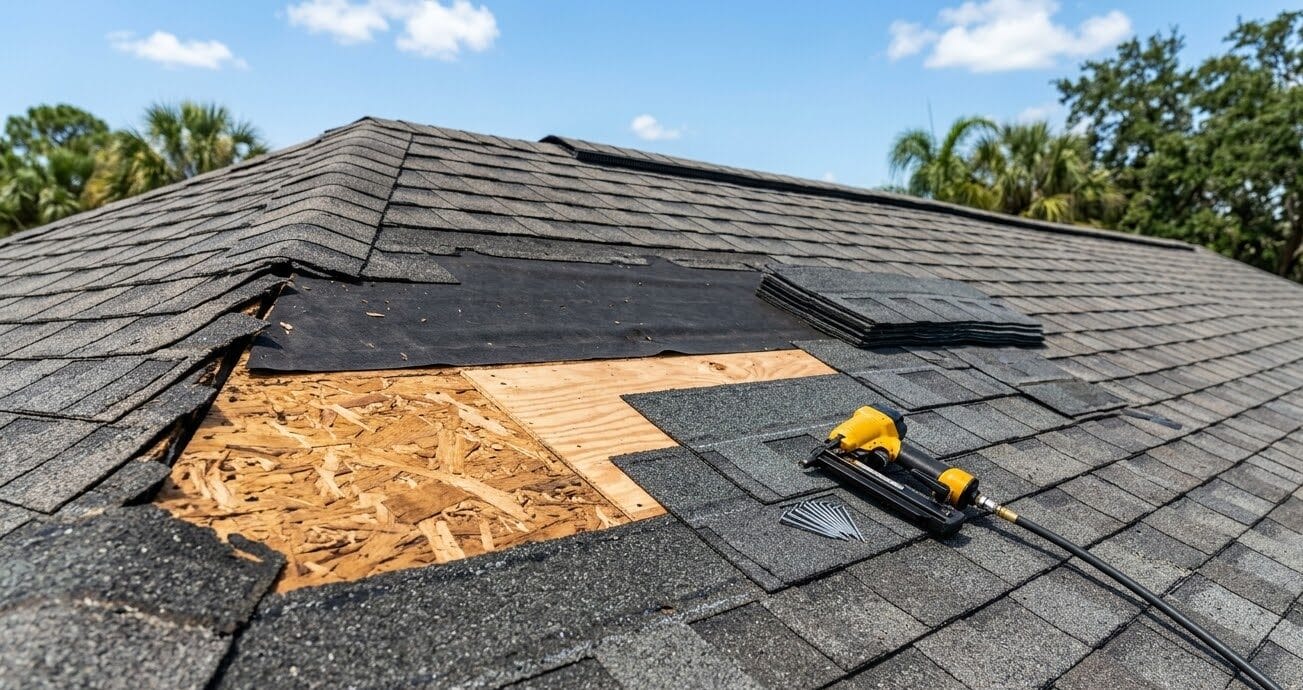
On March 18, 2026, Fannie Mae issued Lender Letter LL-2026-03, updating property insurance requirements alongside project standards. The piece that matters for a buyer looking at an older roof: property insurance must generally provide coverage on a replacement cost basis, except that roofs may be insured at actual cash value. Freddie Mac moved in step. FHFA framed the reason bluntly, that full replacement roof coverage had become expensive and hard to find in many states.
The practical translation: a 20-year-old roof on a conventional loan is no longer an automatic financing wall. Before this change, an ACV roof endorsement could put the policy out of compliance with the lender's insurance requirements, which meant buyers were sometimes forced into a roof replacement to close a loan that was otherwise fine.
Do not read that as good news about risk, only as good news about paperwork. If your policy settles the roof at ACV, the day a storm takes it you receive depreciated value, not replacement cost. On a roof with three years left, depreciation is most of the check. The financing barrier moved. The exposure did not, it just moved onto you.
FHA and VA Draw a Harder Line Than Conventional
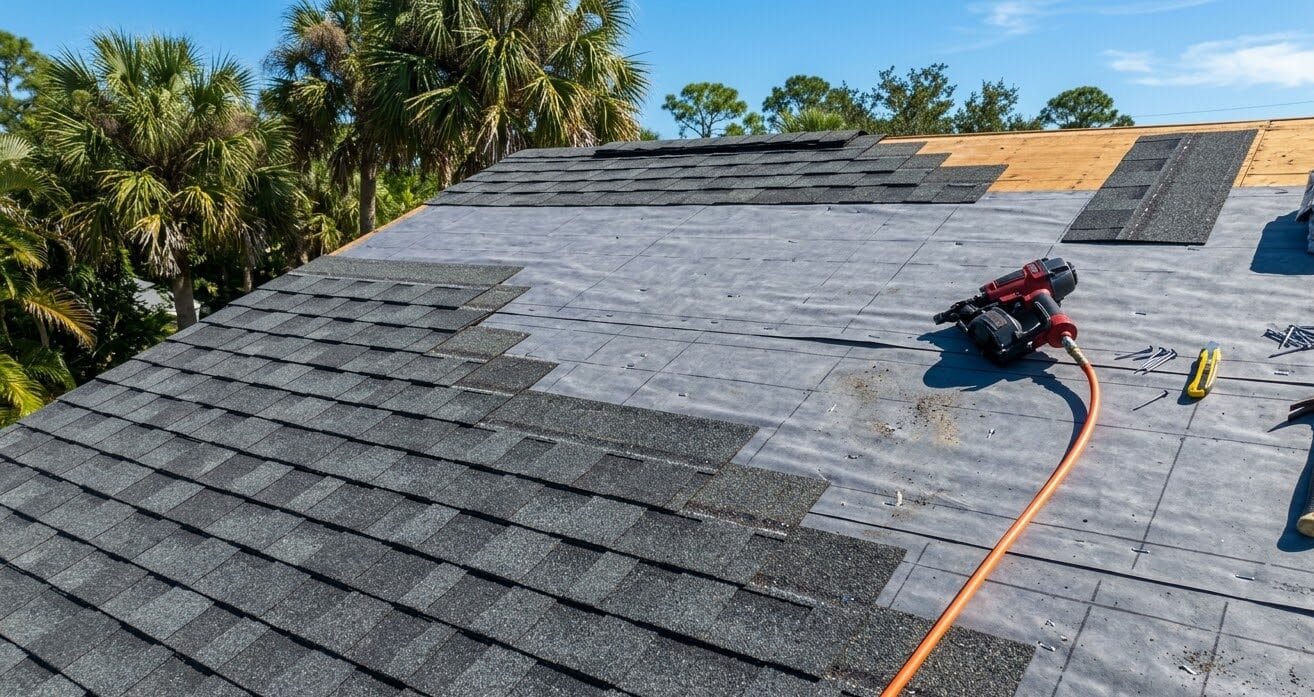
If you are buying with government-backed financing, the appraiser applies a condition test that is separate from anything your insurance agent says. FHA guidance is the well-known one: the roof must be in good condition with no leaks or loose shingles, and the appraiser is required to report a roof with less than two years of remaining life and call for replacement. VA is in the same neighborhood, generally looking for no active leaks, sound structure, and two to three years of remaining life.
That threshold is low, and that is exactly why it surprises people. A roof can be eight years from the end of its service life, cost you a fortune to insure, and still sail through an FHA appraisal without a comment. Appraisal clearance is not an insurability opinion, and buyers who treat "the appraisal came back clean" as proof the roof is fine are reading a document that was never asked that question.
The reverse case also happens. A roof with life left in it gets flagged because of a handful of lifted shingles and visible sealant repairs, and suddenly a $900 repair is a condition of the loan. That is a good outcome for you when the seller pays for it, and a good reason to have a roofer's written scope in hand before the appraisal instead of after.
What a Real Pre-Purchase Roof Inspection Covers
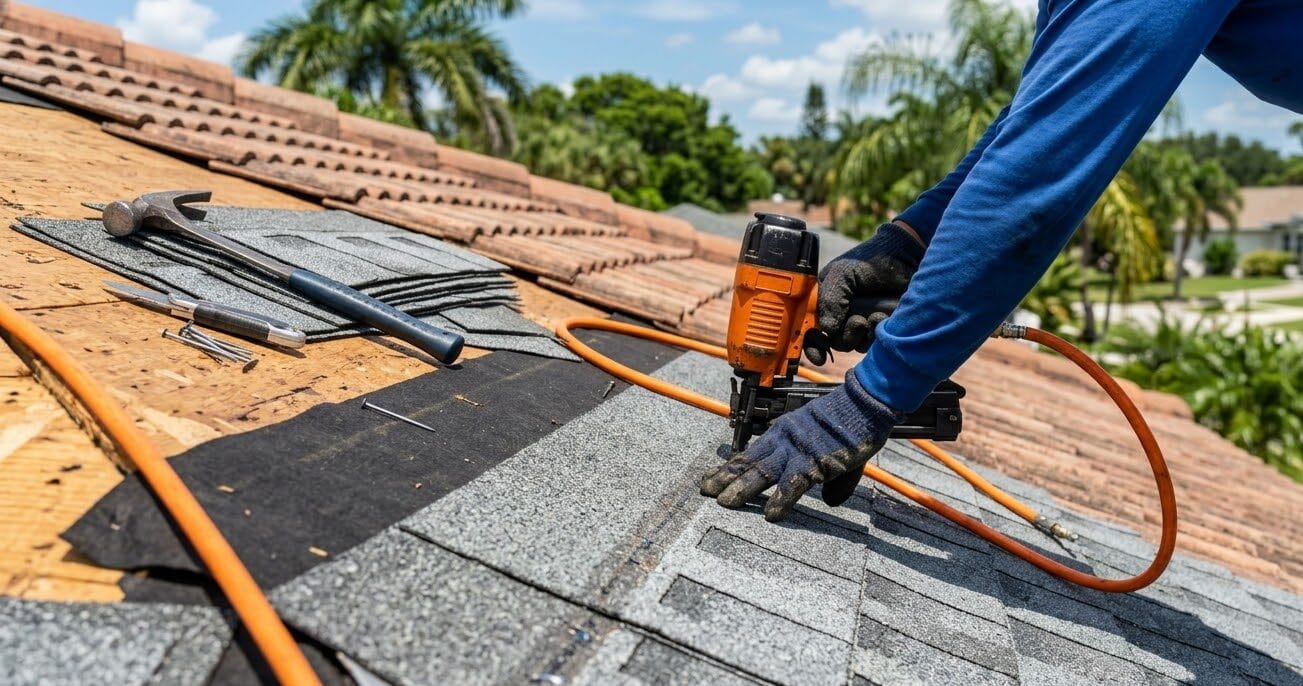
A proper pre-purchase roof evaluation should answer four questions in writing: how old the roof is, what condition it is in, how many years it has left, and what it would cost to address what it needs. Here is the checklist we run on a Central Florida home under contract.
- Documented age and permit history: the permit record on file with the county, not the seller's recollection. A closed permit with a final inspection is the only age evidence an underwriter respects.
- Covering condition: granule loss and mat exposure on shingles, cracked or slipped tiles, fastener backout and panel oil-canning on metal, blistering and ponding on flat sections.
- Fastening and uplift path: whether the deck is nailed or stapled, nail pattern, and whether there is any evidence of secondary water barrier. This is the item that shows up on the wind mitigation form and on your premium.
- Flashing and penetrations: pipe boots, which in Florida heat crack and fail well before the shingles do, plus chimney, skylight and wall flashings.
- Valleys and transitions: the single most common leak origin on Florida hip roofs, and the hardest to photograph from a drone.
- Prior repairs: visible sealant patches, mismatched shingles and roofing cement smears, which say the roof has been leaking and the repairs were symptomatic.
- Decking condition from the attic: stains, delamination, daylight at the ridge, sagging between trusses.
- Attic ventilation and insulation: undersized ventilation cooks a roof from below and takes years off a shingle covering.
- Gutters and drainage: undersized or detached gutters put water at the fascia and eventually into the soffit, and that repair is often bundled into a re-roof for far less than it costs alone.
- Soffit and fascia: soft fascia behind a gutter is a rot indicator and a wind vulnerability at the same time.
- Remaining useful life, stated in years: the number the statute and the carriers actually care about.
- Scope and price for anything needed: repair scope with a number, replacement scope with a number, so you can negotiate with a document instead of an adjective.
Compare that against what you will get in the roof section of a general home inspection report and the value of the second opinion becomes obvious. Our roof inspection service is built around producing that written remaining-life statement, because that is the page you hand to an insurance agent or a seller.
What It Costs and Who Pays
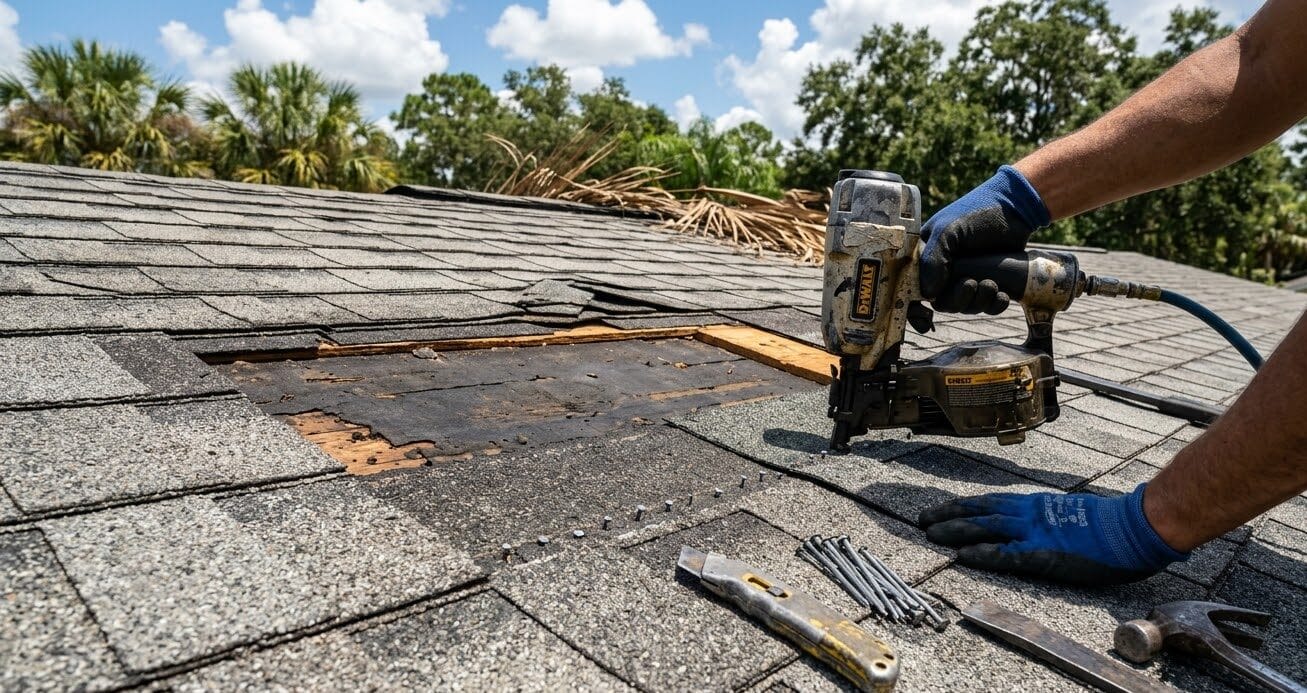
A standalone professional roof inspection in Florida in 2026 generally runs $150 to $400, clustering around $250, with larger, steeper or tile roofs at the top of the band and drone or infrared work above it. The general home inspection for a 1,500 to 2,500 square foot single-family home typically runs $300 to $500, with condos under 1,200 square feet at $250 to $375 and homes above 3,500 square feet at $500 to $800.
A standalone wind mitigation inspection runs about $75 to $175, and it is the best-value inspection in the state because it usually pays for itself in the first policy year. Many roofers, including us, provide it at no charge with a replacement.
The buyer pays for all of it in a normal Florida transaction, and it is worth doing the arithmetic on why that is still cheap. A full shingle replacement on a typical Spring Hill or Brooksville home runs $12,000 to $16,000. Spending $250 to learn which side of that number you are on, while you still have a free right to cancel, is not an expense. It is the cheapest option you will ever hold.
Get the Wind Mitigation Form While You Are Still Under Contract

The wind mitigation inspection is a separate document from both the home inspection and the 4-point, and it is the one that lowers your premium instead of just qualifying you for one. It records roof covering compliance, roof deck attachment, roof-to-wall connection, roof geometry, secondary water resistance and opening protection. Those six entries drive the hurricane mitigation credits on a Florida policy.
As a buyer, order it during the inspection period rather than after closing, for two reasons. First, the credits change the premium, and the premium changes the escrow payment your lender uses to qualify you, so you want the real number before the loan is locked rather than a placeholder estimate. Second, if the form comes back with weak entries, that is negotiating information while you can still use it. We break the form down line by line in the wind mitigation inspection guide.
One detail that repeatedly surprises buyers of 1990s and early-2000s Central Florida homes: a roof can be in fine condition and still score poorly, because the credits are driven by construction details like deck attachment and roof-to-wall straps that were legal when the house was built. That is not a defect, and it is not something the seller hid. It is a premium fact you should know before you sign.
Read the Permit History, Not the Listing Description
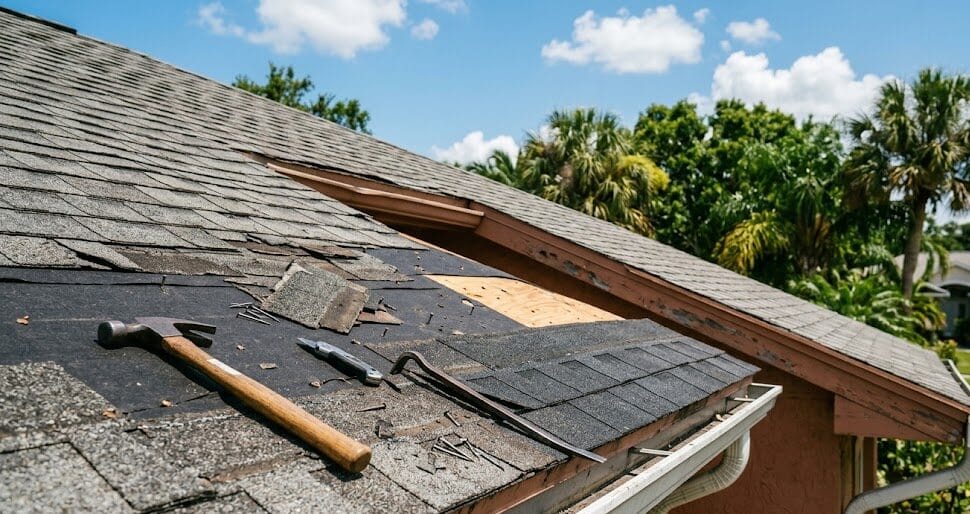
"New roof in 2019" in the MLS remarks is marketing copy. The permit record is evidence. Pull the address in the county building department records and look for a roofing permit with a final inspection recorded. Three things you are checking for: that a permit exists at all, that it was finalized rather than left open, and that the date matches what the seller is telling you.
An open permit is a real problem at closing, not a formality, and it can hold up a title company. A roof replaced without a permit is worse, because there is no inspection record proving the deck attachment and underlayment work was ever verified, and some carriers will treat it as unpermitted work. In Hernando County, roof replacement requires a permit in nearly every case, and we laid out the process in the Hernando County roof permit guide.
Permit history is also how you catch the partial re-roof. A house listed with a "2021 roof" sometimes turns out to have a 2021 permit covering the rear slope after a storm claim, with the original 2004 covering still on the front. From the street, one roof. On the permit record, two roofs with a seventeen-year age gap, and the carrier will price the older one.
Repair Credit or New Roof Before Closing
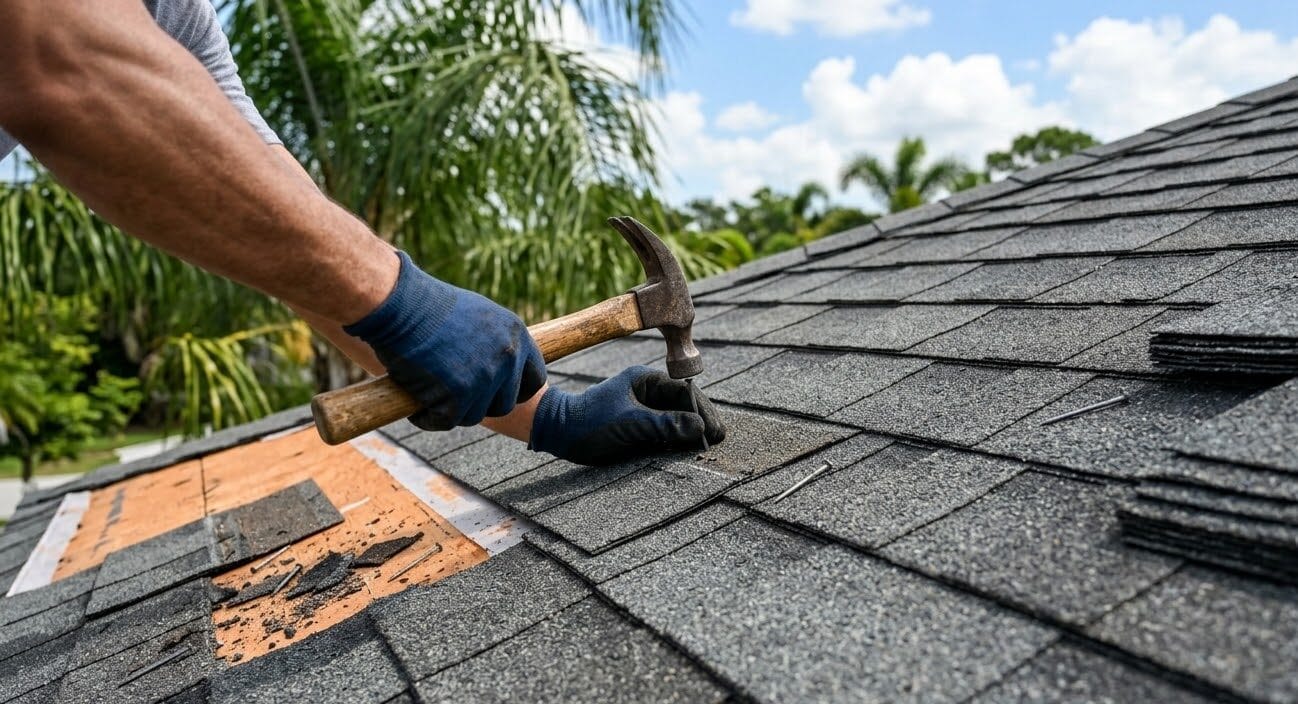
When the roof needs work, the negotiation usually collapses into two options: the seller credits you money at closing, or the seller replaces the roof before closing. Buyers reflexively prefer the credit because it feels like cash and flexibility. In Florida, the credit is frequently the worse deal, and the reason is the insurance sequence.
If the roof is old enough to be the reason the carrier is hesitating, a credit does not fix that on closing day. You still need a bound policy on the day you close, and you will be binding it on the old roof. That can mean a higher premium locked into your escrow, an ACV roof endorsement, or a carrier of last resort. Replacing before closing means you close on a new roof, bind on a new roof, and get the wind mitigation credits from day one.
The credit makes sense in three situations: when the work is genuinely repair-scale rather than replacement, when you want control over material and contractor choice, and when the lender will not allow a large seller credit anyway and you are negotiating price instead. Our breakdown of where that line sits is in repair versus replacement, and the cost side is in the Florida roof replacement pricing guide.
One more practical note. If the seller does replace, ask for the permit number, the final inspection, the manufacturer warranty registration and the wind mitigation form at closing. Those four documents together are worth real money on your first renewal, and they are nearly impossible to reconstruct a year later from a seller who has moved to another state.
Tile, Metal and Flat Sections Change the Answer
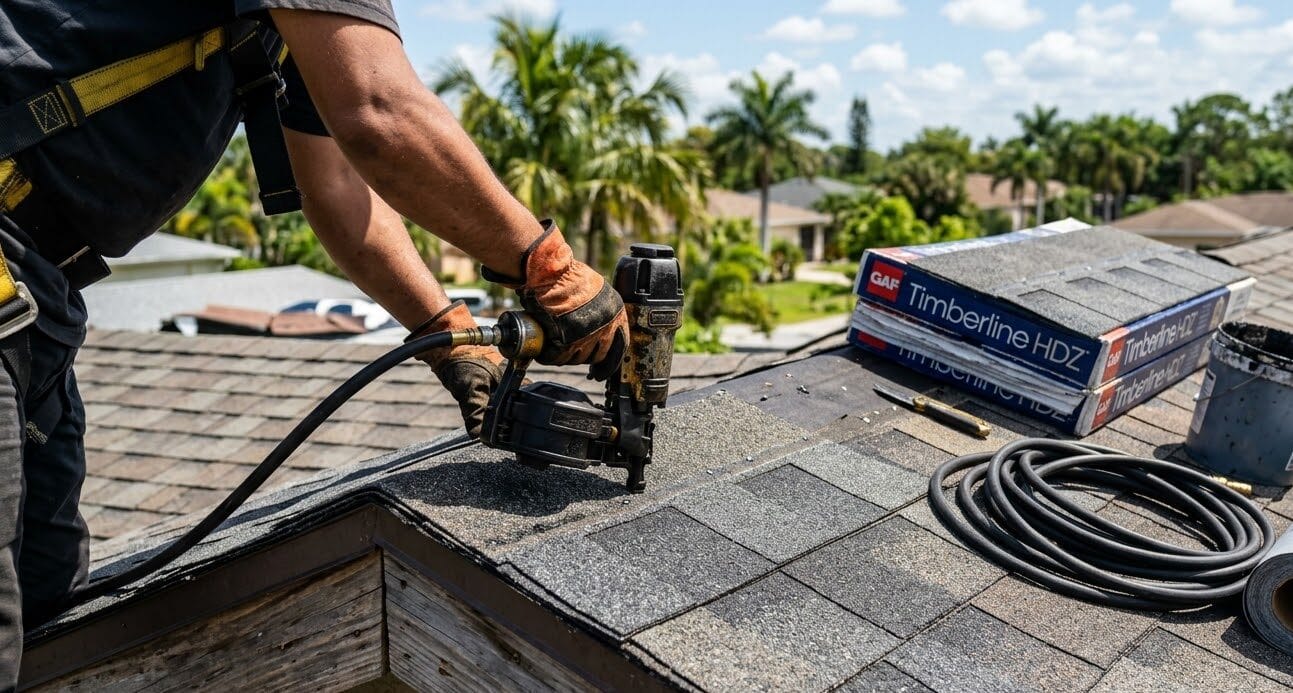
Roof material changes both the useful-life math and the repair economics, and Central Florida has all of it.
Concrete and clay tile
The tile itself can outlast the house. The underlayment underneath is what fails, typically in the 20 to 25 year range on older felt systems, and replacing it means lifting and resetting or replacing the tile. That makes tile the material where a seller's "the roof is original and it is fine" is most likely to be technically true and financially wrong. Broken and slipped tiles also matter more than they look, because each one is a hole in the water path.
Metal
Exposed-fastener panel roofs age at the fasteners, not the panels. Neoprene washers dry out and the screws back out, and a roof that looks perfect from the driveway can have several hundred fasteners at the end of their life. Standing seam is a different animal with a much longer runway. Ask which one you are buying, because the listing will say "metal roof" for both.
Flat and low-slope sections
Florida ranch homes and additions constantly carry a flat section over a porch, a carport or a Florida room, and that section is usually the oldest and worst part of the roof. It is also the part a drone photo makes look fine. Ponding water that is still standing 48 hours after rain is a defect, not a characteristic.
The Five Findings That Should Change Your Offer
Not every finding is a negotiation. These five are.
- Documented age past the carrier line with no insurance quote in hand. This is the one that ends deals at the closing table. Get the quote before the inspection period expires.
- Active leak evidence in the attic. Stains, delamination or mold on decking mean the water has been getting in long enough to be seen from inside, and it is never only where you can see it.
- Prior repairs with roofing cement over the field of the roof. Sealant on the flat of a shingle roof is not a repair, it is a postponement, and it usually marks a roof that has already been declared not worth fixing once.
- No permit for a roof the seller says is recent. Either the age claim is wrong or the work was unpermitted. Both are your problem after closing.
- A flat section at the end of its life on an otherwise good roof. Cheap to fix now as a scope item, expensive later when it has soaked the framing under it.
Findings that are usually not worth a fight: a handful of cracked pipe boots, minor granule loss consistent with age, a slightly undersized gutter run, and a couple of lifted ridge caps. Those are maintenance, they price in the hundreds, and spending your negotiating capital on them is how buyers lose the argument that actually mattered.
What to Ask For, and What We Provide
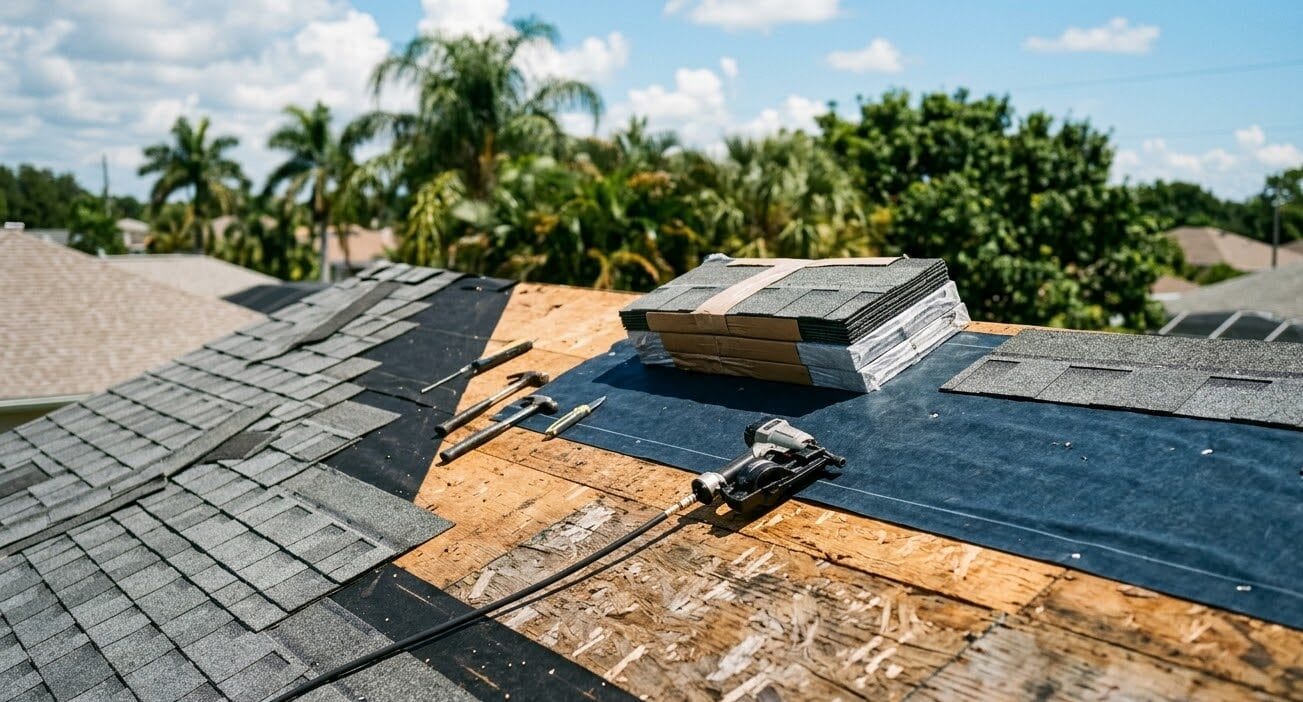
If you are under contract in Hernando, Pasco, Citrus, Sumter, Marion, Pinellas or Hillsborough County, the request to make is specific. Ask for a pre-purchase roof evaluation with a written remaining-useful-life statement, not a replacement estimate. Those are different documents with different readers, and the second one is useless to your insurance agent.
We inspect and document roofs for buyers across the Nature Coast and Central Florida, including Spring Hill, Brooksville, Hudson and Inverness, where a large share of the housing stock is now past the 20-year mark that carriers watch. Call (352) 605-0696 and say you are under contract with an inspection period running, because that changes how we schedule you.
If the roof does need replacing and you decide to move forward after closing, we handle the permit, the tear-off, the deck repairs and the wind mitigation form, and we can walk you through roof financing so the project does not have to come out of the cash you just spent on a down payment. Start with a conversation rather than a quote request, because at this stage the useful output is information, not a price.
FAQ
Frequently Asked Questions
Does a home inspection cover the roof in Florida?
+
How long do I have to inspect the roof in a Florida purchase contract?
+
Can I get insurance on a house with a 20-year-old roof in Florida?
+
Who can perform the roof inspection that satisfies a Florida insurer?
+
Should I take a repair credit or ask the seller to replace the roof?
+
Will an old roof stop me from getting a mortgage in 2026?
+
Related Articles
More guides for Florida homeowners

Florida Tile Roof Problems: Repair vs Re-Roof (2026)
Tile lasts for decades, the underlayment under it does not. Here are the tile roof problems Florida homeowners see most, what each repair costs in 2026, and how to tell when a repair is enough and when it is time to re-roof.
Read Article
Solar Roofing in Florida: Solar Shingles vs Panels (2026)
Every solar system on a Florida roof is either bolted to the roof or is the roof. Here is how panels and solar shingles compare in 2026, what changed with the federal credit, and why the cheapest solar project often starts with a re-roof.
Read Article
Chimney Flashing Leaks in Florida: Find the Real Cause
Roofs do not leak in the field, they leak at the terminations, and the chimney is the hardest termination on the roof. Here is what Florida code requires, the five failures behind almost every chimney leak, and what a correct reflash costs in 2026.
Read ArticleReady When You Are
Get your free roof inspection today.
No-pressure, written estimate. Same-week scheduling across Hernando County. Call us now or request a visit online.