Blog
The Villages Roof Replacement: How to Pass ARC Color and Material Approval in Sumter County
Call (352) 605-0696Most homeowners in The Villages learn about the Architectural Review Committee the same way: a roofer says the words, the homeowner assumes it is a formality, and three weeks later nobody has a permit. It is not a formality. Sumter County lists ARC approval directly on its re-roof submittal requirements, so the deed restriction and the building department are wired to each other. Miss the ARC step and you have not just risked a deed compliance letter, you have stalled the permit itself. Here is exactly what the committee asks about your roof, how long it takes, what the county charges, and the order these two clocks have to run in.
ARC Approval Is Not Optional, and the County Enforces It
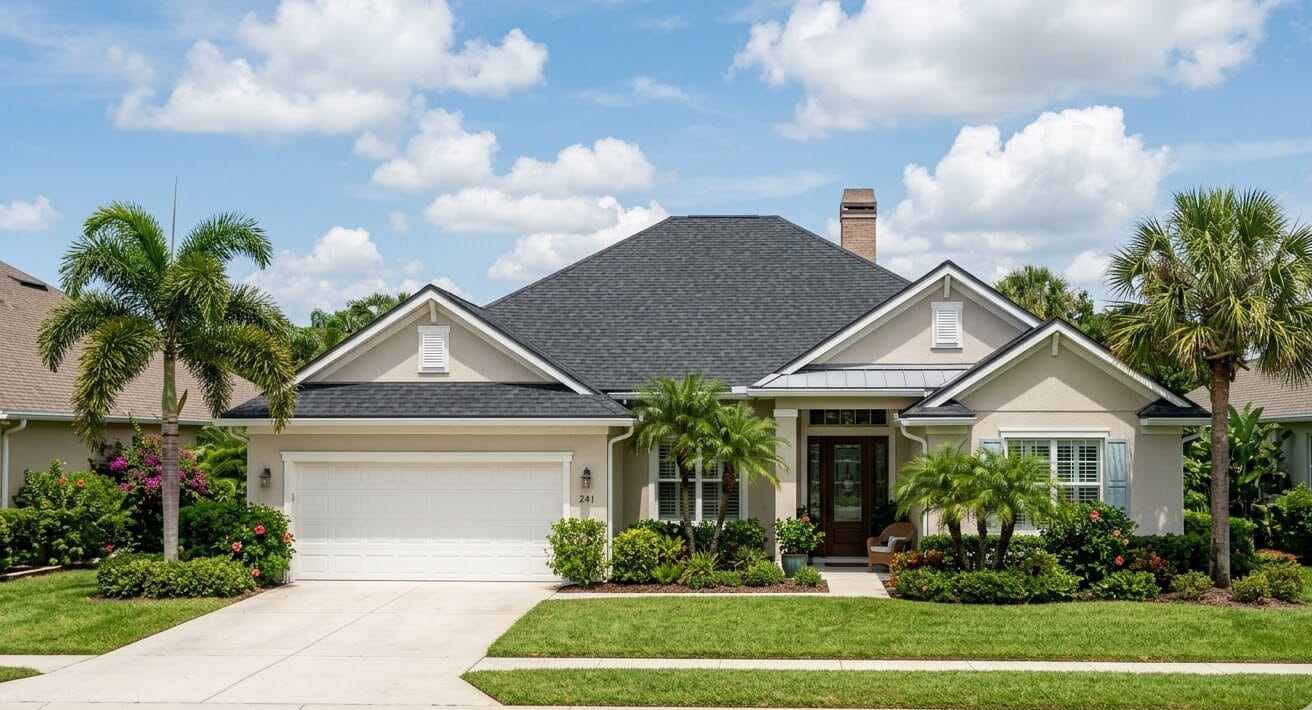
There is a version of this story where the ARC is a homeowners association nicety, separate from the real permitting process, and a roofer who works fast can start Monday and sort out the paperwork later. That version does not survive contact with Sumter County.
On the county's own Re-Roof and Roof-Over submittal requirements, alongside the square footage, the product approval numbers and the recorded deed, sits this line: The Villages Architectural Review Committee (ARC) require approval for various projects depending on the deed restrictions. Homeowners with questions are pointed to Community Standards at 352-751-3912. That is the building department telling you, in its own permit checklist, that the deed restriction is part of the packet.
The practical consequence is worth stating plainly. In most of Florida, an HOA violation and a permit problem are two separate headaches on two separate timelines. In The Villages they are one timeline, and the ARC sits at the front of it. A roofer who tells you the ARC can happen in parallel with the install is telling you something that will cost you.
The second consequence is about who does the work. Community Standards runs two divisions, Architectural Review and Deed Compliance. The same department that approves your shingle color is the department that writes the letter when the color on your roof is not the color on the application. Getting the paperwork right is not just about starting, it is about not being asked to redo a finished roof.
What the ARC Application Actually Asks About Your Roof
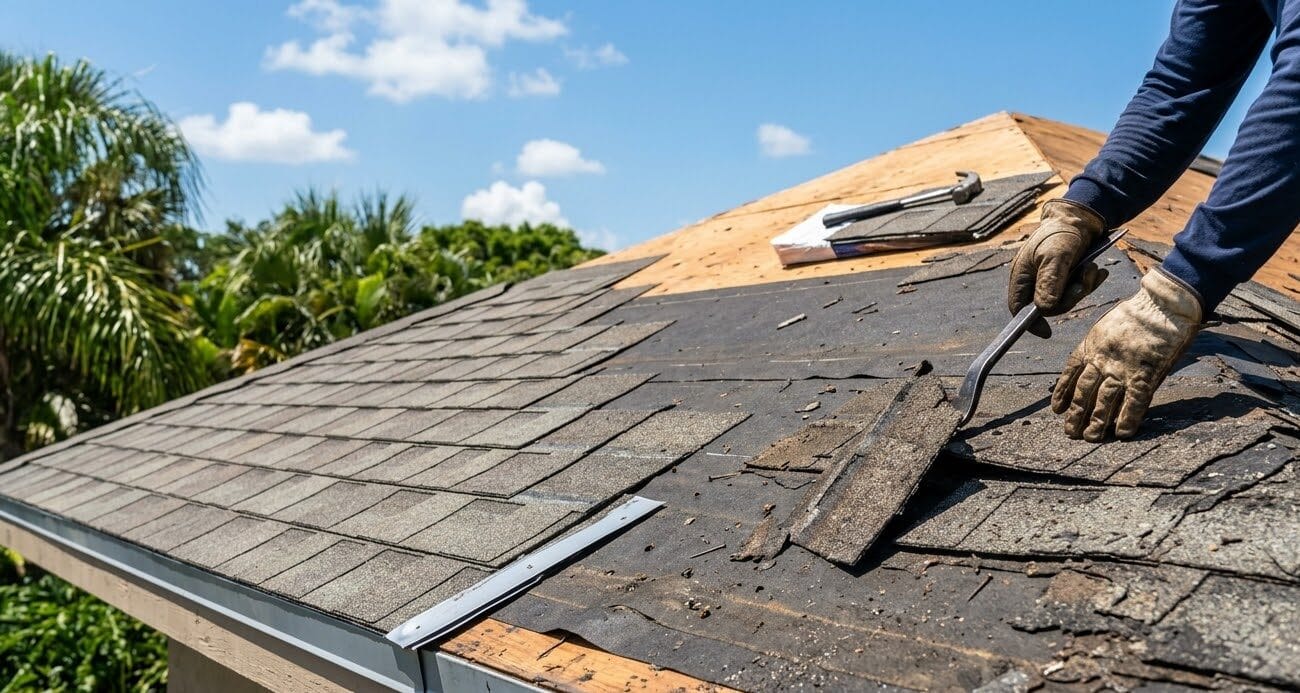
The Modification and Alteration application is not a vague request for permission. For a roof, it is a product specification, and it asks you to commit to four things before anything is ordered:
- Manufacturer. The company that makes the shingle, tile or metal panel. Not the roofer, not the distributor.
- Product name. The specific line, because two shingles from the same manufacturer can carry very different profiles and wind ratings.
- Color. The manufacturer's color name, not a description. Weathered wood is a color name. Sort of gray is not.
- Profile. Whether the shingle is architectural or three-tab, whether the tile is flat or barrel, whether the metal is standing seam or a stone-coated tile look.
The committee compares that specification against the deed restrictions that apply to your particular village, and that is the part people get wrong. The Villages is not governed by one uniform rulebook. Restrictions differ from village to village, which means the answer your neighbor got two streets over is evidence, not authority. Some villages are specific about profile and will not accept a three-tab shingle where architectural is the established standard.
If you want the shortest path to approval, the answer is boring: match what is already on the house. An application that keeps the same manufacturer class, the same profile and the same color family is a decision about maintenance. An application that changes the color is a decision about appearance, and appearance is precisely what the committee exists to evaluate. Both can be approved. Only one of them is quick.
Across The Villages, roof colors cluster tightly in the weathered wood and gray range, with warmer browns on the tile homes. That is an observation about the streetscape, not a published approved list, and you should treat it that way. The only list that governs your house is the set of deed restrictions recorded for your village. Before you fall in love with a color, get that document and read the exterior sections.
The Calendar: Friday at 5, Fourteen Business Days, and a Wednesday Meeting
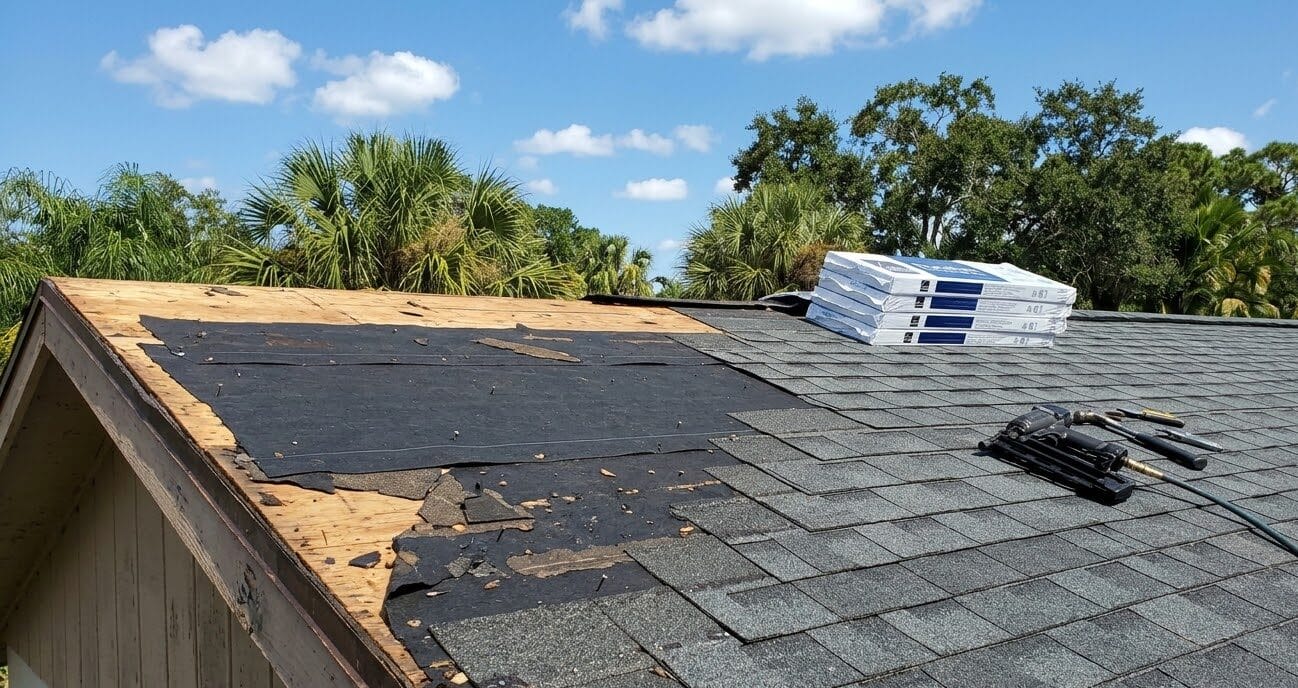
This is the part that decides whether your roof goes on in October or December, and almost nobody plans around it.
Completed applications received by 5 p.m. on Friday are reviewed within 14 business days, by either the Architectural Review Committee or an Architectural Review Hearing Officer, depending on which district you are in. Read the two conditions in that sentence carefully. The clock starts on a completed application, and it runs in business days.
Fourteen business days is roughly three calendar weeks. Add a federal holiday and it is longer. Submit on a Monday and you have not started the clock, you have started waiting for Friday. An application missing the product name or the color does not get reviewed and rejected on day 14, it gets held, and the timeframe extends while somebody tries to reach you for the missing information.
The committee itself meets weekly on Wednesdays, in two groups split by district. Districts 2 through 5, 7 through 10, and the Lady Lake and Lake County area meet at 8:30 a.m. at Brownwood, 3571 Kiessel Road. Districts 1, 6, 11 through 15, and Middleton meet at 1:00 p.m. at Ezell Recreation, 769 Marilee Place. Applications go to the Community Standards Department at 3571 Kiessel Road, The Villages, FL 32163, and can be submitted by mail, in person, or by email to ArchReview@DistrictGov.org.
If the answer comes back as a denial, you are not finished. Appeals must be made in writing within 30 days of the decision and delivered to Community Standards at the same Kiessel Road address. In practice, most denials on roofing are not philosophical disagreements about taste. They are a color or profile that does not match the deed restrictions, and the faster fix is usually a revised application with a compliant product rather than an appeal defending the original one.
Which Permit Office You File With Depends on Where Your House Sits
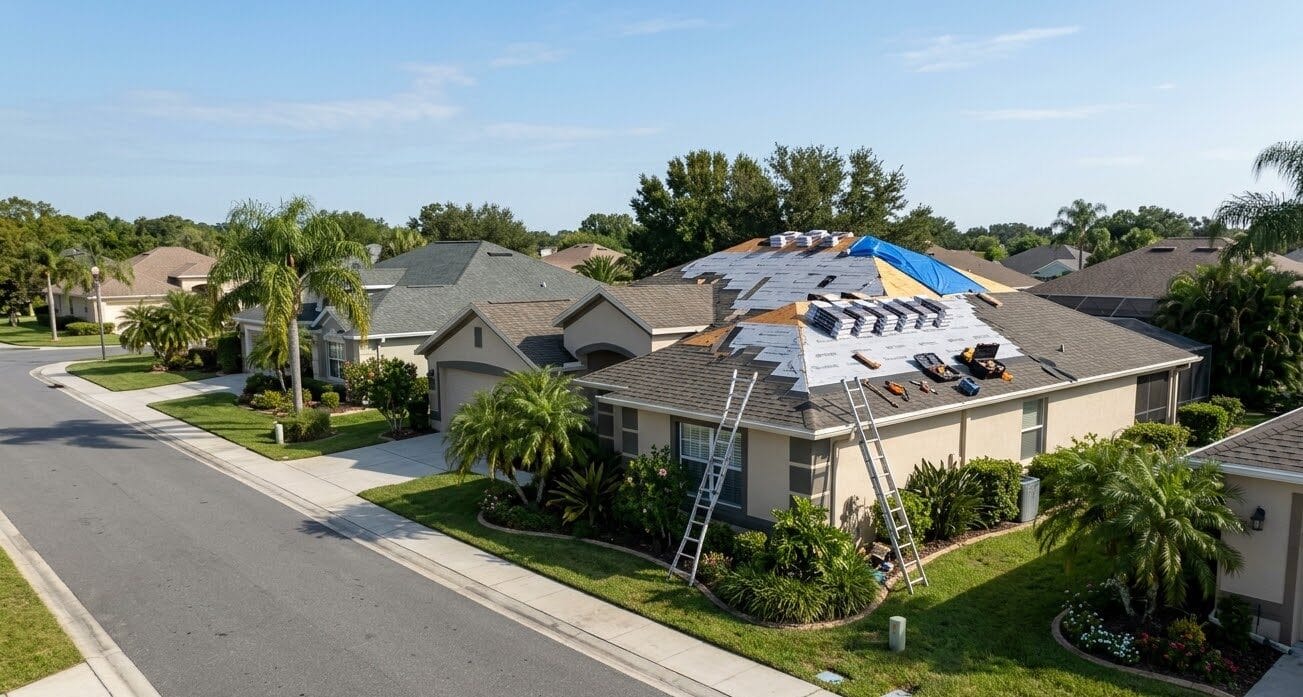
The Villages spans county lines, and the building department that issues your permit is decided by geography, not by the community. The same ARC process applies across the footprint, but the permit does not.
Most of The Villages sits in unincorporated Sumter County, where Building Services operates out of 7375 Powell Road in Wildwood and can be reached at 352-569-1529. Northern sections fall into Marion County. The Lady Lake and Lake County area, which is also the older part of the community, is handled by the Town of Lady Lake and Lake County. Parts of the newer southern growth fall inside city limits for Wildwood, and other edges touch Fruitland Park and Leesburg.
This matters for two reasons. Fee schedules differ by jurisdiction, so a number a neighbor quotes you may simply be from a different building department. And inspection scheduling differs, which is the part that affects your install date. Before you compare quotes, confirm which office your address files with, because a contractor who works one side of the community and not the other will be learning your jurisdiction on your job. Protech Roofing works throughout The Villages and files in the office your address actually belongs to.
The Sumter County Re-Roof Packet, Item by Item
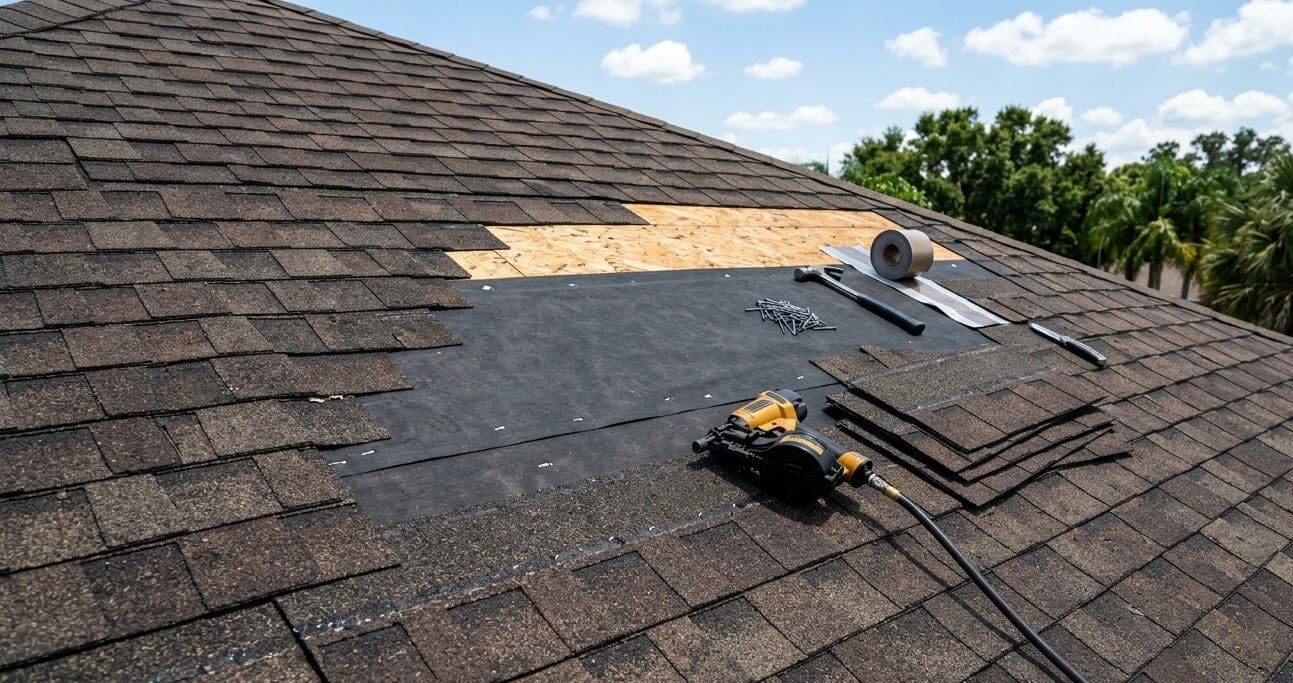
For a re-roof or roof-over in Sumter County, the submittal requirements are short enough to list completely, which is useful, because every one of them is a place an application stalls:
- Square footage of the re-roof area and type of materials. The number and the material, not an estimate range.
- Drawings signed and sealed by a Florida design professional for a roof-over. A tear-off and replacement is a different animal from installing over an existing covering, and the roof-over is the one that pulls an engineer into the packet.
- Copy of the recorded deed. Proof you own what you are re-roofing.
- Product approval numbers. The Florida Product Approval or Miami-Dade Notice of Acceptance for the covering, the underlayment and the fasteners. This is how the county verifies the assembly is rated for the wind speed at your address.
- The Villages ARC approval where deed restrictions require it.
- Owner appearance in person if you are pulling the permit as an owner-builder rather than through a licensed contractor.
Notice how the product approval numbers and the ARC application overlap. Both of them require you to have settled on a specific product before either process starts. That is the single most useful scheduling insight in this article: the manufacturer, product line, color and profile have to be locked down before you can file anything with anybody. A roofer who wants to pick the shingle later is a roofer who has not started your paperwork.
The product approval requirement is also where the current code edition shows up in your packet, since the approvals have to be current for the code in force when you apply. We walk through what changed in the 2026 Florida Building Code roof provisions and why the application date, not the install date, is what governs.
What Sumter County Charges at the Counter
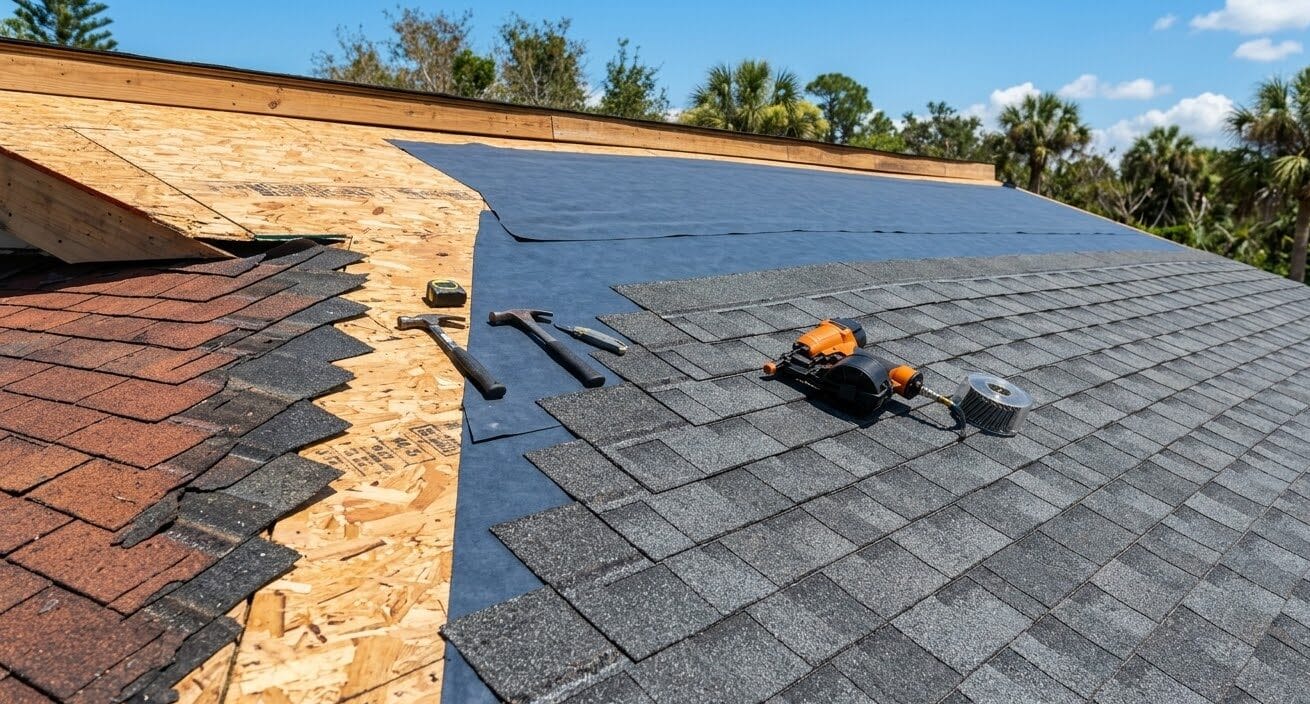
Sumter County uses flat fees for residential roof replacement rather than a percentage of job value, which is unusually homeowner friendly and worth knowing before somebody quotes you a permit line that looks like a percentage. Under the fee schedule effective October 1, 2024:
- Shingle, rolled or built-up replacement roofing: $121. Flat, regardless of square footage.
- Metal, clay tile or concrete: $181. Also flat.
- Florida surcharge: 1.0 percent of the permit fee, with a $2 minimum.
- Building Code Administrators and Inspectors Fund: 1.5 percent of the permit fee, with a $2 minimum.
- Plan review: $59 for the first half hour, then $59 per additional half hour.
- Inspections: $82 each, and a failed inspection generates another $82 that must be paid before the final can be requested.
Two numbers there deserve emphasis. The first is the flat fee itself. A shingle re-roof on a 1,400 square foot Villages home and a shingle re-roof on a 2,600 square foot home pay the same $121. If a contractor's estimate carries a permit line that scales with the size of your roof, ask what it is actually covering.
The second is the re-inspection fee. At $82, a failed inspection is not financially devastating, but it is a scheduling event. The inspector comes back on the county's calendar, not yours, and in the middle of a busy season that is days. Failed inspections on re-roofs are usually mundane: fastening pattern, underlayment lap, or missing documentation at final. They are also almost entirely preventable by a crew that has done the work in this jurisdiction before.
One more date to put on the calendar: permits expire 180 days after issuance. That is generous for a re-roof, and it is not generous if you pull the permit early to lock in a code edition and then wait on an insurance decision or a material backorder.
Build the Timeline Backwards From the Install Date
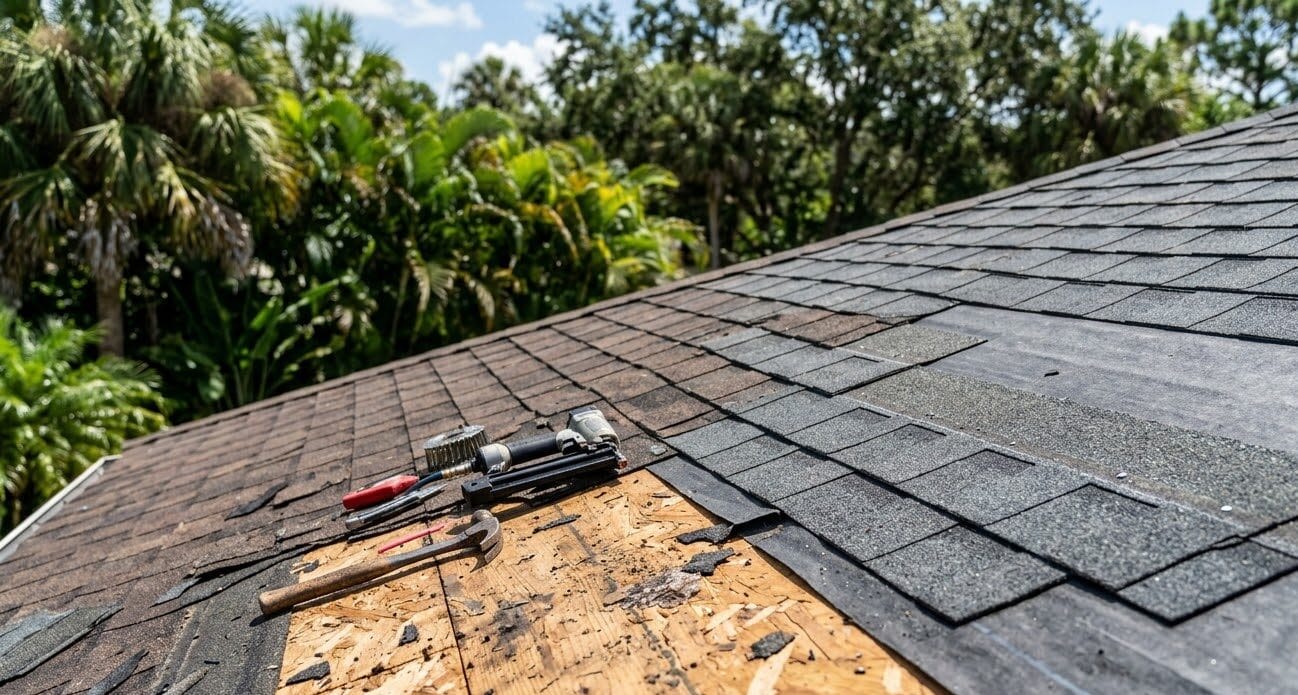
Put the two clocks next to each other and the sequencing becomes obvious. Work backwards from the week you want a crew on the roof.
- Step one, product selection. Manufacturer, product line, color and profile, chosen and confirmed available. Nothing else can start until this is done.
- Step two, ARC application, submitted to land before 5 p.m. Friday. Then budget 14 business days, about three calendar weeks, for the decision.
- Step three, county permit application with the ARC approval, the product approval numbers, the recorded deed and the square footage. Plan review is billed in half-hour increments, which tells you the county expects most residential re-roof packets to be reviewable quickly, if they are complete.
- Step four, material order and install, with the permit valid for 180 days from issuance.
- Step five, inspections on the county's schedule, with the final closing out the permit.
The honest headline number is this: from the day you pick a shingle to the day a crew shows up, a well-run Villages re-roof with no complications is a month or more of paperwork before anyone touches the roof. That is not a criticism of the process. It is the number to plan around, and it is why the homeowner who starts in September gets a comfortable install and the one who starts in November does not.
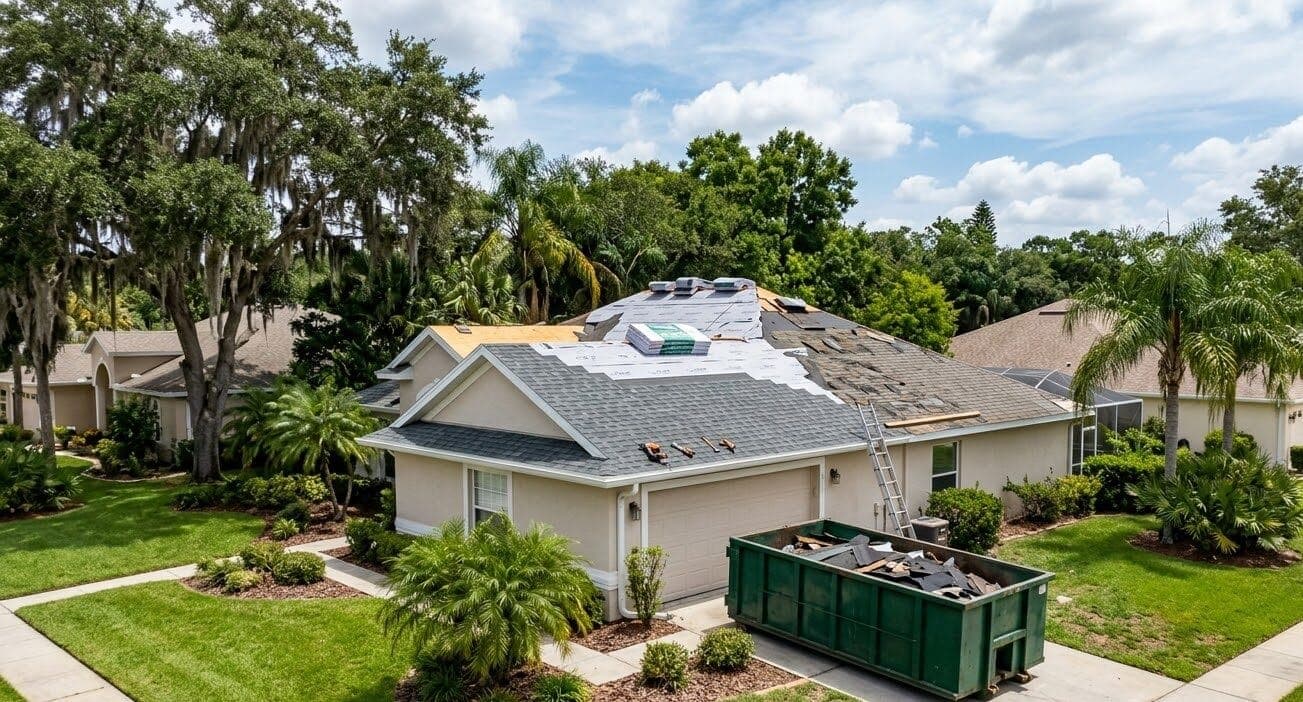
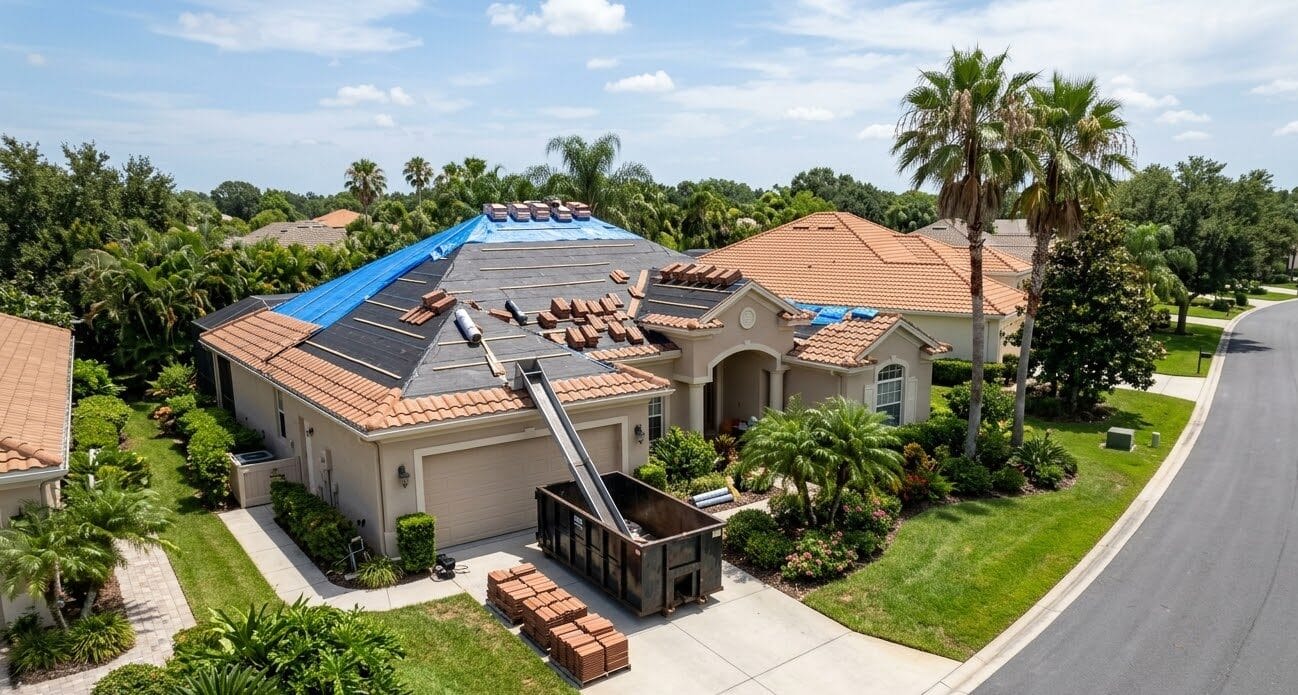
It is also why an emergency and a planned replacement are different projects. If a storm has opened the roof, the sequence is stabilize first and paperwork second, which is what storm damage restoration exists for. A tarp is not a modification to the exterior appearance of your home. A new roof is.
Where the Insurance Clock Collides With the ARC Clock
Here is the collision that catches Villages homeowners more than any other, and it comes from a good place: Florida law gives you real protection on roof age, and that protection has a deadline attached.
Under Florida Statute 627.7011(5), an insurer may not refuse to issue or renew a homeowner's policy on a residence with a roof less than 15 years old solely because of the age of the roof. Once the roof is at least 15 years old, the insurer must allow you to have an inspection performed by an authorized inspector, at your expense, before requiring replacement as a condition of issuing or renewing. And if that inspection shows the roof has 5 years or more of useful life remaining, age alone is off the table as a reason to refuse.
The Villages has a lot of housing stock that is now sitting on the wrong side of 15 years, which means a lot of these letters. When one arrives with a deadline on it, the arithmetic gets tight fast. If a carrier gives you 30 days to demonstrate a plan, the ARC's 14 business days consume most of it before the county has seen anything. The move is to file the ARC application the same week the letter arrives, not after you have finished negotiating with the carrier.
The other statutory piece worth knowing is the 25 percent rule, which is more often a friend than an enemy here. If your roof was built, repaired or replaced in compliance with the 2007 Florida Building Code, which took effect March 1, 2009, or any later edition, the rule no longer forces a full replacement when a portion is damaged. So the age of your roof determines which side of that line you are on, and it is worth finding out before you accept that a partial repair is impossible. A roof inspection in The Villages answers both questions at once: how much useful life the roof has for the insurance conversation, and whether a repair is legally available to you. If the carrier is already disputing scope, insurance claims assistance is a separate service from the roof itself.
For the longer view on when Villages roofs actually reach the end of their service life, and why so many of them are arriving there at once, our guide on roof replacement frequency in Florida and The Villages covers the aging curve in detail.
The Short Version
Pick the exact product first, because both the ARC application and the county's product approval requirement depend on it. Get the ARC application in before 5 p.m. Friday and count 14 business days, not 14 days. Confirm which building department your address files with, because The Villages spans Sumter, Marion and Lake counties plus several municipalities. Expect a flat $121 permit fee for shingle in Sumter County, $181 for metal or tile, plus the two state surcharges and $82 per inspection. And if an insurance letter with a deadline is what started all this, start the ARC application the same week, because that is the clock you cannot speed up.
Protech Roofing handles the ARC application and the county permit as part of the job, from product selection through final inspection, whether the work is a repair or a full roof replacement in The Villages. Estimates are free, and if what you need is a straight answer about whether this roof has another few years in it, that is what the inspection report is for. Call (352) 605-0696, and if the number is the obstacle rather than the roof, financing options are available.
FAQ
Frequently Asked Questions
Do I really need ARC approval to replace my roof in The Villages?
+
How long does ARC approval take for a roof?
+
Can I change my shingle color when I replace the roof?
+
What does a roof permit cost in Sumter County?
+
My insurer sent a letter about my roof age. Does that change the ARC process?
+
Which building department issues my permit if I live in The Villages?
+
Related Articles
More guides for Florida homeowners
Roofing Warranties in Florida: What Voids Them
A new Florida roof usually carries two warranties: one from the manufacturer for the product and one from the contractor for the installation. Here is what each covers, what quietly voids them and how to keep your coverage.
Read Article
Best Roof Color for Florida Heat: Cool Roofs Explained
Florida test homes show a white shingle saves only 3 to 5 percent on cooling while reflective white metal or tile saves 18 to 26 percent. Here is how to choose a roof color that actually keeps your attic cooler.
Read Article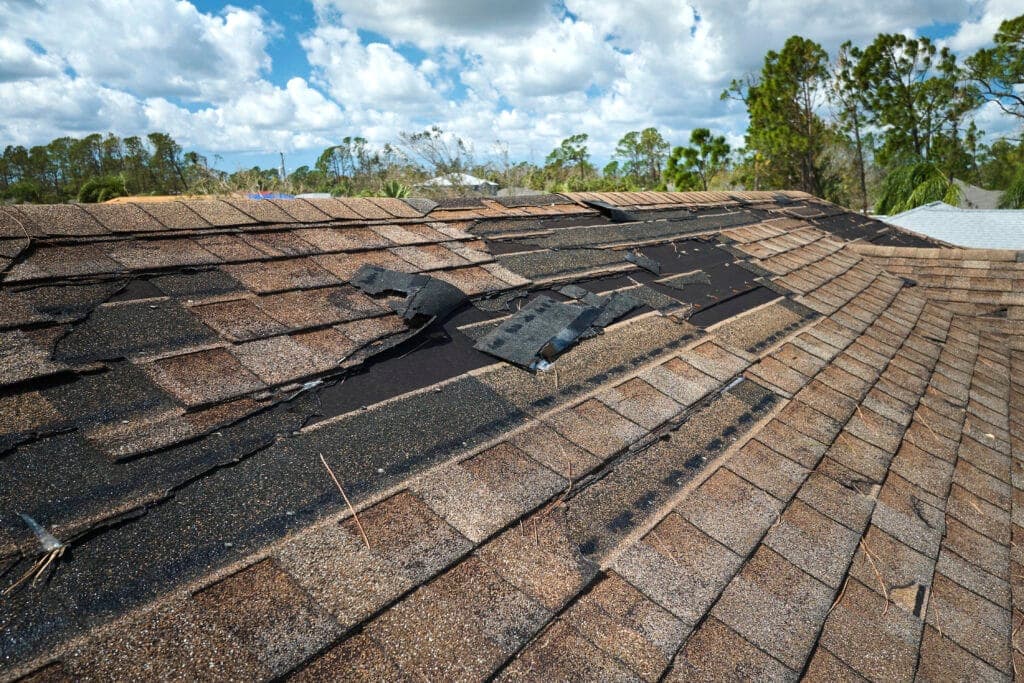
Roof Underlayment in Florida: The Hidden Layer Explained
Underlayment is the layer that decides what happens to your house when wind strips the shingles. Here is how felt, synthetic and peel-and-stick compare, what Florida code requires on a re-roof, and what each option costs in 2026.
Read ArticleReady When You Are
Get your free roof inspection today.
No-pressure, written estimate. Same-week scheduling across Hernando County. Call us now or request a visit online.