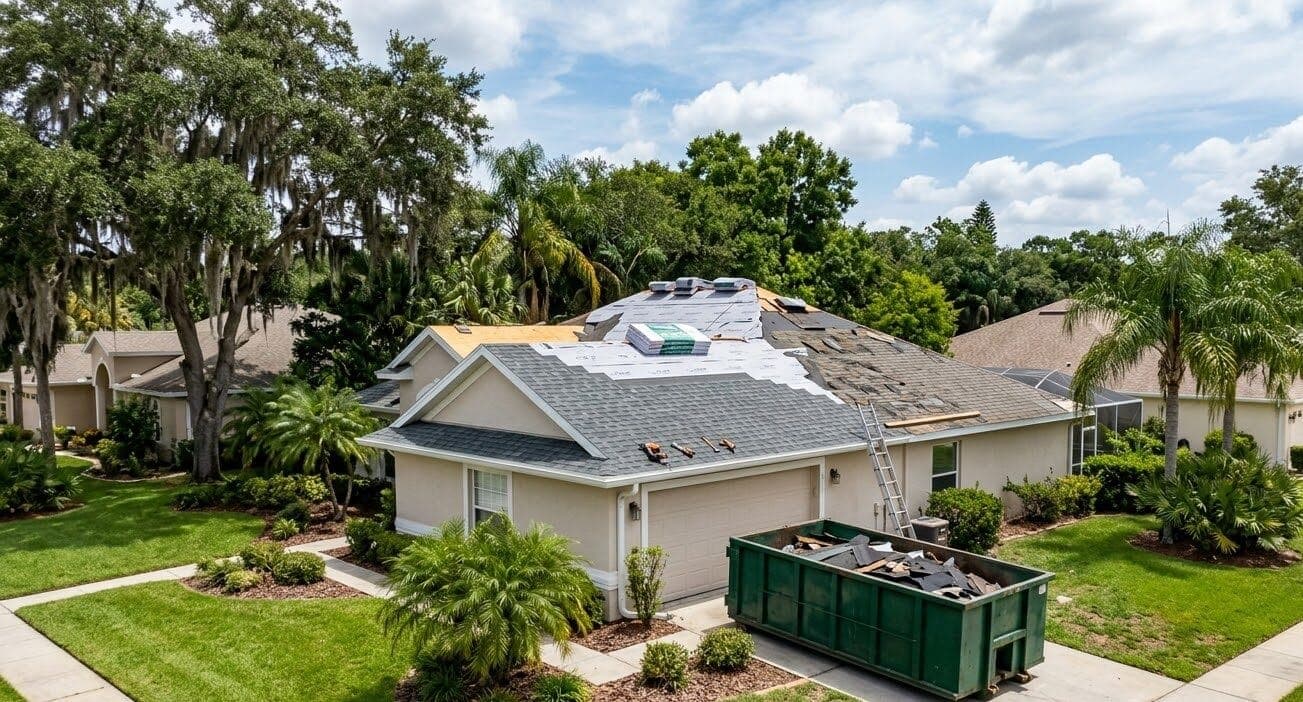
Blog
Pasco County Roof Permits: The Application, the Inspections, and the December 31 Deadline
Call (352) 605-0696Pasco County is the fastest growing county on the Gulf side of Central Florida, and its building department processes a volume of roof permits that reflects it. That is good news and bad news. The good news is that the process is standardized and predictable. The bad news is that a re-roof application with a missing document does not get a phone call, it gets a rejection in the portal, and you find out when you check. Here is what Pasco actually requires, in the order you will need it.
Yes, You Need a Permit, and the New Exemption Does Not Change That
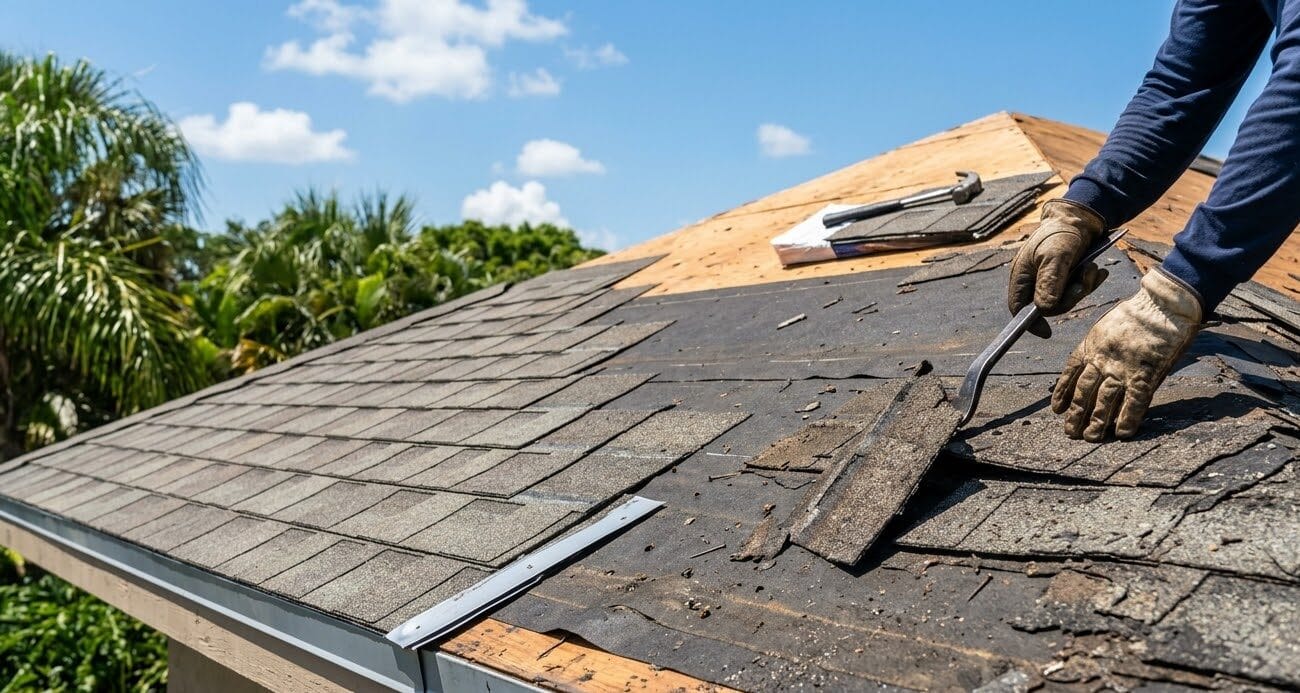
Roof covering replacement requires a permit in Pasco County. So does roof repair beyond the trivial. There is no square footage floor that lets a re-roof through unpermitted, and there is no version of this where a licensed roofer legitimately offers to skip it.
The question everyone is asking in the second half of 2026 is whether House Bill 803 changed this. HB 803 was signed on May 7, 2026 and took effect July 1, 2026. It requires local governments to exempt owners of single-family dwellings, and their contractors, from permitting for work valued under $7,500. Roofers have been asked about it on nearly every estimate since July, and the answer is no, for two reasons that each stand on their own.
- Structural work is excluded. The exemption does not reach electrical, plumbing, structural, mechanical or gas work. A roof deck, its fastening schedule and its uplift resistance are structural. A re-roof does not qualify.
- Flood hazard areas are excluded. The exemption does not apply to work on property partly or entirely within a flood hazard area as defined by the Florida Building Code. West Pasco has a great deal of mapped flood hazard area, from Aripeka down through Hudson, Port Richey and the Gulf Harbors canals.
- And a practical third. A $7,500 valuation ceiling would exclude nearly every full re-roof in Pasco anyway. The exemption is aimed at cosmetic interior work, and that is where it is doing real good.
If someone quotes you an unpermitted re-roof citing the new law, you have learned something more useful than a price. You have learned they either have not read the statute or are betting you have not.
Where the Permit Comes From and How to Reach a Human
Pasco County Building Construction Services is at 8661 Citizens Drive, Suite 100, New Port Richey, FL 34654, open Monday through Friday from 8:00 a.m. to 4:00 p.m. Applications go through PascoGateway, the county's Accela-based online portal, and residential permits are handled there rather than over a counter.
Two contact points are worth writing down before you need them. For permitting questions, the department can be reached at 727.847.8126, option 5, or by email at BCSCustomerService@MyPasco.net. For inspection scheduling and extension requests, the address is inspectionschedulers@mypasco.net. Those are different queues, and sending an inspection question to the permitting address is how a day gets lost.
One jurisdiction caveat that costs people a week. If your address is inside the city limits of New Port Richey, Port Richey, Zephyrhills, Dade City or San Antonio, the municipality may be your permitting authority rather than the county. Mailing address is not the test. Annexation is. Check the parcel record before you file, because an application to the wrong authority is not forwarded, it is refunded.
What the Application Has to Contain
Pasco calculates permit fees by the type and valuation of the work, with separate fees per trade, and the schedule is adjusted periodically. Confirm the current figure in PascoGateway rather than trusting a number from a blog, including this one. What does not change is the document list, and that list is where applications die.
- A licensed, county-registered contractor. Florida licensure through DBPR and registration with Pasco County are two separate things. A roofer can hold the first and not have completed the second, and the portal will not accept the application until both are in place.
- Product approval documentation. Every component in the assembly needs a current Florida Product Approval or a Miami-Dade Notice of Acceptance rated for the design wind speed at your address. That means the shingle or panel, the underlayment, the drip edge and the fasteners, not just the visible covering.
- Owner and parcel information with a declared valuation. The valuation drives the fee, and understating it to save fee dollars is a bad trade against an inspector who prices roofs for a living.
- A recorded Notice of Commencement when the contract exceeds $5,000. Florida Statute 713.135 requires the issuing authority to have a copy on file before the first inspection. Nearly every full re-roof clears $5,000, so plan on it. It gets recorded with the Pasco County Clerk.
- Two state surcharges. Florida Statutes 468.631 and 553.721 each add 1.5 percent of the permit fee with a $2.00 minimum. On a residential re-roof permit these are a rounding error, but they are why the total never matches the fee schedule exactly.
Three Inspections, Not One, and Two of Them Are Time Sensitive
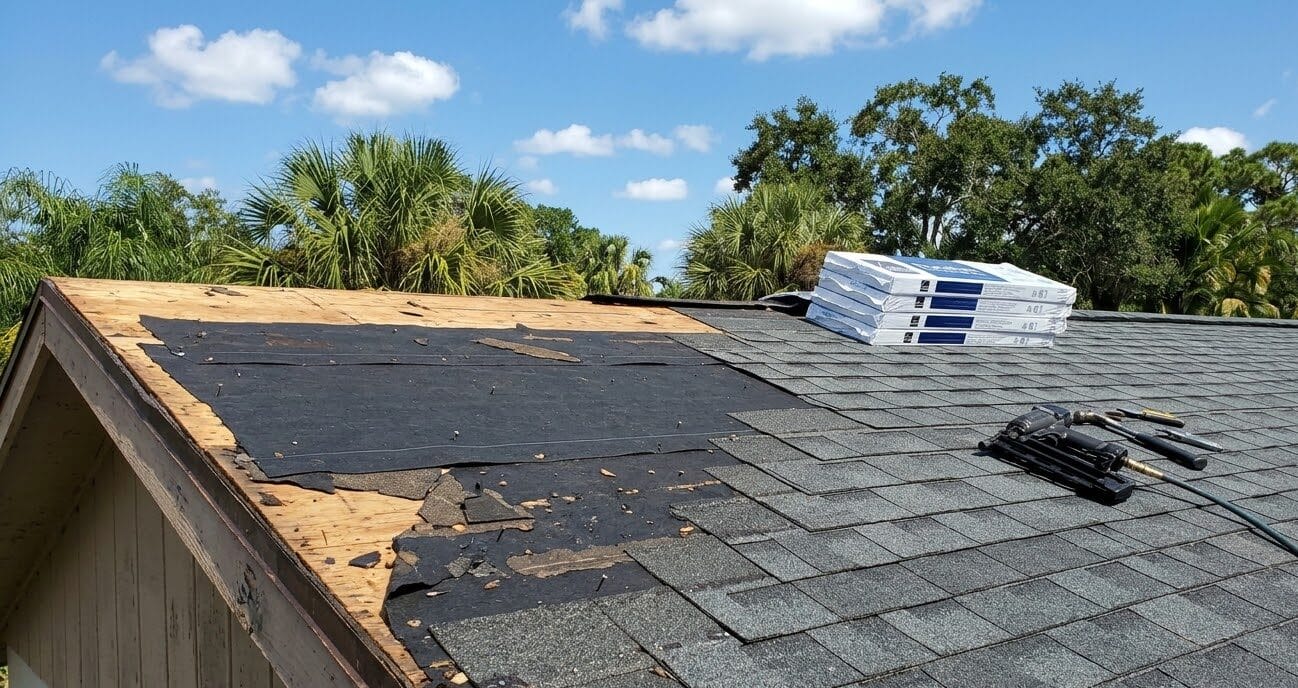
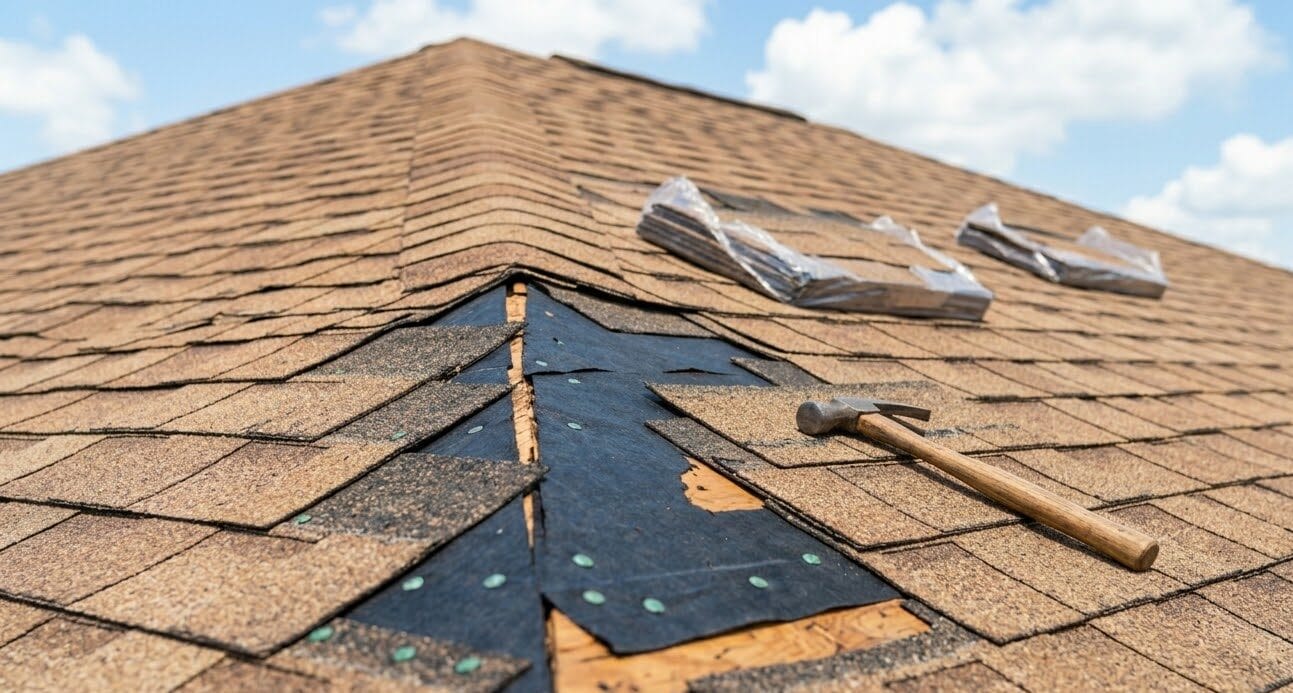
This is the part homeowners underestimate. A Pasco re-roof is inspected in sequence: dry-in, then nail-off, then final. Two of those happen while the roof is open, which means the crew cannot simply work through and call for an inspection at the end.
- Nail-off verifies the deck fastening schedule after tear-off, with the sheathing exposed. This is where re-nailing of existing decking to current uplift requirements gets confirmed. Cover it before the inspector sees it and you are opening it back up.
- Dry-in verifies the underlayment and secondary water barrier, again before the covering goes down.
- Final verifies the finished covering, the flashing details and the ventilation.
The practical consequence is scheduling risk. A crew that tears off Monday and hits an inspection backlog has your deck exposed under nothing but underlayment while a Gulf coast afternoon storm builds. A roofer who plans the tear-off around the inspection calendar rather than around the crew calendar is telling you something about how they operate. That is one of the things we look at during a roof inspection when a homeowner asks us to review a competing bid.
Florida Statute 553.791 also allows an owner or contractor to use a private provider for plan review and inspections instead of the county. On a straightforward residential re-roof this is usually more cost than it saves. On a commercial project against a hard deadline, or during the post-storm surge when county inspection queues stretch, it is a real option worth pricing.
Pasco Sits on Both Sides of the Wind-Borne Debris Line

This is the county-specific fact that changes materials, and it is the one most commonly gotten wrong by contractors who work statewide and assume one answer covers Pasco.
Florida assigns design wind speed geographically. The wind-borne debris region covers areas where the ultimate design wind speed exceeds 140 mph, and separately, areas within one mile of the coastal mean high water mark where the ultimate design wind speed is 130 mph or greater. Pasco County runs from the Gulf at Aripeka and Hudson all the way inland to Lacoochee and the Withlacoochee. A waterfront house in Hudson and a house in Dade City are not answering the same code question, and the difference lands on the opening protection and on which product approvals qualify.
Do not accept a general answer here. Confirm the address-specific ultimate design wind speed and wind-borne debris status with Building Construction Services before materials are ordered. This is the same split we described across Citrus County roofing, where the coastal side and the inland side fail in different ways, and Pasco has a longer coastline and more inland acreage than Citrus does. We work both ends of it, from Hudson on the Gulf to Dade City in the east.
The 25 Percent Rule, and the Exception Pasco Cannot Amend
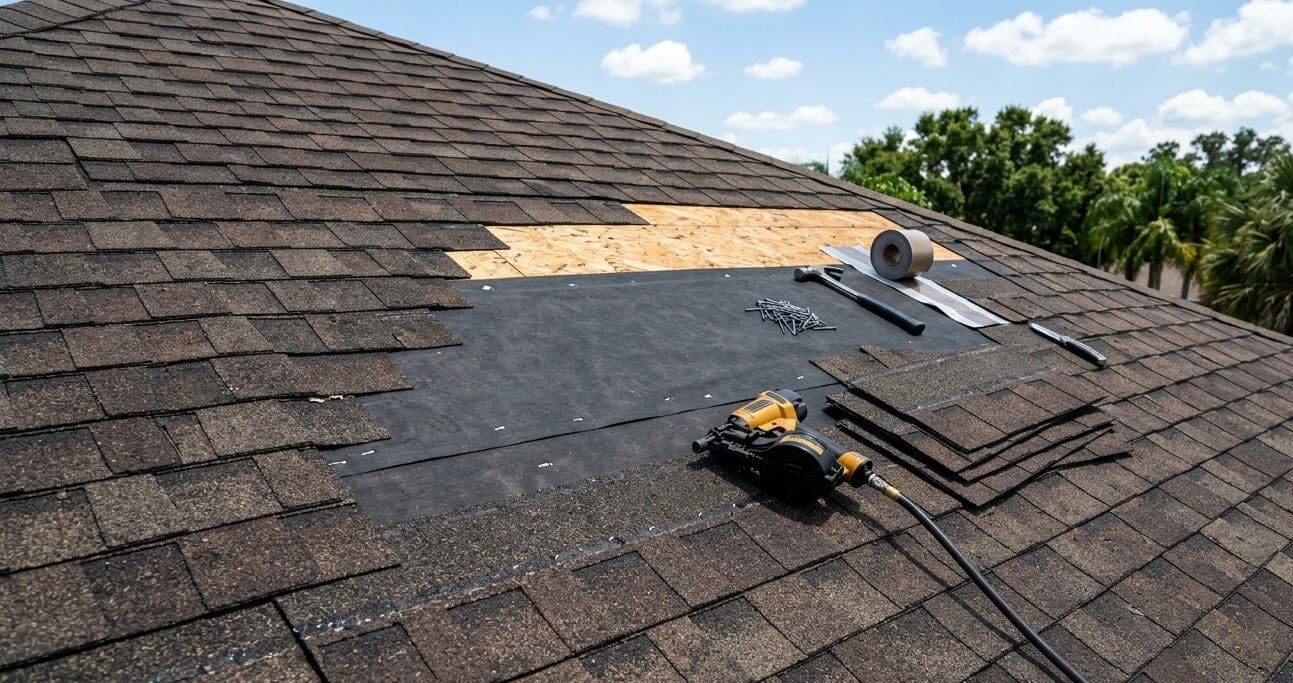
Florida's 25 percent rule is the provision that used to force a full code-compliant replacement whenever more than a quarter of a roof was repaired or recovered inside a twelve month period. It is still in the code, and it is still misdescribed constantly.
The current exception lives at Florida Statute 553.844(5). If an existing roofing system or roof section was built, repaired or replaced in compliance with the 2007 Florida Building Code or any later edition, and 25 percent or more of that system is being repaired, replaced or recovered, then only the repaired, replaced or recovered portion has to meet the code in effect. The rest can stay.
Two details do the work here. First, the 2007 code was not effective until March 1, 2009, so the practical dividing line for your roof is that date, not 2007. Second, and this is the part that matters when a plans examiner and a homeowner disagree, a local government may not adopt an ordinance amending this exception. Pasco cannot make it stricter. If you are told locally that a partial repair triggers a full replacement on a post-2009 roof, that position does not have a legal basis, and it is worth escalating politely with the statute number in hand.
Practically, this decides whether a hurricane claim on one slope becomes a one-slope job or a whole-roof job, and the dollar difference is usually five figures. It is worth pulling the original permit record before you accept anyone's characterization. Our insurance claims assistance starts with exactly that document search.
December 31, 2026: The Application Date Is the Trigger
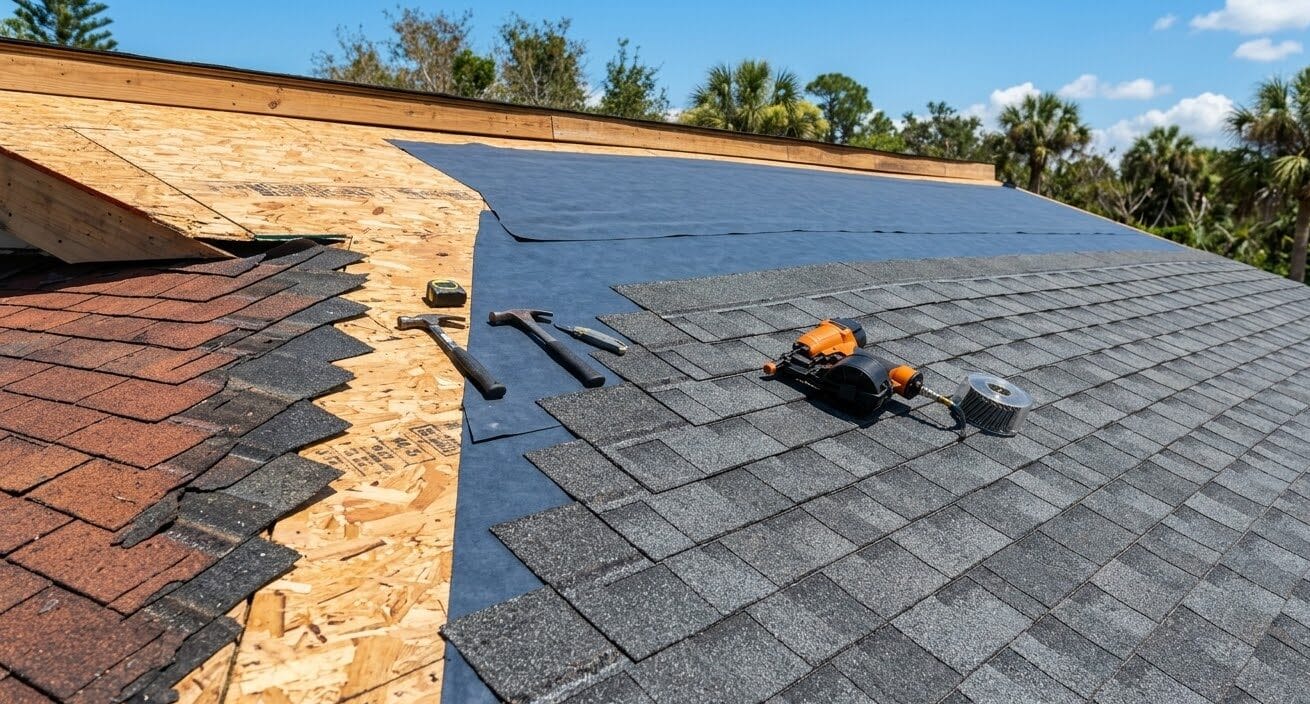
The 9th Edition of the Florida Building Code takes effect December 31, 2026. If you are planning a Pasco re-roof for late this year or early next, the single most useful thing to understand is that the permit application date determines which edition governs your job, not the installation date and not the contract date.
What is not changing: wind loads. The 9th Edition continues to reference ASCE 7-22, the same standard the 8th Edition already uses. Nobody's design pressure is going up on December 31.
What is changing is a set of provisions that, on balance, favor coastal roofs. Fastener corrosion requirements near saltwater are tightened. The drip edge requirement extends to gable ends rather than eaves only on steep-slope roofs of 2:12 and greater. A new section governs coatings applied over asphalt shingles. And the conditions under which an existing roof may be recovered rather than torn off are revised. For a waterfront Hudson roof, applying after the cutover is arguably the better outcome. For an inland Dade City roof, the difference is small either way. Our breakdown of the 2026 Florida Building Code roof changes goes through each provision.
The failure mode to avoid is drifting into the cutover by accident. If you sign in November and the contractor files in January because the schedule slipped, you got the 9th Edition without deciding to. Ask when the application will be filed, and get the answer in writing.
What an Unpermitted Pasco Roof Costs You Later
The permit fee is a small fraction of a re-roof. The absence of one is not.
- Wind mitigation credits evaporate. The state wind mitigation form documents roof covering compliance, deck attachment, roof-to-wall connection and secondary water resistance. An inspector cannot certify roof covering compliance without a permit record and product approvals. Those credits recur annually for as long as you own the house, and in the current Florida market they are among the few premium reductions still available.
- The claim gets harder. After a named storm, the carrier asks what was installed and whether it was permitted. Unpermitted work invites a coverage argument at the exact moment you have the least leverage.
- Closing stalls. Missing permits show up in title work. A buyer's lender can require retroactive permitting before funding, and retroactive roof permitting can mean opening the covering to expose the deck fastening an inspector never saw.
- The four-point inspection fails. Older Pasco homes need one to bind coverage at all, and roof age plus documentation is the first thing on it.
The Short Version
Every Pasco re-roof needs a permit and HB 803 does not exempt it. Applications go through PascoGateway, and the contractor must be both state licensed and county registered. Expect three inspections in sequence, two of them with the roof open, which makes scheduling a real risk rather than a formality. Confirm your address-specific wind speed and debris region status, because Pasco straddles the line. Know whether your existing roof predates March 1, 2009, because that decides how the 25 percent rule applies to a partial repair. And if the job lands anywhere near year end, decide deliberately which side of December 31 you want to be on.
Protech Roofing works throughout Pasco County and handles the permit from application through final inspection, whether the job is a repair or a total roof replacement. Estimates are free, and the inspection report tells you what your roof actually needs and what the county will actually require.
FAQ
Frequently Asked Questions
Do I need a permit to replace a roof in Pasco County?
+
Does the new $7,500 permit exemption cover a re-roof in Pasco?
+
How many inspections does a Pasco County re-roof require?
+
Is my Pasco County home in the wind-borne debris region?
+
Does repairing more than 25 percent of my roof force a full replacement?
+
Should I apply for my Pasco roof permit before or after December 31, 2026?
+
Related Articles
More guides for Florida homeowners
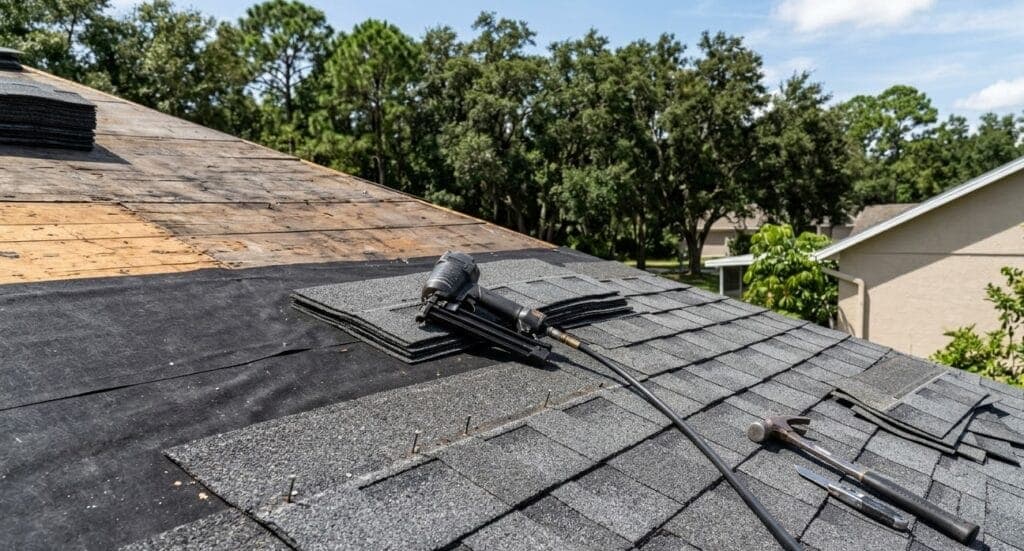
Solar Roofing in Florida: Solar Shingles vs Panels (2026)
Every solar system on a Florida roof is either bolted to the roof or is the roof. Here is how panels and solar shingles compare in 2026, what changed with the federal credit, and why the cheapest solar project often starts with a re-roof.
Read Article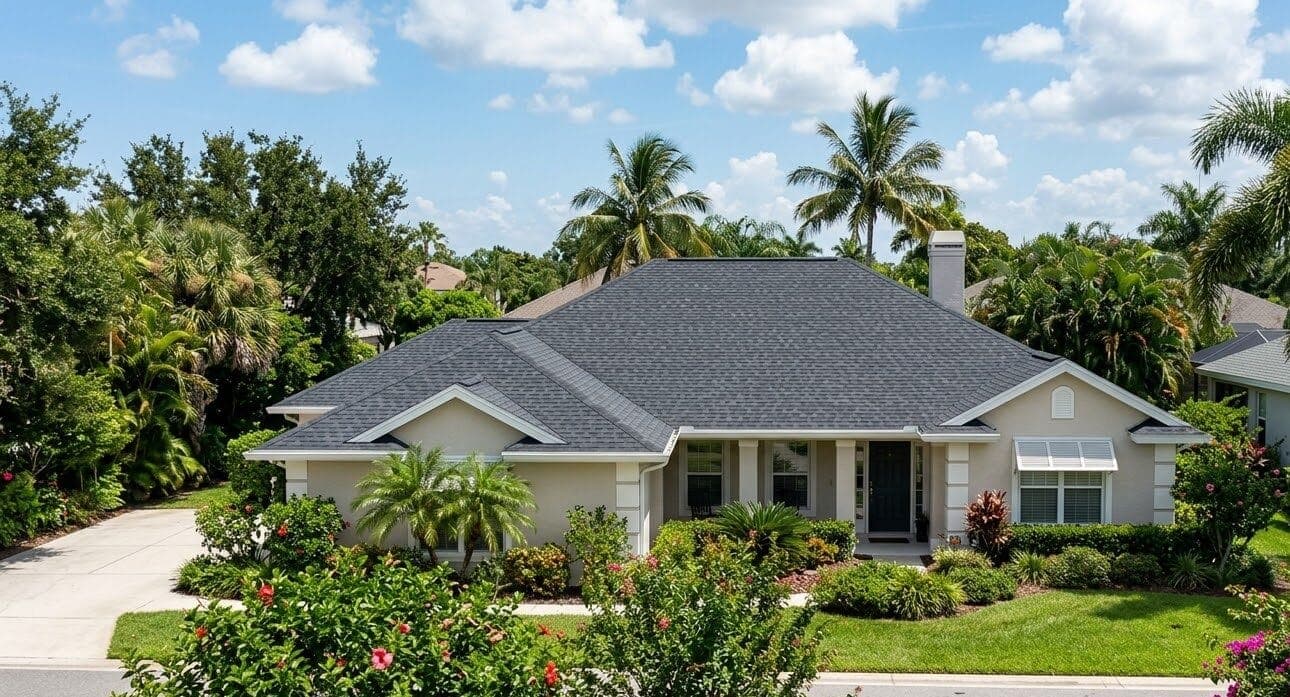
Pinellas Flood Zone Roofing: The 49% Rule Explained
Every article calls it the FEMA 50 percent rule. In unincorporated Pinellas County the number that governs your permit is 49 percent, measured against structure value without land. Here is what counts toward it, where a roof replacement actually lands in that math, and why simultaneous permits still aggregate even where the lookback period was repealed.
Read Article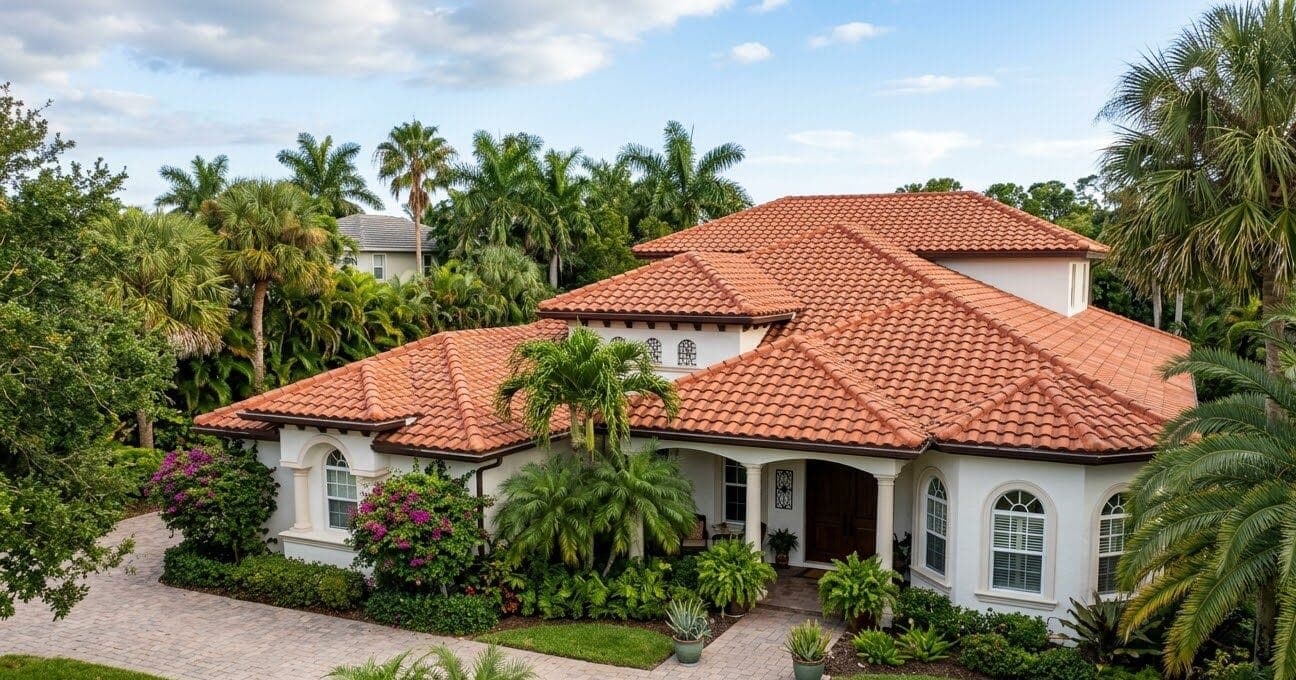
Citrus County Roofing: Salt, Shade and the 2026 Code
Crystal River and Inverness are twenty minutes apart and destroy roofs in completely different ways. One is a fastener metallurgy problem, the other is a moisture dwell problem, and the advice that fixes one does nothing for the other.
Read ArticleReady When You Are
Get your free roof inspection today.
No-pressure, written estimate. Same-week scheduling across Hernando County. Call us now or request a visit online.