Blog
Citrus County Roofing: Why Nature Coast Roofs Fail Early, and What Changes December 31
Call (352) 605-0696A roof in Crystal River and a roof in Floral City are twenty minutes apart and are being destroyed by two unrelated forces. One is losing its fasteners to salt. The other is holding water under a live oak canopy long enough to feed algae into its granules. Both roofs will fail early, both owners will blame the shingles, and the maintenance program that saves one does nothing at all for the other. Here is how to tell which roof you own, and what the Florida Building Code change on December 31, 2026 means for the permit you are about to pull.
Two Counties in One, and Your Roof Only Knows Which One It Is In
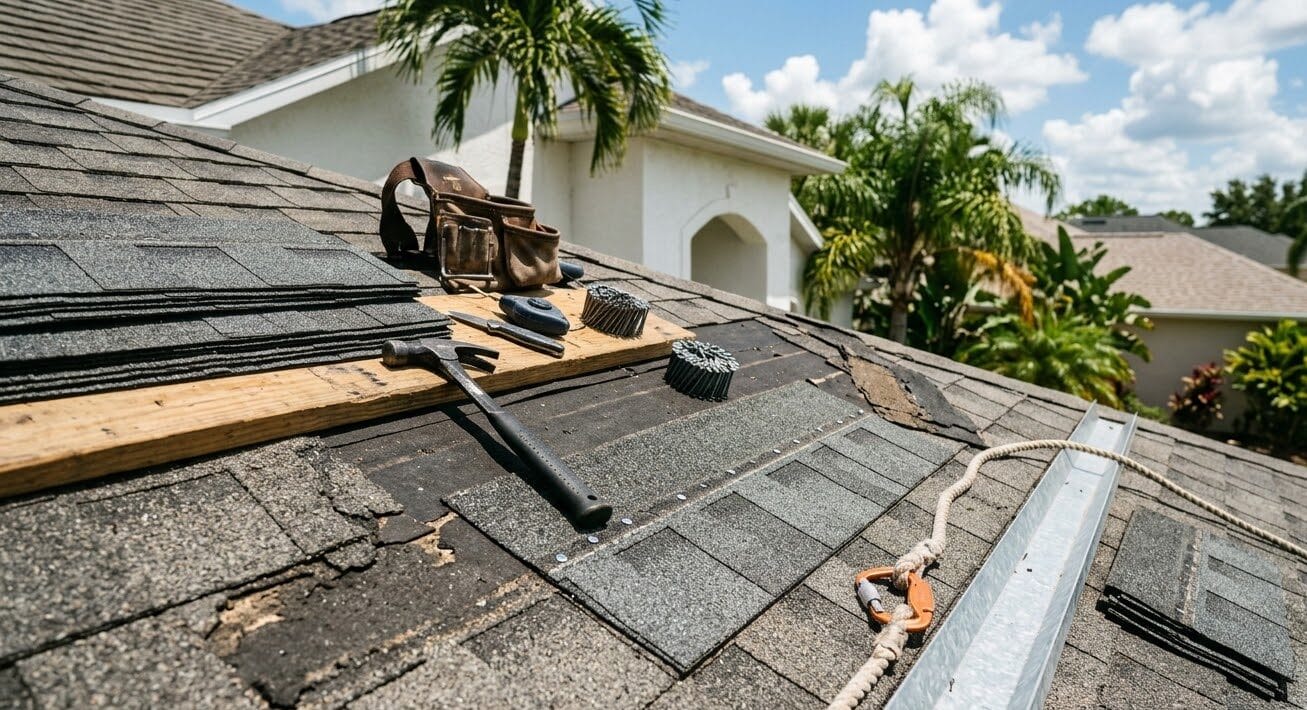
Citrus County does not have one roofing climate. It has two, and they fail roofs in completely different ways. The line between them runs roughly along US 19, and which side of it your house sits on changes the fasteners, the ventilation strategy and the maintenance schedule your roof needs.
West of that line, in Crystal River, Homosassa, Ozello and Chassahowitzka, the roof is fighting salt. The Gulf is close enough that airborne chloride settles on the roof surface every night and stays there until rain washes it off. Salt does not attack the shingle mat. It attacks every piece of metal in the assembly: the drip edge, the valley flashing, the pipe boots, the ring-shank nails holding the whole thing down, and the vent housings.
East of it, in Inverness, Floral City, Hernando and Beverly Hills, the roof is fighting shade and moisture. Citrus County has one of the densest hardwood canopies on the Nature Coast, and a roof under live oaks stays wet for hours after a roof in an open subdivision has already dried. That extra dwell time is what feeds algae, moss and lichen, and it is why two identical roofs installed the same week by the same crew can look ten years apart at year twelve.
Most roofing advice written for Florida assumes one condition or the other. Citrus County homeowners get bad advice constantly because the person giving it is picturing the wrong half of the county.
The Salt Side: Corrosion Is a Fastener Problem Before It Is a Leak
The failure sequence on the coastal side of Citrus County is predictable, and it almost never starts where homeowners look.
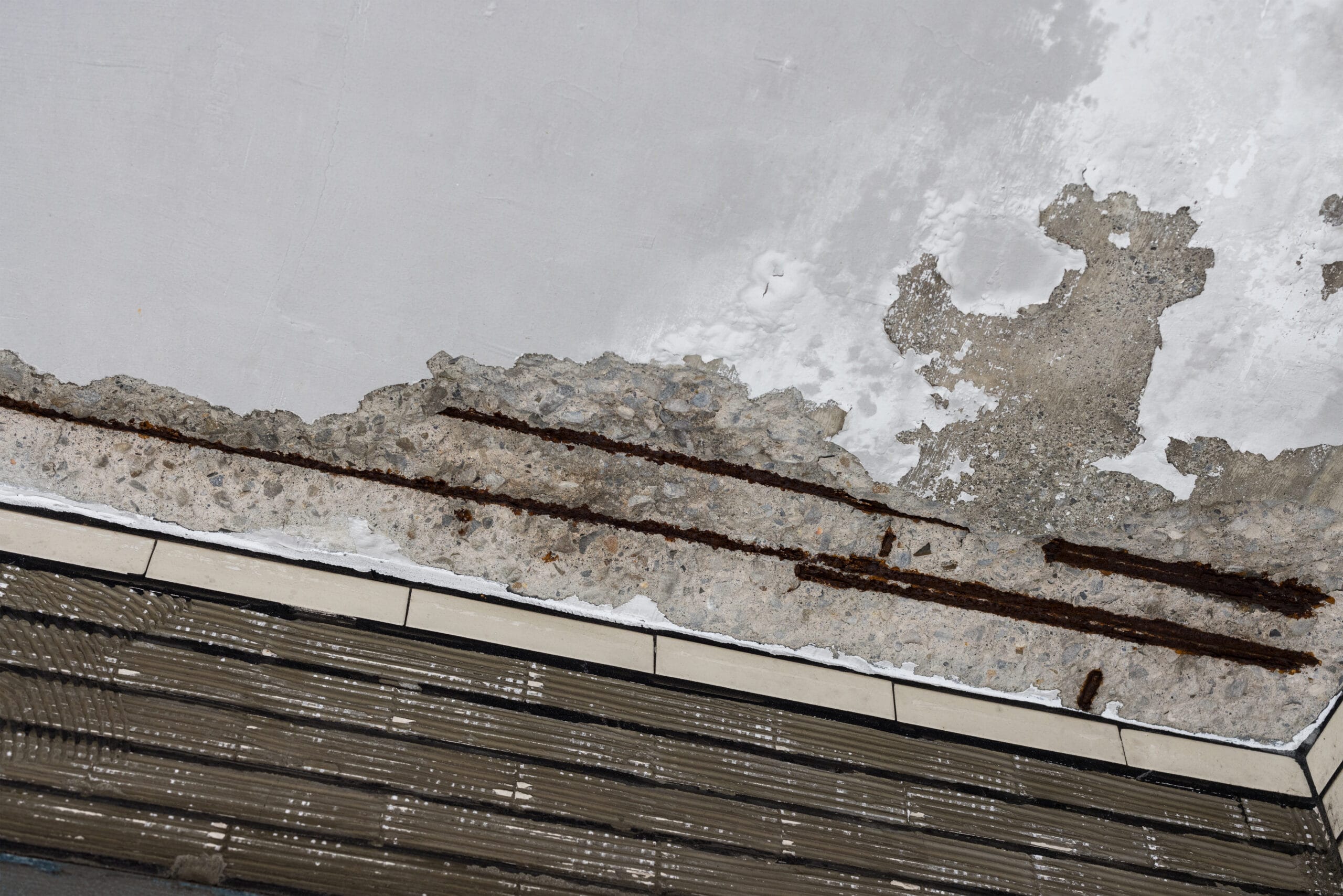
It starts at the nail. A standard electro-galvanized roofing nail has a thin zinc coating. In chloride-heavy air that coating sacrifices itself faster than it would twenty miles inland, and once it is gone the steel shank corrodes. The nail head swells slightly as rust expands, which lifts the shingle tab just enough to break the seal strip. Now wind gets under the tab. The shingle above it starts to flutter in every afternoon storm. Eventually a gust takes it, and the homeowner concludes the shingles were defective.
They were not. The fastener was wrong for the address. This is exactly why the incoming code revision treats fastener metallurgy near saltwater as a wind-resistance issue rather than a durability footnote, and it is the right way to think about it. A roof only resists uplift as well as the metal holding it down.
What a coastal Citrus County roof should specify:
- Fasteners: hot-dipped galvanized or stainless steel, not electro-galvanized. The cost difference on a typical re-roof is small compared to the labor of doing it twice.
- Drip edge and flashing: heavier gauge metal, and never mixed metals in contact. Aluminum flashing touching a steel fastener in salt air sets up galvanic corrosion that eats the softer metal.
- Pipe boots: lead or heavy neoprene with a stainless clamp. The cheap thin-rubber boot is the single most common leak source on Gulf-side roofs, and it usually fails between year six and year ten.
- Vent housings: aluminum or coated steel rated for coastal exposure. Painted mild steel vents streak rust down the roof plane and telegraph the problem long before they leak.
If your roof is within a few miles of the water and the last crew used whatever nails were on the truck, that is worth knowing now rather than after a named storm. A roof inspection that specifically checks fastener condition and boot age costs nothing and tells you which decade your roof is actually in. The broader mechanics of chloride exposure on a roof assembly are covered in our guide to salt air roof damage on the Gulf coast.
The Shade Side: Algae Is Not Cosmetic Once It Holds Water
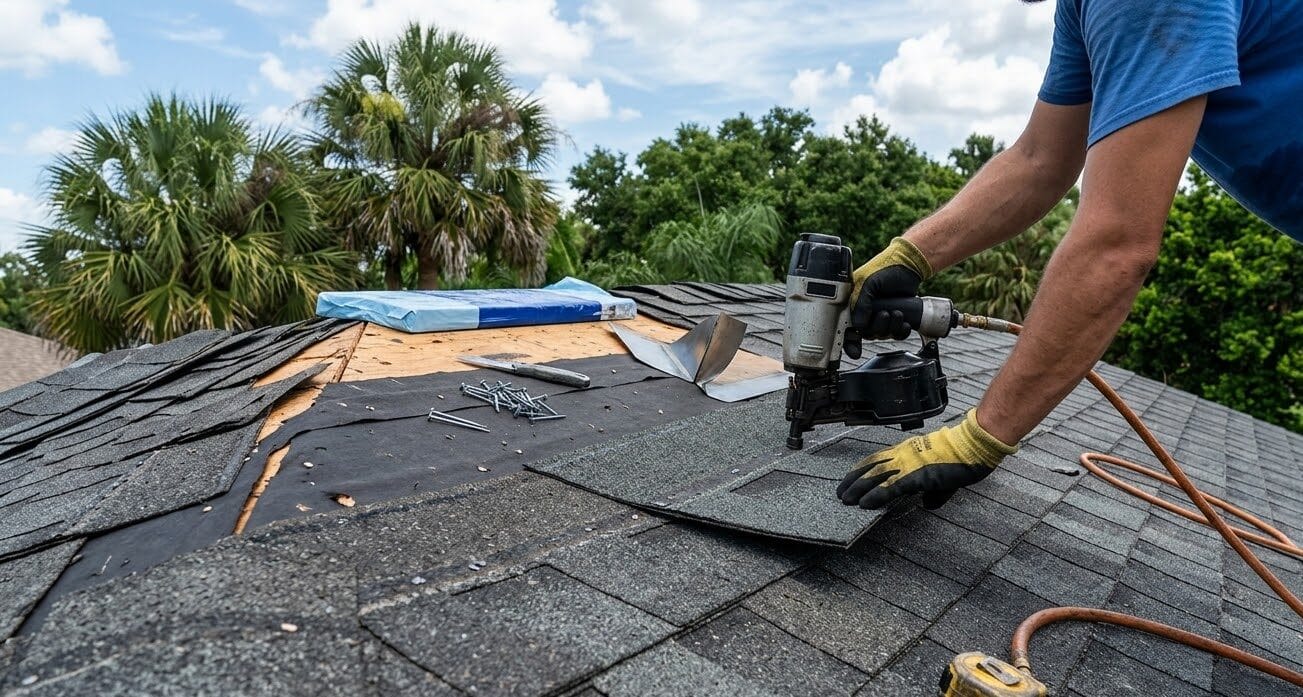
Homeowners in Inverness and Floral City are usually told the black streaks on their roof are "just algae" and purely cosmetic. That is half right. Gloeocapsa magma, the organism responsible for the streaking, does not eat asphalt. But it does hold moisture against the shingle surface, and sustained moisture is what loosens the granule bond.
Granules are not decoration. They are the shingle UV shield. When they wash into the gutter, the asphalt underneath is exposed to direct sun, and asphalt without granule cover ages years per season instead of years per decade. That is the actual mechanism by which a shaded, streaked roof in Citrus County reaches end of life several years before an identical roof in full sun.
Moss and lichen are worse than algae. Moss builds a mat that wicks water sideways under the shingle course, defeating the shed-water logic the whole assembly depends on. Lichen is worse still because it roots into the asphalt itself, and removing it takes granules with it. Once lichen is established, there is no clean recovery, only slowing it down.
The practical program for a shaded Citrus County roof:
- Trim back the canopy. Get limbs off the roof plane and open the area to airflow and morning sun. This does more than any product.
- Never pressure wash asphalt shingles. Pressure washing strips granules and can void a manufacturer warranty. Soft washing with the correct solution is the only appropriate method.
- Consider algae-resistant shingles at replacement. Copper-infused granules inhibit growth, and on a shaded lot that feature earns its price difference.
- Keep gutters clear. Under heavy canopy, gutters fill with leaf litter faster, and a full gutter holds water against the fascia and the first shingle course.
Clogged gutters matter more here than the average Florida address because of rainfall intensity. Summer afternoon storms in Citrus County routinely drop two to four inches per hour for short bursts. A gutter that would handle a gentle rain overflows completely at that rate, and the water lands where it does the most damage: at the wall line. Sizing and gutter installation on a wooded lot is a different calculation than on an open one.
The Code Change That Makes Your Permit Date Matter
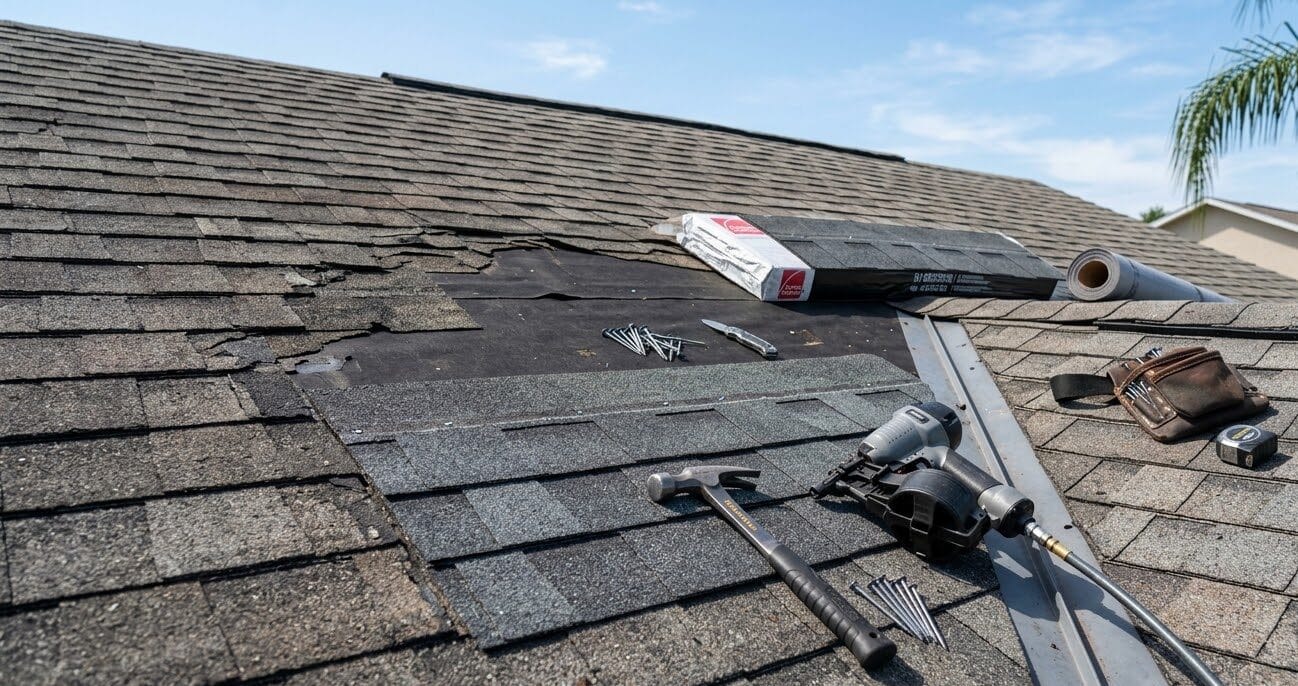
This is the most time-sensitive thing a Citrus County homeowner can know right now, and almost nobody has been told.
The 9th Edition of the Florida Building Code takes effect December 31, 2026. The date that decides which edition governs your roof is the date the permit application is filed, not the date work starts and not the date it finishes. A permit applied for before that deadline is governed by the 8th Edition. A permit applied for after it is governed by the 9th.
First, the thing people get wrong: wind loads are not changing. The 9th Edition continues to reference ASCE 7-22, the same standard the 8th Edition already uses. Anyone telling you the code change means your house suddenly needs a stronger roof is using a calendar as a sales tool.
What does change matters more on the coastal side of this county than almost anywhere else in the state. The 9th Edition tightens fastener corrosion requirements near saltwater, extends the drip edge requirement to gable ends rather than eaves only on steep-slope roofs of 2:12 and greater, adds a new section governing coatings applied over asphalt shingles, and revises the conditions under which an existing roof may be recovered rather than torn off.
For a Crystal River or Homosassa homeowner, the fastener and drip edge provisions are effectively a code-level endorsement of what a competent coastal roofer already specifies. That means the honest advice here is the opposite of urgency: if your roof needs replacing anyway, there is no reason to rush a permit in ahead of the deadline to avoid the newer rules, because the newer rules are the ones that protect a coastal roof. The full breakdown of what shifts is in our guide to the 2026 Florida Building Code roof changes.
The one case where filing early genuinely helps is a recover instead of a full tear-off, where the two editions handle the existing layer differently. That is a judgment call that depends on what is under your shingles, and it needs eyes on the roof before anyone can answer it.
Permits, Wind Speed and the Citrus County Building Division
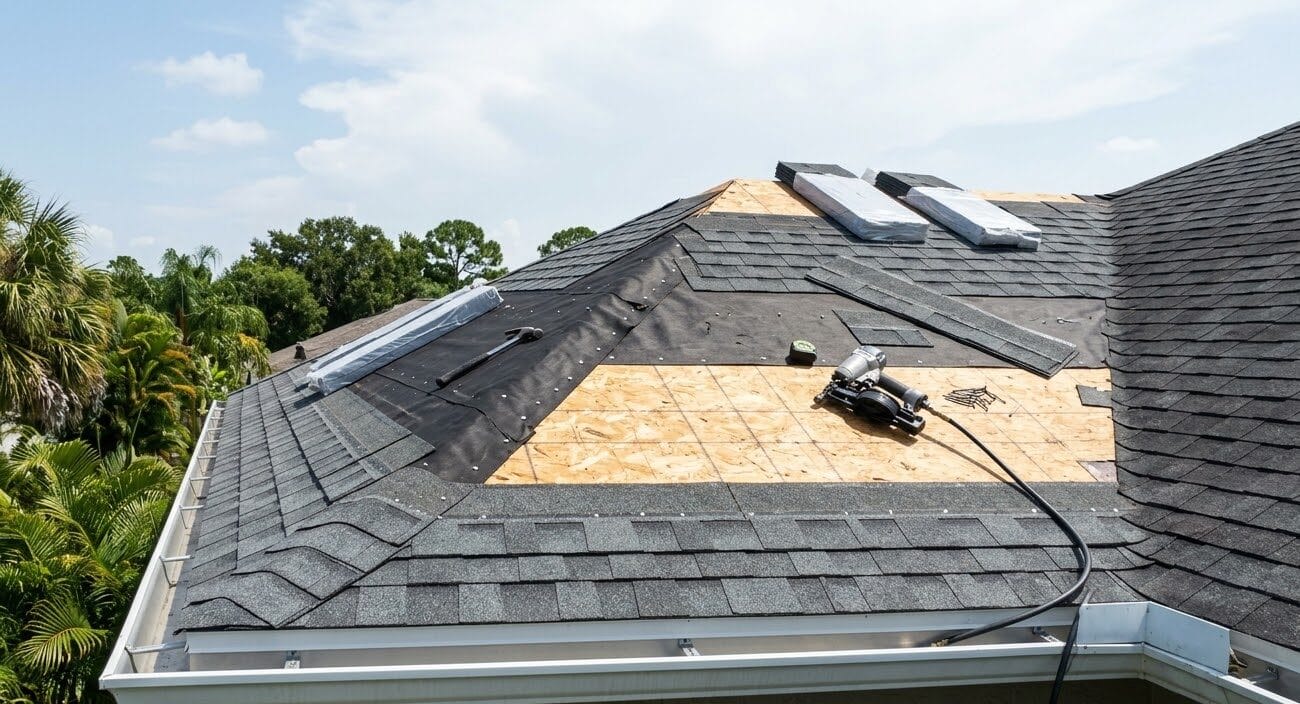
Every re-roof in Florida requires a permit. There is no square-footage exemption that lets a full roof replacement proceed without one, and a roof replaced without a permit becomes a problem twice: at insurance renewal, and at closing when the buyer's inspector finds unpermitted work.
Permits in unincorporated Citrus County go through the Citrus County Building Division, reachable at (352) 527-5310 during normal business hours. The Division also handles permit exemption requests, which require a written request with a copy of the written contract and a completed, notarized exemption form. Note that this is a narrow administrative process and not a way around a re-roof permit.
On wind speed, be careful with numbers you read online. Florida assigns design wind speed geographically, and the practical thresholds are these: the wind-borne debris region covers areas where the ultimate design wind speed is greater than 140 mph, and also areas within one mile of the coastal mean high water mark where the ultimate design wind speed is 130 mph or greater. Because Citrus County has both Gulf frontage and substantial inland area, properties in this county can fall on either side of that line depending on the specific address.
That is not a detail worth guessing at, because it changes what products are legal on your roof. Confirm your address-specific design wind speed and debris-region status with the Building Division or have your contractor pull it before materials are ordered. Any roofer who quotes a Citrus County roof without knowing which side of that line the house is on is quoting a number, not a roof.
The related benefit most homeowners leave on the table is insurance. A wind mitigation inspection documents features like roof deck attachment, roof-to-wall connections and secondary water resistance, and those credits apply to the premium. On a re-roof, several of those features are decided during the job, which means the time to think about the inspection is before the roof goes on, not after. Our guide to the wind mitigation inspection explains what the inspector actually checks.
What Fails First, by Roof Type, on the Nature Coast
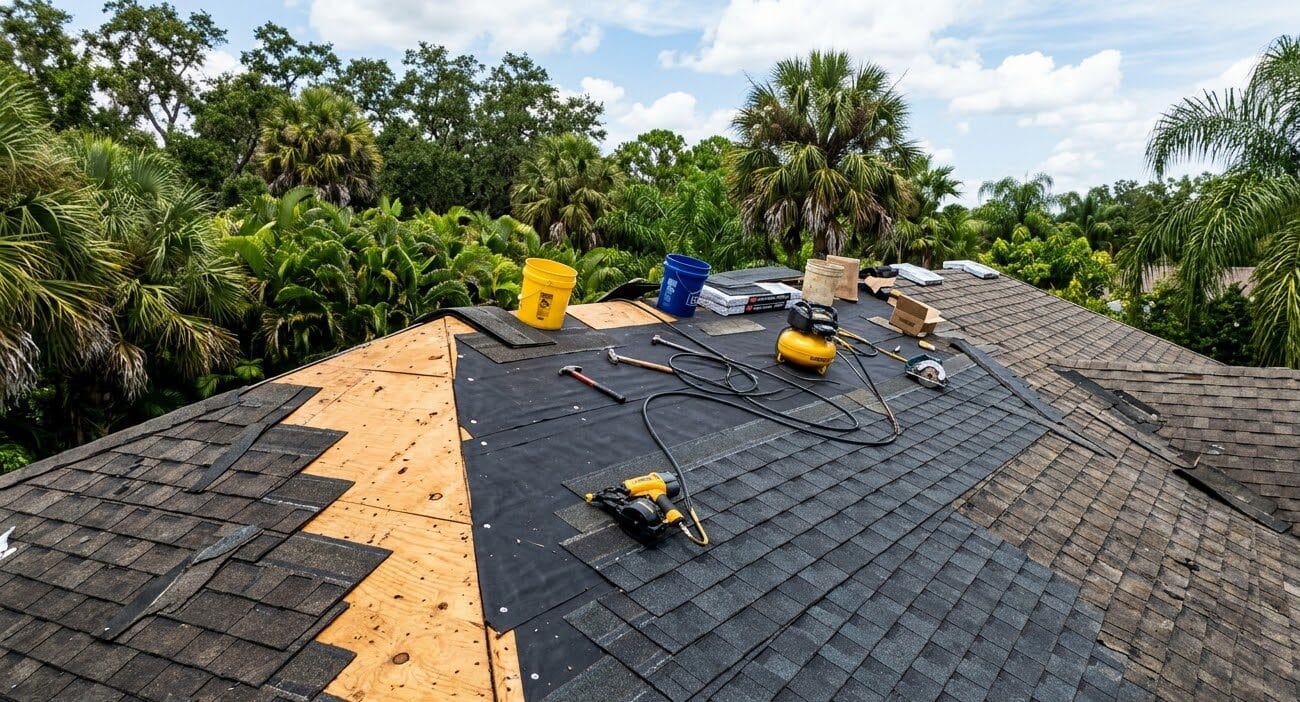
Different assemblies age differently in this county, and knowing the first failure point tells you what to watch.
Architectural asphalt shingles. The most common roof in Citrus County and the most sensitive to both local conditions. On the coast, fasteners and boots go first. Under canopy, granule loss and algae go first. Expect a realistic service life shorter than the printed warranty, because printed warranties are written for average national conditions and the Nature Coast is not average.
Metal. Genuinely strong in this climate for wind and for shedding water fast in intense rain, and it does not host algae. The caveat is that metal in a salt zone is a specification problem: panel coating, fastener metallurgy and the treatment of every panel cut edge decide whether the roof lasts forty years or streaks rust in eight. Metal is the right answer near the Gulf only if it is specified for the Gulf. Metal roofing systems and their coastal detailing are worth understanding before you price one.
Tile. Durable in itself, but tile roofs in Florida rarely fail at the tile. They fail at the underlayment, which is the actual waterproofing layer, while the tile is the wear surface protecting it. A tile roof can look flawless from the street with an underlayment that expired years ago.
Flat and low-slope. Common on additions, Florida rooms and lanai enclosures throughout the county, and the most common source of chronic leaks on otherwise healthy houses. Ponding water after those two-inch-per-hour storms finds every seam.
When a leak does show up, the location of the stain inside is rarely the location of the entry point outside, because water travels along the deck and down rafters before it drops. That is what leak detection and repair exists to solve, and it is why chasing a stain with a bucket of sealant usually fails.
When Damage Is Storm Related, Document It the Same Week
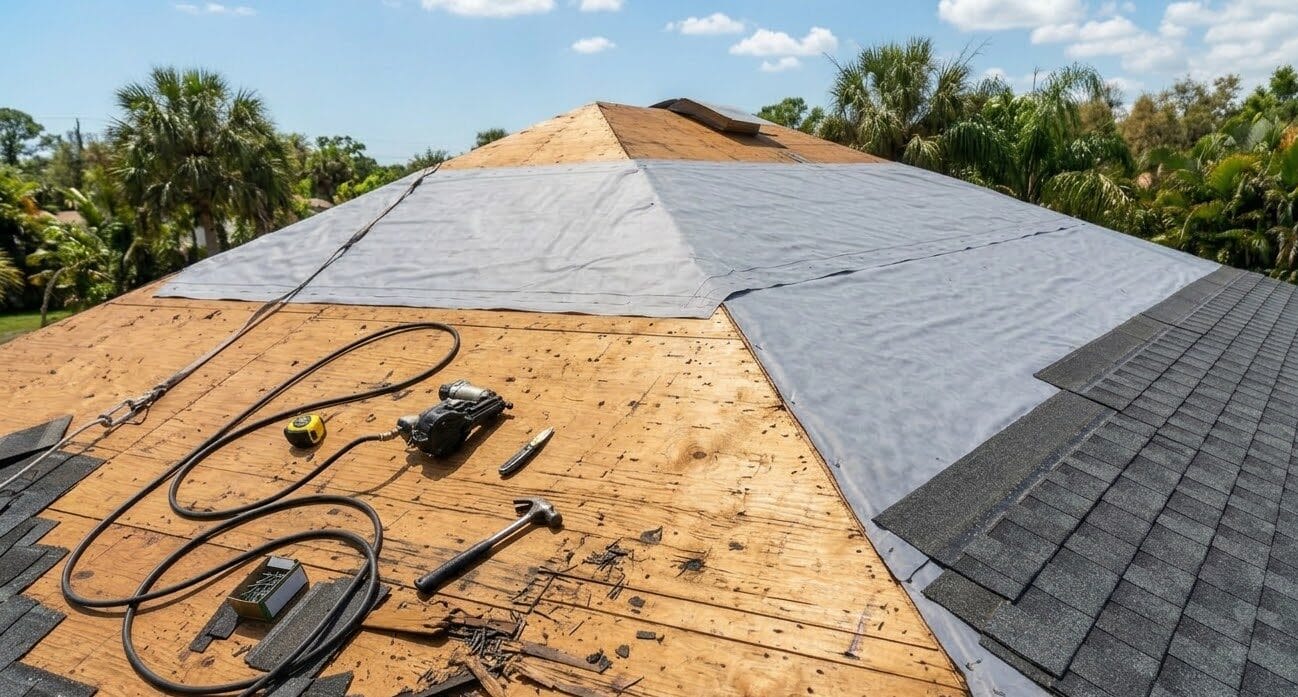
Citrus County sits on an open stretch of Gulf coast, and the low, flat terrain around Crystal River and Homosassa means storm surge and wind arrive together. When a named storm passes, the roofing decisions that matter happen in the first week.
Photograph the roof from the ground on all four elevations, photograph the gutters and the yard for displaced granules and shingle fragments, photograph any interior staining with a date-visible reference, and keep every receipt for temporary repairs including tarps. Insurers pay for reasonable emergency mitigation, but only when it is documented.
Do not sign a contract with a crew that shows up unsolicited the day after a storm. Verify the license, verify the local address, and understand that the fastest-moving contractor after a storm is frequently the one least likely to be reachable when a warranty question arrives two years later. Protech Roofing works this county from a fixed local base, and the number is (352) 605-0696.
If the damage is claim-scale, the sequencing matters: get your own documentation before the adjuster arrives, and understand what the policy actually covers versus what it excludes. Insurance claims assistance exists because the gap between a covered loss and a paid loss is usually paperwork, not damage.
The Short Version for a Citrus County Homeowner
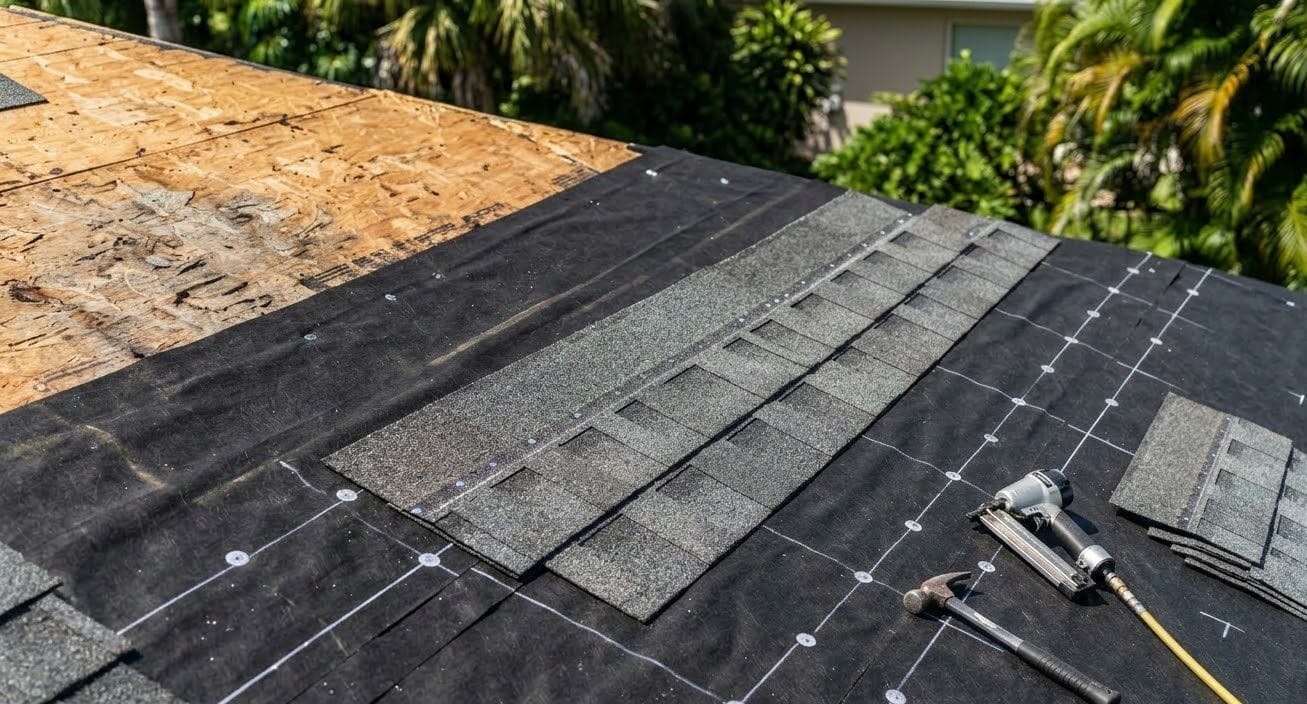
If you live west of US 19, your roof is a metallurgy problem. Specify hot-dipped galvanized or stainless fasteners, upgrade the pipe boots, inspect flashing and vents on a schedule, and treat the incoming code fastener provisions as protection rather than a burden.
If you live east of it under canopy, your roof is a moisture-dwell problem. Get limbs off the roof, keep gutters clear for high-intensity rain, soft wash rather than pressure wash, and specify algae-resistant shingles at replacement.
If you are replacing a roof in the next few months, know that the permit application date determines whether the 8th or 9th Edition governs, that wind loads are not changing either way, and that the newer provisions favor coastal roofs. And before materials are ordered, confirm your address-specific design wind speed and wind-borne debris status, because in this county that answer is genuinely different from one side of town to the other.
Protech Roofing serves all of Citrus County, including Inverness, and handles everything from a single boot replacement to a full roof replacement in Inverness. Estimates are free, and the inspection tells you what you actually have rather than what a sales script says you need.
FAQ
Frequently Asked Questions
Do I need a permit to replace a roof in Citrus County?
+
What is the design wind speed for a roof in Citrus County?
+
Should I pull a roof permit before December 31, 2026 to beat the code change?
+
Why does my roof in Inverness have black streaks but my friend's roof in Crystal River does not?
+
What fasteners should be used on a roof near Crystal River or Homosassa?
+
Is a metal roof a good choice on the Citrus County coast?
+
Related Articles
More guides for Florida homeowners
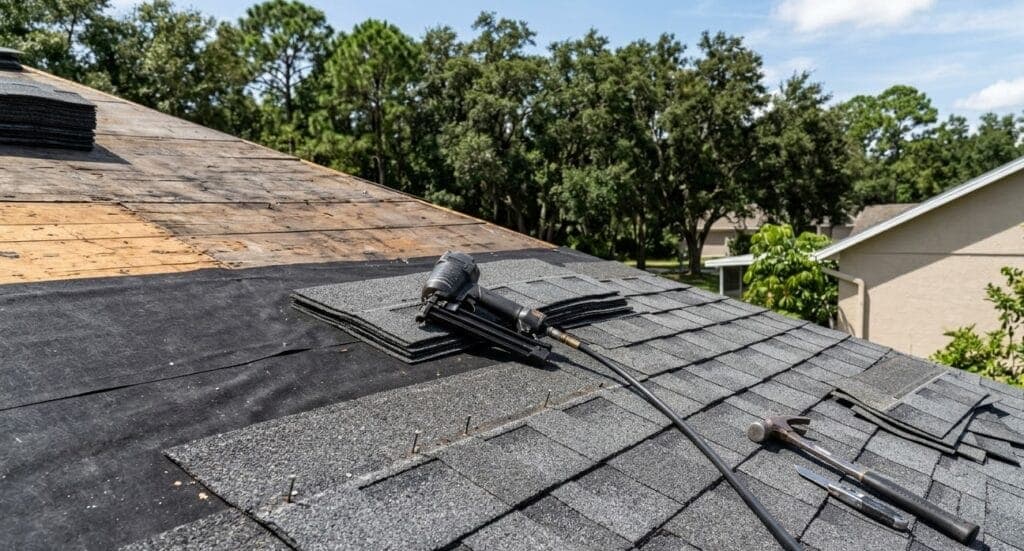
Solar Roofing in Florida: Solar Shingles vs Panels (2026)
Every solar system on a Florida roof is either bolted to the roof or is the roof. Here is how panels and solar shingles compare in 2026, what changed with the federal credit, and why the cheapest solar project often starts with a re-roof.
Read Article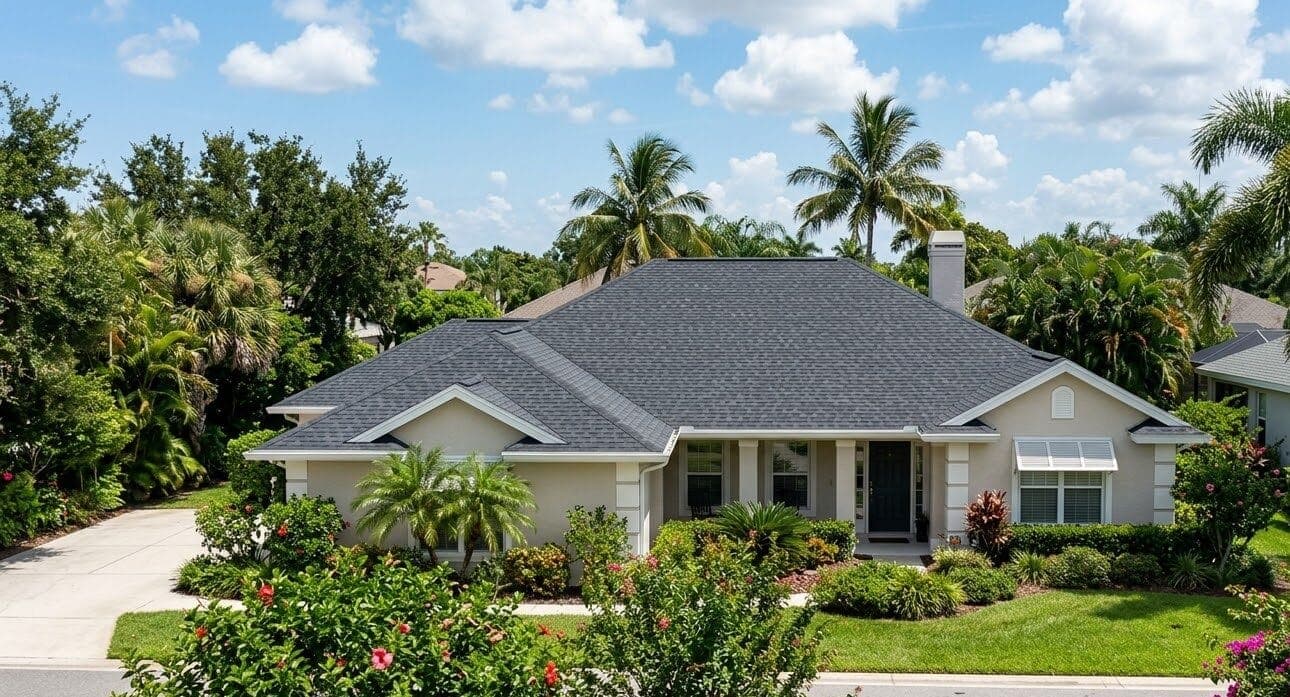
Pinellas Flood Zone Roofing: The 49% Rule Explained
Every article calls it the FEMA 50 percent rule. In unincorporated Pinellas County the number that governs your permit is 49 percent, measured against structure value without land. Here is what counts toward it, where a roof replacement actually lands in that math, and why simultaneous permits still aggregate even where the lookback period was repealed.
Read Article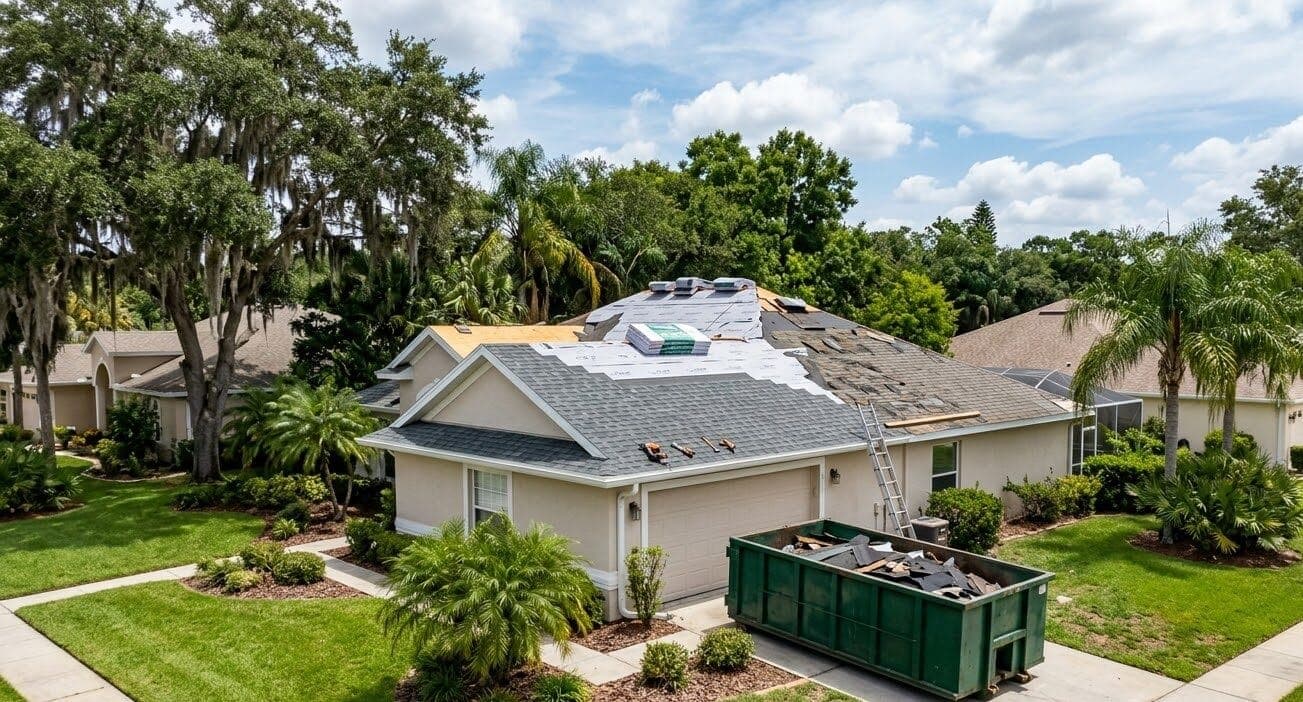
Pasco County Roof Permits: What 2026 Actually Requires
Pasco County runs its permitting through PascoGateway, inspects a re-roof three separate times, and sits on both sides of the wind-borne debris line. Here is what the application has to show and why the date you apply matters more than the date you install.
Read ArticleReady When You Are
Get your free roof inspection today.
No-pressure, written estimate. Same-week scheduling across Hernando County. Call us now or request a visit online.