Blog
TPO vs PVC vs EPDM in Florida: Which Membrane Survives 25 Years of Heat, Grease and Wind
Call (352) 605-0696There are only three single-ply membranes on the Florida commercial market that matter, and the sales material for all three says roughly the same thing: durable, energy efficient, long lasting. That is true of all of them and useless for choosing between them. What actually separates TPO, PVC and EPDM is a short list of physical properties, and each property maps to a specific kind of building. Get the map right and you buy 25 years. Get it wrong on a building with a grease exhaust fan and you buy eight.
The Three Membranes, Stripped Down to What Actually Differs
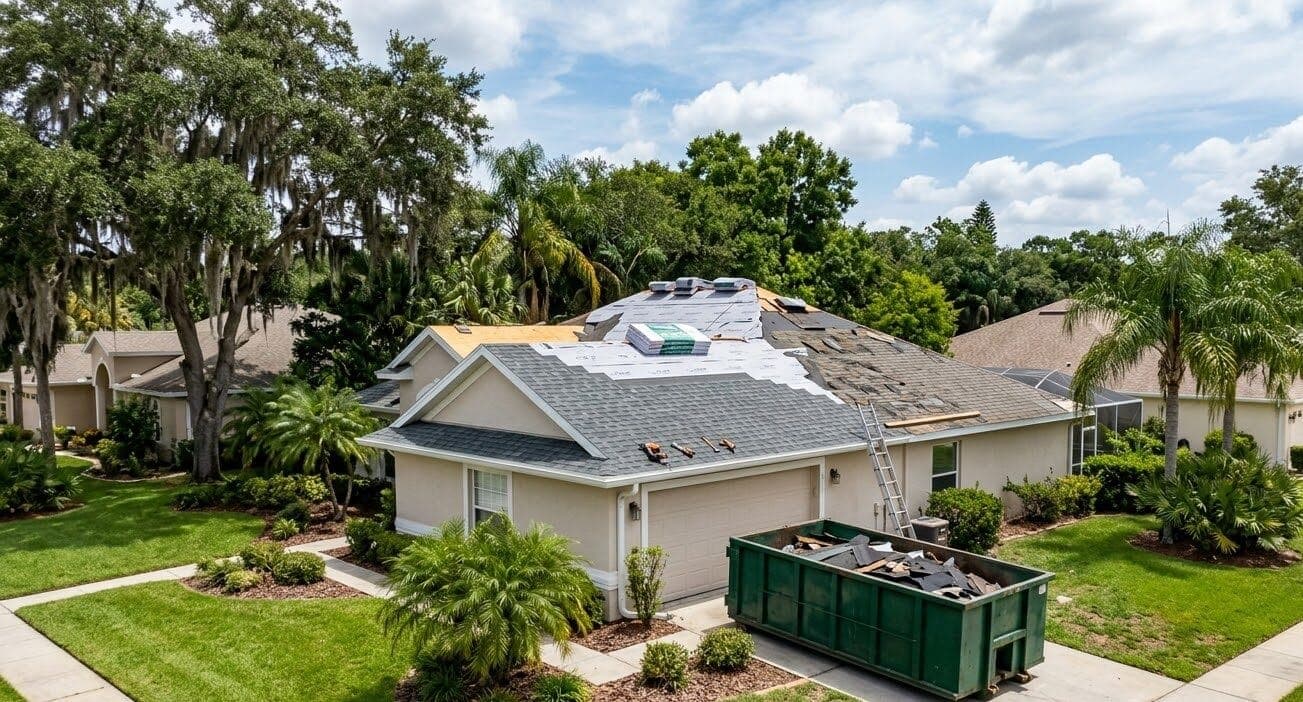
Every commercial flat roof bid in Florida lands on one of three single-ply membranes: TPO, PVC or EPDM. The marketing around them is thick enough that most building owners pick by price per square foot and hope. That is a mistake, because the price spread across the three is roughly $5 per square foot and the cost of choosing wrong on a restaurant or a hospital roof is a full tear-off eight years early.
Here is the honest version. TPO and PVC are both thermoplastics, which means their seams are heat welded. EPDM is a thermoset rubber, which means its seams are glued or taped. That single distinction drives most of what follows. Thermoplastic seams can be rewelded years later for repairs and additions. Thermoset seams cannot be rewelded, they can only be re-adhered, and adhesive is the part of an EPDM roof that ages first.
The second real distinction is color and reflectivity. TPO and PVC ship white as standard. EPDM is traditionally black, and white EPDM exists but costs more and is less common. On a Florida roof deck that hits 160 degrees on a July afternoon, that is not an aesthetic decision.
The third is chemistry. PVC contains plasticizers that give it flexibility and outstanding resistance to fats, oils, greases and most solvents. TPO does not have that resistance. EPDM is a rubber and is vulnerable to petroleum-based products in a different way. On a building with a kitchen exhaust fan, this distinction decides the whole job.
2026 Cost Per Square Foot: What Each System Really Runs
Installed pricing nationally in 2026 runs about as follows, and Florida sits at or slightly above the national midpoint because of code-driven fastening density and labor demand after storm seasons.
- EPDM: roughly $5 to $9 per square foot installed, with a 25 to 30 year service life. Lowest entry cost of the three.
- TPO: roughly $7 to $12 per square foot installed, with a 20 to 30 year service life. In Florida specifically, full TPO replacement commonly quotes at $11 to $14 per square foot, and a recover or overlay at $9 to $12.
- PVC: roughly $9 to $15 per square foot installed, with a 25 to 30 year service life. Florida full replacement commonly quotes at $13 to $17 per square foot, and recover at $11 to $14.
Two numbers matter more than the spread. First, on a 20,000 square foot roof, the gap between the cheapest EPDM and the most expensive PVC is roughly $120,000, which is real money and deserves an actual analysis rather than a preference. Second, on that same roof, a white reflective membrane saves an estimated $0.10 to $0.30 per square foot per year in cooling cost in southern climates, which is $2,000 to $6,000 a year. Over a 25 year roof, the reflectivity alone can outrun the entire installed cost difference between black EPDM and white TPO.
That is why the total cost of ownership math over 30 years usually lands like this: EPDM at 60 mil is the lowest total cost when reflectivity does not matter much, TPO at 80 mil closes the gap or wins once cooling savings are counted, and PVC costs the most up front and earns it back only in chemical exposure applications. If your building has no grease exhaust and no chemical discharge, PVC is often paying for a property you will never use.
Mil Thickness Is the Spec That Decides Your Warranty
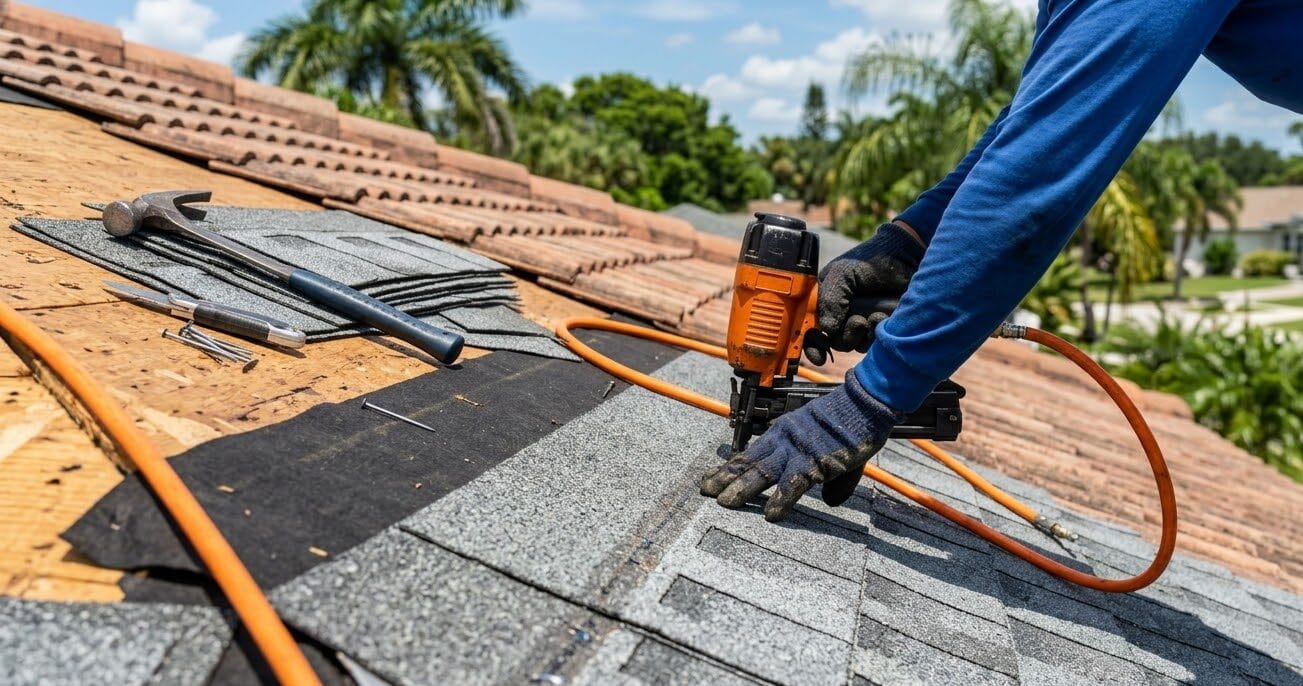
The single most common way a Florida commercial roof bid gets quietly cheapened is membrane thickness. TPO and PVC both ship in 45, 60 and 80 mil. A mil is one thousandth of an inch, so 45 mil membrane is about the thickness of a credit card and 80 mil is closer to two.
Here is the part that gets left out of the sales conversation. If you want a 20 year no dollar limit warranty from any major manufacturer, 60 mil is the minimum they will write it on. Carlisle, GAF and Johns Manville all require at least 60 mil for their premium and NDL warranty programs. Carlisle writes 20 to 30 year NDL coverage on Sure-Weld TPO, and GAF programs extend as far as 35 years on qualifying assemblies. The 80 mil product is what you specify for high traffic roofs, extreme climates and 25 to 30 year NDL terms.
So when a bid says "TPO with a 20 year warranty" and the line item says 45 mil, one of those two things is not true. Ask for the membrane thickness in writing, ask which warranty program the assembly qualifies for, and ask who registers the warranty. A manufacturer NDL warranty is registered by an approved applicator, not by whoever hands you the invoice.
A related trap: warranty length is not lifespan. A 20 year NDL warranty on a membrane with a 25 to 30 year service life is normal and fine. A 30 year warranty on a system whose realistic Florida service life is 20 years means the warranty has exclusions doing heavy lifting. Read what is excluded, particularly ponding water, which is excluded or limited in most single-ply warranties and is the single most common flat roof failure mode in Florida.
Heat-Welded Seams vs Glued Seams: Where Florida Roofs Actually Fail
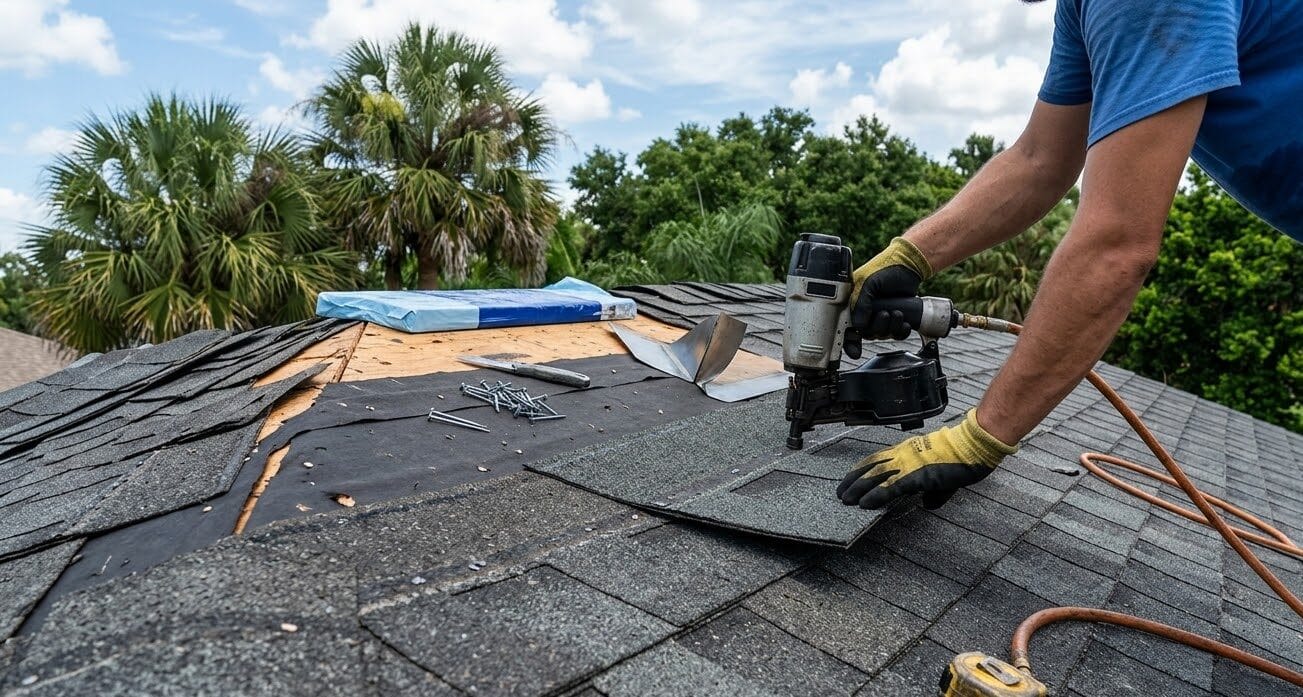
On a low-slope roof the field of the membrane rarely fails first. The seams and the details fail first. This is where the thermoplastic versus thermoset distinction stops being trivia.
TPO and PVC seams are joined with hot-air welders running around 1,000 to 1,100 degrees Fahrenheit. The weld fuses the two sheets into one continuous piece of material, and a properly executed weld is stronger than the membrane it joins, which means the seam is not the weak point of the system. Heat welded PVC seams have been tested through accelerated weathering equivalents beyond 50 years with bond strength intact.
EPDM seams are made with seam tape or adhesive. Modern factory-applied tape systems are far better than the liquid adhesive of the 1980s, and a well built EPDM roof performs for decades. But adhesive has a service life independent of the rubber, and in Florida that service life is shortened by thermal cycling: a black EPDM roof expands and contracts through a much wider daily temperature swing than a white membrane, and every one of those cycles works the seam.
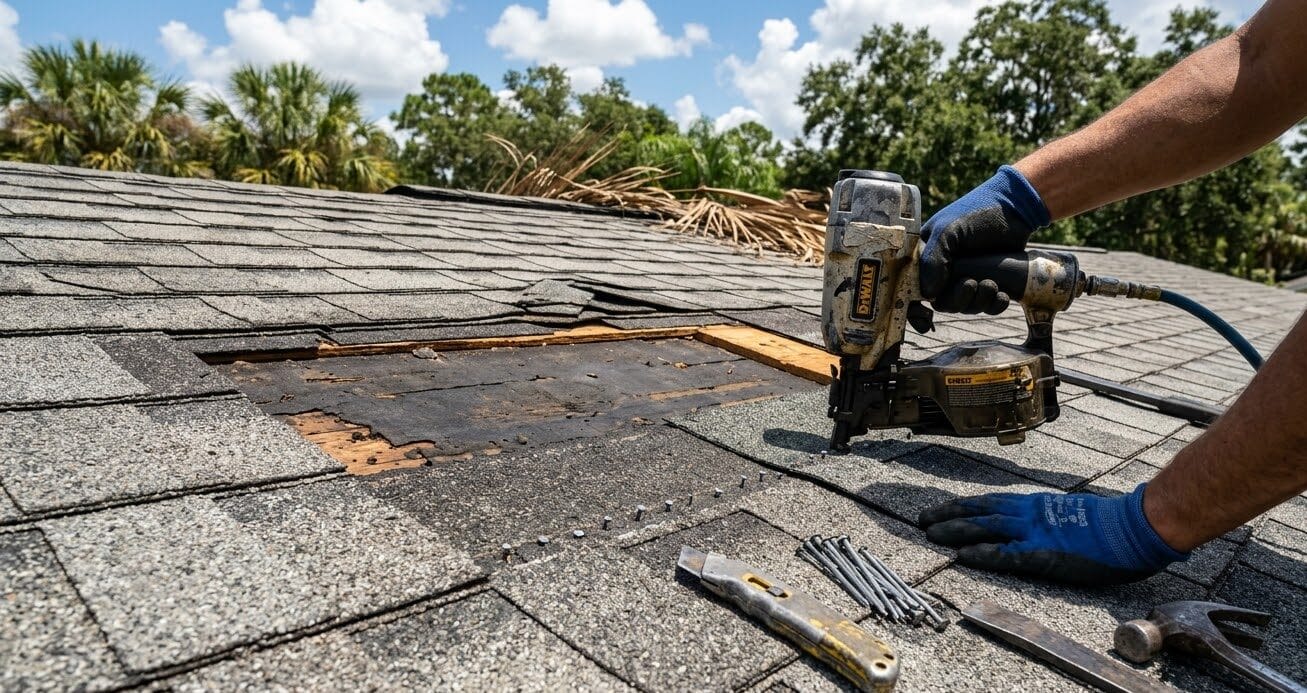
The practical consequence shows up at year 12 to 15. On a thermoplastic roof, a failed detail is cut out and rewelded, and the repair is as strong as original construction. On an EPDM roof, a failed seam is cleaned, primed and re-taped, and the repair is a new adhesive bond over an aged substrate. Both work. One ages better. If you want the diagnostic side of that, the process we use to isolate where water is actually entering is covered under leak detection and repair, because on a flat roof the stain inside is almost never under the hole.
Grease, Chemicals and Kitchen Exhaust: The One Case Where PVC Is Not Optional
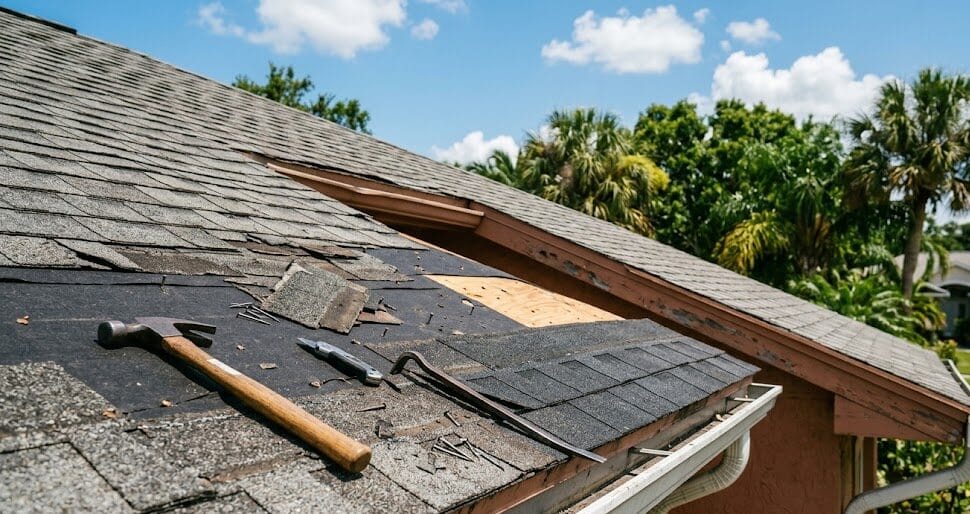
If your building has a commercial kitchen, a grease exhaust fan, a food processing operation or any chemical discharge on the roof, this section is the whole decision and price per square foot is a footnote.
Animal fats and vegetable oils behave like plasticizers. When they land on a TPO membrane, they migrate into the polymer matrix. The membrane swells, in severe cases by 15 to 20 percent, loses tensile strength, goes soft and becomes tacky. That is not a stain, it is a chemical change in the sheet, and it is not repairable. It progresses outward from the exhaust fan in a widening circle until the affected area has to be cut out and replaced.
PVC resists animal and vegetable fats, greases and most solvents without degrading, which is precisely why it is the default specification on restaurant, grocery, hospital and industrial roofs. TPO manufacturers publish chemical resistance data that is genuinely good against fungus and many chemicals, with the explicit exceptions of acids, greases and oils. Those exceptions are exactly what a Florida restaurant roof produces.
The half-measure that gets sold: a TPO roof with PVC or grease-resistant target sheets around the exhaust units. It works if the target area is sized correctly and the grease is actually captured. It fails when a fan is remounted, when a new hood goes in, or when prevailing wind carries the plume past the target. On a building whose tenant mix changes over 25 years, specifying PVC across the whole roof buys you the right not to think about it again.
Wind Uplift: The Florida Spec That Overrides Membrane Preference
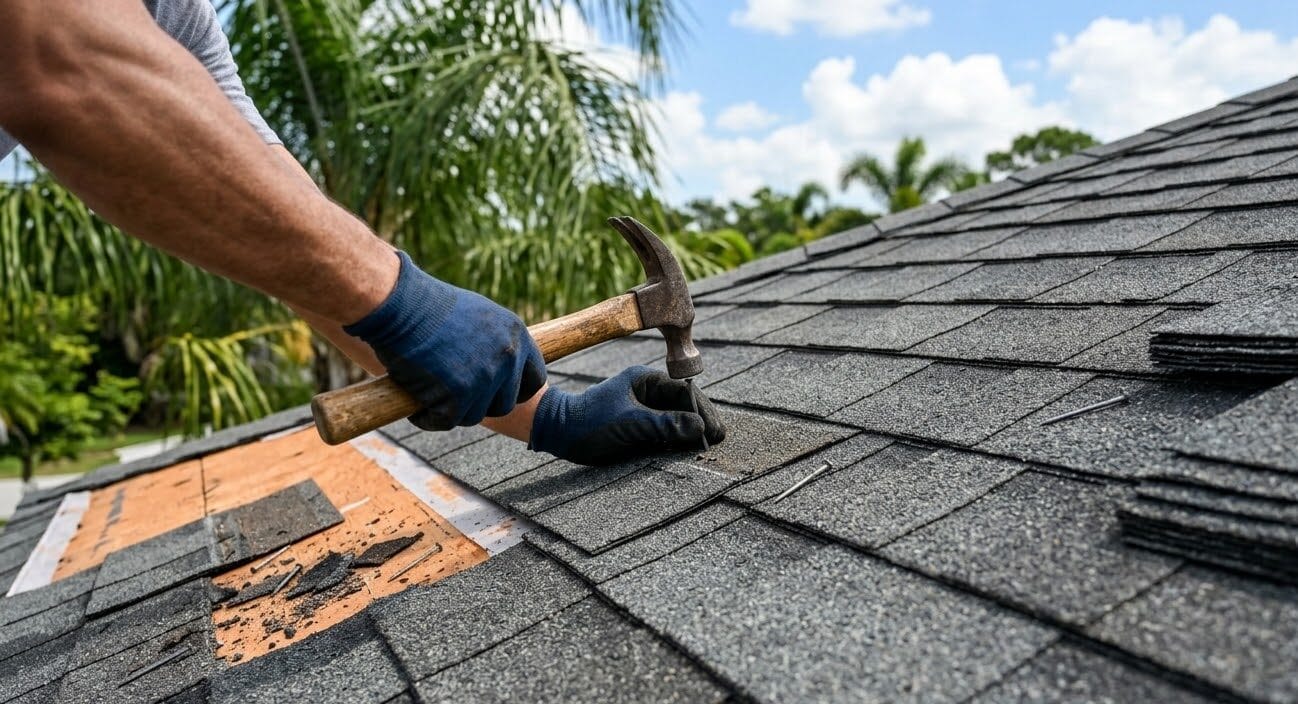
None of the three membranes matters if the assembly leaves the deck. Florida Building Code requires commercial roofs to resist wind forces calculated from the building specific geometry, height, exposure and the code wind speed map, and the design pressure at the corners and perimeter of a roof is dramatically higher than in the field.
FM Approvals rates roof assemblies by uplift resistance in pounds per square foot, which is where designations like 1-60, 1-90 and 1-120 come from. A 1-90 assembly resists 90 psf of uplift. The number is a property of the entire assembly, not the membrane: deck type, insulation, fastener pattern, fastener length, plate type and edge metal are all part of the rating. Swapping the membrane brand without re-checking the assembly listing can void the rating.
Two things follow for a Florida building owner. First, ask for the assembly listing, not the membrane brochure. Second, understand that fully adhered, mechanically attached and ballasted systems reach uplift ratings very differently, and the attachment method usually drives more of your cost than the membrane chemistry does. Post-storm field surveys of Florida single-ply roofs are consistent on this point: single-ply systems held up well overall, and the damage clustered where installation strayed from the manufacturer specification and the assembly was not properly fastened.
If your building sits in the High Velocity Hurricane Zone, every component from the membrane to the fasteners to the edge metal needs valid approval for the intended application, and the edge metal is the piece most often overlooked. Edge metal failure is a classic uplift initiator: wind peels the perimeter flashing, gets under the membrane, and the field of the roof follows. The broader code picture for Florida roofs is laid out in our guide to the 2026 Florida Building Code roof changes.
Ponding Water, Slope and the Florida Humidity Problem
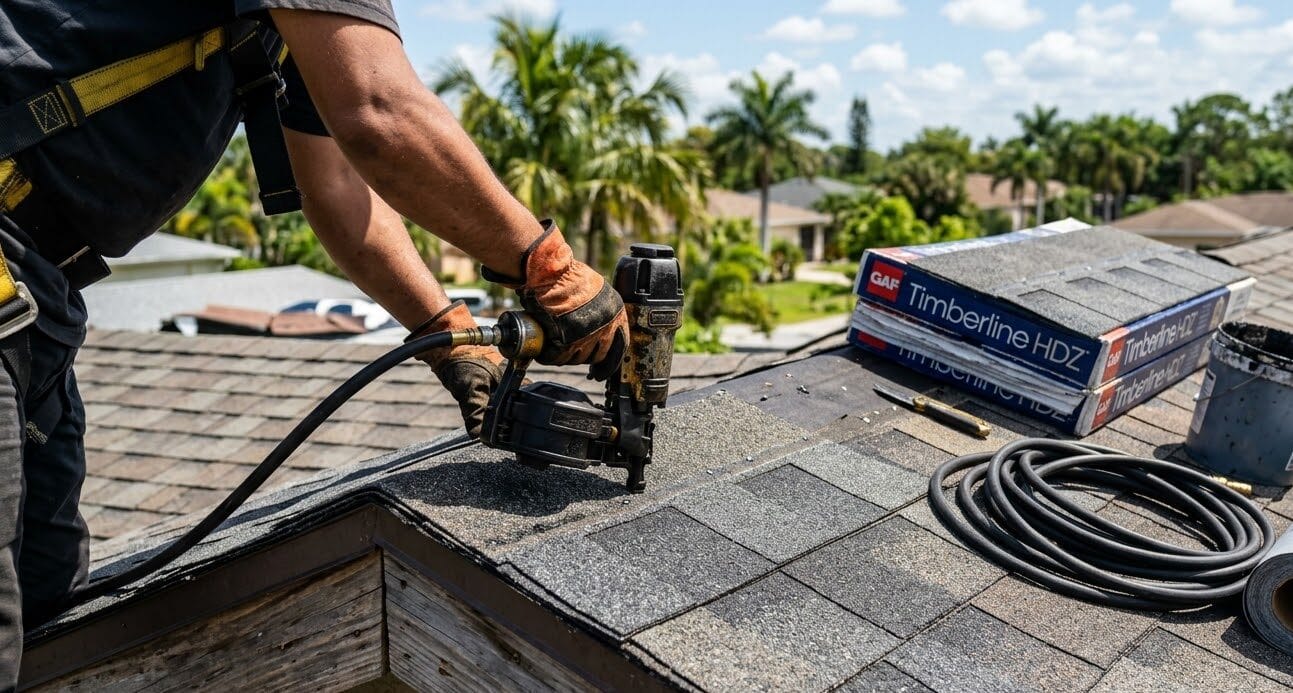
Florida gives low-slope roofs a combination that most of the country does not: intense UV, sustained heat, daily summer downpours and humidity that keeps surfaces wet long after the rain stops. The membranes handle UV and heat reasonably well. What none of them handle indefinitely is standing water.
Code and industry practice expect a low-slope roof to drain within 48 hours after rainfall stops. Water that sits longer than that does three things: it drives dirt into the membrane surface and destroys reflectivity, it accelerates plasticizer migration in PVC, and it finds any pinhole in a seam and stays there working. Most manufacturer warranties exclude or sharply limit damage attributable to ponding, which means the cheapest way to shorten a $200,000 roof is to skip the drainage analysis.
Reflectivity loss is worth its own note because it is invisible. A white TPO or PVC roof that is never cleaned loses a meaningful share of its solar reflectance in the first few years to biological growth and airborne dirt, which is a bigger factor in humid Florida than in dry climates. The cooling savings you underwrote the roof with degrade with it. A rinse and inspection on a scheduled interval is the cheapest line item on a commercial roof and the one most often cut, which is why we treat it as a program rather than a call-out under regular maintenance.
For roofs where the deck and insulation are still sound but the membrane surface is spent, a fluid-applied restoration can add service years without a tear-off, and the economics of that route are covered under roof coating. It is not a fix for a wet insulation layer, and any honest contractor will core the roof before proposing it.
How to Choose: A Building-Type Decision Table
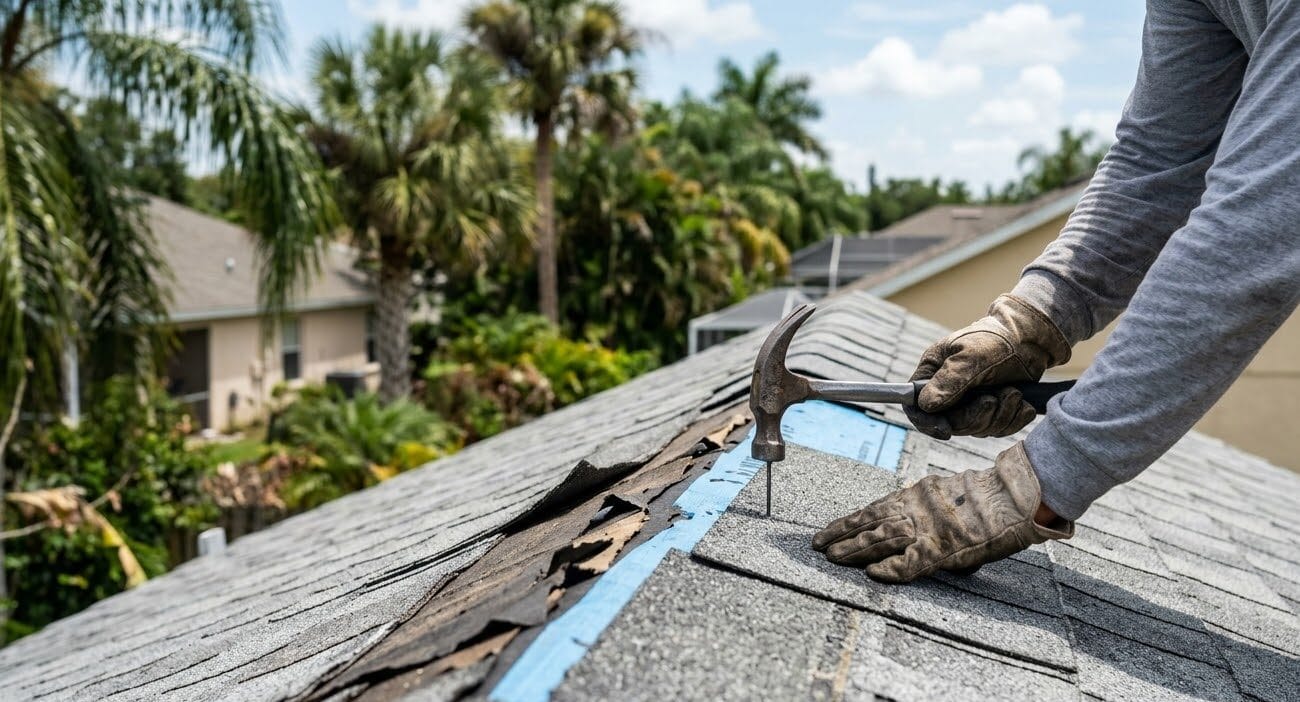
Stripping out preference, here is how the three sort by building type in Central Florida.
- Restaurant, grocery, food processing, any grease exhaust: PVC, 60 mil minimum. The chemical resistance is the entire reason and there is no cheaper substitute that holds up.
- Warehouse, distribution, light industrial with no chemical discharge: TPO at 60 or 80 mil. Large roof area means reflectivity savings are large in absolute dollars, and there is nothing on the roof to attack the membrane.
- Office, retail strip, medical office: TPO at 60 mil is the default. PVC if a tenant with a kitchen is plausible within the roof life, which in a retail strip it usually is.
- Church, school, municipal building on a tight capital budget: EPDM at 60 mil, especially where the roof is not visible and the building is not cooling-dominated around the clock. Lowest 30 year total cost when reflectivity is not doing much work.
- Apartment or condominium buildings: depends on association reserve schedules more than chemistry, and the bid process itself has statutory structure worth understanding before the vote. Our multi-family roofing work covers how those decisions get documented.
- Rooftop mechanical, heavy foot traffic, service crews on the roof weekly: 80 mil regardless of which chemistry you pick, plus walkway pads. Puncture is the failure mode, not weathering.
One filter that cuts through the whole table: if you cannot name a chemical exposure on your roof, you probably do not need PVC. If you can name one, price is not the deciding variable.
Recover vs Tear-Off: The Decision That Moves Real Money
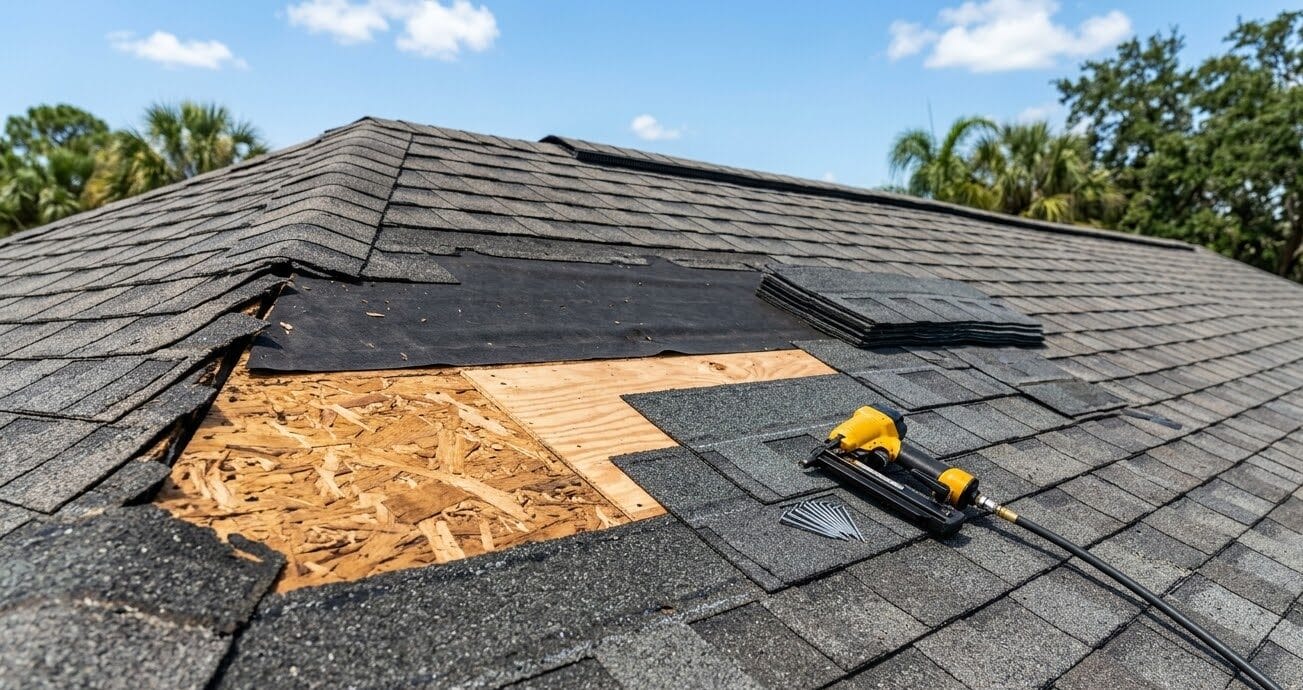
Before choosing a membrane, settle whether you are replacing the roof or recovering it, because that decision is worth more dollars than the membrane choice.
A recover, sometimes called an overlay, installs new membrane over the existing system without removing it. In Florida a TPO recover commonly runs $9 to $12 per square foot against $11 to $14 for full replacement, so it saves roughly 20 percent. It is permitted only when the existing assembly is dry, structurally sound and does not already carry the maximum number of roofing layers the code allows on that building.
The test that decides it is a core sample, not a visual inspection. A roofer cuts a plug through the assembly and reads the insulation. Wet insulation means tear-off, no exceptions, because sealing moisture under a new membrane guarantees rot, mold and a second failure within a few years. Infrared or moisture-meter surveys map the wet areas so you know whether you are looking at a partial tear-off with a recover over the sound field, which is often the cheapest correct answer.
We walk through the full repair, recover and replace comparison for Florida flat roofs, including when each is legitimate, in our guide to flat roof repair and replacement. The commercial side of that work, from core sampling through assembly specification, sits under commercial flat roofing.
What to Demand in a Commercial Membrane Bid
Most commercial roofing bids in Florida are hard to compare because they are written to be hard to compare. Six specifications make them comparable, and any qualified contractor can produce all six without hesitation.
- Membrane type and mil thickness: stated explicitly, for example "60 mil TPO" rather than "TPO membrane."
- Manufacturer and warranty program: the specific NDL program name and term, plus confirmation the contractor is an approved applicator for it.
- Assembly attachment method and uplift rating: mechanically attached, fully adhered or induction welded, with the FM or equivalent listing for the whole assembly.
- Insulation type, thickness and R-value: plus whether a cover board is included. Cover boards get value-engineered out and they are what stops hail and foot traffic punctures.
- Drainage plan: existing drain count and condition, whether tapered insulation is included, and the expected time to drain after rainfall.
- Core sample results: how many cores, where, and what the insulation moisture readings were. A bid written without cores is a guess.
If two bids are $60,000 apart on the same building, one of those six lines is different, and it is usually mil thickness, cover board or the warranty program. Ask which. Protech Roofing works commercial and low-slope assemblies across Hernando, Pasco, Pinellas, Polk and Marion counties, and you can reach the office at (352) 605-0696 or through our contact page for a core-sampled assessment. Local commercial work in the Brooksville and Spring Hill corridor is detailed at Brooksville, and the broader commercial program sits under commercial roofing.
FAQ
Frequently Asked Questions
Which is better for a Florida commercial roof, TPO or PVC?
+
How much does a TPO, PVC or EPDM roof cost per square foot in 2026?
+
What mil thickness do I need for a 20 year warranty?
+
Why do people say EPDM is worse in Florida when it lasts 25 to 30 years?
+
Does the membrane choice affect my wind uplift rating?
+
Can I recover my existing flat roof instead of tearing it off?
+
Related Articles
More guides for Florida homeowners
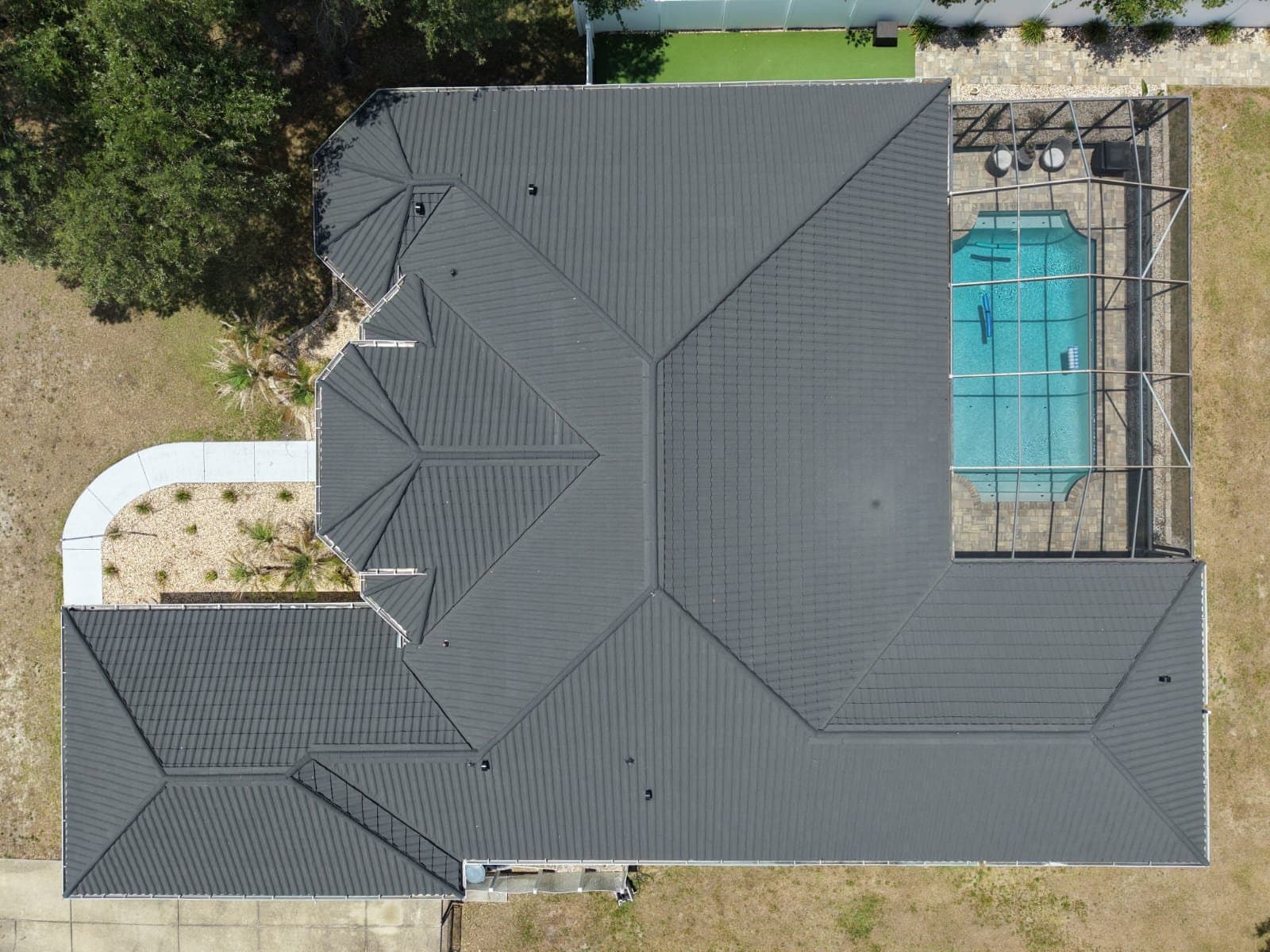
Metal Roof Cost in Florida 2026: Per-Sqft Guide
Metal roofs in Florida run about $8 to $23 per square foot installed, depending on the system. Here is what standing seam, stone coated steel and exposed fastener panels cost, what a typical home pays and how to compare quotes.
Read Article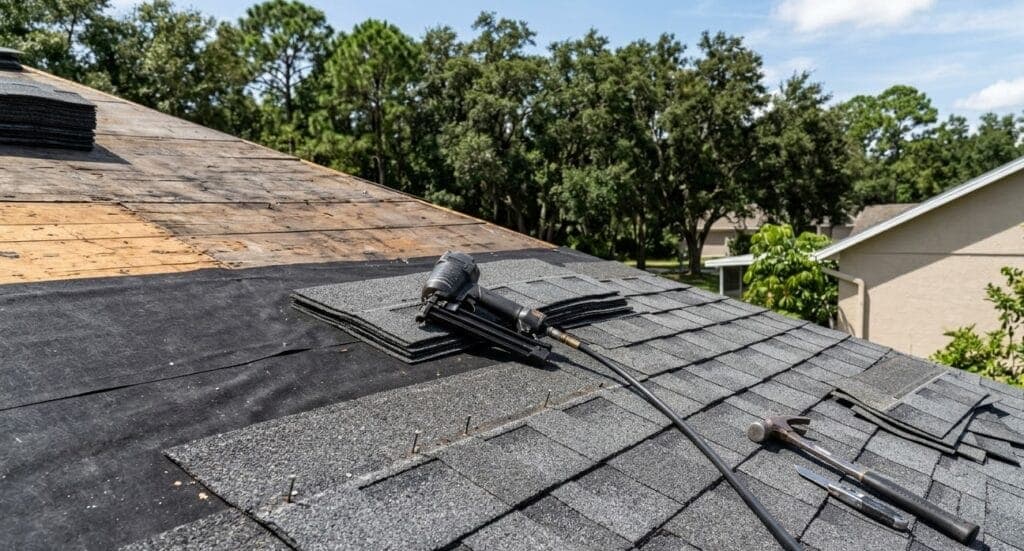
Roofing Warranties in Florida: What Voids Them
A new Florida roof usually carries two warranties: one from the manufacturer for the product and one from the contractor for the installation. Here is what each covers, what quietly voids them and how to keep your coverage.
Read Article
Best Roof Color for Florida Heat: Cool Roofs Explained
Florida test homes show a white shingle saves only 3 to 5 percent on cooling while reflective white metal or tile saves 18 to 26 percent. Here is how to choose a roof color that actually keeps your attic cooler.
Read ArticleReady When You Are
Get your free roof inspection today.
No-pressure, written estimate. Same-week scheduling across Hernando County. Call us now or request a visit online.