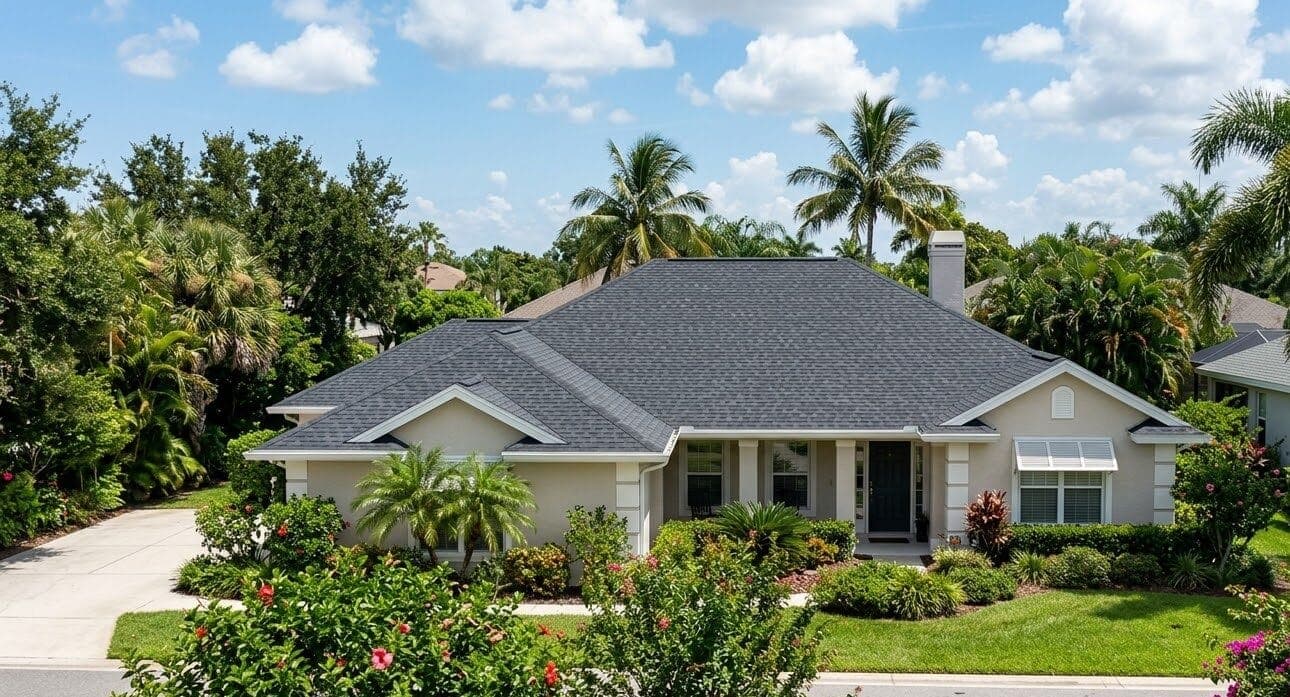
Hernando County, FL
Roofing in The Oaks, Spring Hill, FL
Roofer serving The Oaks in Spring Hill, FL. Repair, replacement, leak detection, and storm damage work. We pull the Hernando permit. Call (352) 605-0696.
Call (352) 605-0696Roofing in The Oaks, a Spring Hill Neighborhood
The Oaks is a single-family residential subdivision in Spring Hill, inside Hernando County, Florida. If you live there and you are looking for a roofer, the first useful fact is that your address sits in the same county jurisdiction as our office. Protech Roofing Services works out of 9035 Jayson Drive in Brooksville, which means the building division that reviews your roof permit is the same one our crews file with every week.
That matters more than most homeowners expect. A roof in Florida is not simply a material choice. It is a permitted job with a fixed inspection sequence, a product approval requirement tied to your specific address, and a paper trail your insurance carrier will ask about later. Hiring a contractor who already works inside that process is the difference between a roof that closes cleanly and a roof that sits half finished waiting on a correction.
What we will and will not claim about your street
We write these pages from things we can point to. We know The Oaks is a single-family subdivision in Spring Hill. We know the county code that applies to it, the weather that ages roofs here, and the age profile of the surrounding housing stock. We are not going to tell you what your community association allows, which colors or profiles are approved, or how many homes sit inside the subdivision, because we do not have a source for any of that. If your community has architectural rules, bring them to the estimate and we will write the scope around them.
What we can talk about with real confidence is the roof itself: how it fails here, what the county requires, what the inspection sequence looks like, and what the work costs you in time and disruption. Protech Roofing Services is rated 4.9 on Google, and the work behind that rating is the same work we bring to Spring Hill addresses. If you want to see the broader picture of what we do across the area, the Spring Hill service area page and the Brooksville page cover the same county from a wider angle.
Why So Many Spring Hill Roofs Are Coming Due at Once
Spring Hill has a median home construction year of roughly 1993, and the housing stock here is predominantly covered in asphalt shingle. A large share of the homes went up between 1985 and 2005. Put those two facts side by side and you get exactly what we see on service calls: a very large number of original roofs reaching or passing the end of their useful service life inside the same window of years.
That does not mean your roof is finished. It means the odds that a neighbor's roof and your roof are the same age are high, and it means a roof that looks fine from the driveway can still be at the point where one storm turns a tired shingle field into an active leak. Age alone is not a verdict. Age plus condition is.
What actually wears out first
An asphalt shingle roof in Central Florida rarely fails across the whole field at once. It fails at the points where water is forced to change direction and where fasteners break the plane of the covering. In practice, that means valleys, the flashing at chimneys and vent stacks, the pipe boots around plumbing penetrations, and the edges where wind can get under a course of shingles and start lifting.
- Granules in the gutters. A handful after installation is normal. A steady accumulation years later means the mat under the granules is losing its protection.
- Curling, cupping, or lifted shingle edges. Once an edge lifts, wind has a lever and water has a path.
- Cracked or hardened pipe boots. The rubber collar around a plumbing vent usually gives out well before the shingles do.
- Rust, separation, or lifted fasteners at flashing. Valleys and wall intersections carry the most water on the roof, so they show trouble first.
- Staining on the ceiling or in the attic. A stain means water has already been inside long enough to leave a record.
- Soft or spongy decking underfoot. That is a decking issue, not a shingle issue, and it changes the scope of the job.
Repair or replace
The honest answer depends on three things: how much of the roof is affected, how old the covering is, and whether the decking underneath is still sound. A single failed boot on an eight year old roof is a roof repair. Widespread granule loss with multiple leak points on a roof from the late nineties is usually a total roof replacement, because every dollar spent patching is a dollar spent on a system that is going to be torn off anyway. We will tell you which one we think you have, in writing, with the reasoning attached.
The Permit, the Inspections, and Who Handles Them
In this area, roofing permits for both residential and commercial buildings are issued by the Hernando County Building Division at 789 Providence Blvd, Brooksville, FL 34601, reachable at (352) 754-4050. Every roof covering replacement in Hernando County requires a permit. There is no size of reroof that quietly skips this step, and a roof done without one is a problem that surfaces later, usually at closing or at a claim.
Product approval is tied to your address
The products installed on your roof have to carry a Florida Product Approval, or a Miami-Dade Notice of Acceptance, that is compatible with the wind speed assigned to your address. This is one of the quieter reasons a cheap bid can be a bad bid. A shingle, an underlayment, and a fastening pattern are approved as a system, and swapping one component for something cheaper can put the assembly outside its approval. When we write a proposal, the products and the attachment method are named in it.
The inspection sequence
A residential reroof in Hernando County runs through a set sequence of inspections: dry-in, then nail-off, then final. Each one has to happen at the right moment in the build, which is why the schedule on a reroof is not purely a question of how fast a crew can work. The dry-in inspection has to be called and passed before the covering goes down over it. Skipping ahead is how a job ends up torn back open.
We are the permit holder, so the deadlines are ours
Protech pulls the permit for the job and conducts the final inspection. That is part of the service, not something we hand back to you. It is worth knowing what that responsibility carries: the permit holder has to request the final inspection within ten business days of the work being completed, and if a red tag is issued, reinspection has to be requested within seven business days. Those clocks are ours to watch, not yours.
Commercial work runs on a different track. Commercial reroofing in Hernando County requires its own Commercial Building Permit Application, separate from the residential process. If the building at issue is a small commercial property or a multi-family building rather than a house, our commercial roofing and multi-family roofing pages describe how those projects are run.
The 25 Percent Rule, and Why a Small Repair Can Get Bigger
This is the rule that surprises homeowners most often, so it is worth explaining before you get a bid rather than after. Under Section 706.7 of the Florida Building Code, which applies in Hernando County, if more than 25 percent of the total roof area is repaired or replaced within any twelve month period, the entire roof has to be brought up to the current code.
Read that carefully, because two details do the damage. The first is that the threshold is cumulative over twelve months, not per job. Two separate repairs, each comfortably under 25 percent, can add up to something over the line. The second is that the consequence is not a bigger repair. It is a code upgrade to the whole roof.
What this changes in practice
It changes how a storm repair should be scoped from the very beginning. If a section of your roof is badly damaged and the affected area is anywhere near a quarter of the total, the sensible move is to price both paths honestly and decide with your eyes open, rather than starting a repair that trips the threshold halfway through. It also changes the math on insurance, because the difference between a partial repair and a full code compliant replacement is the kind of thing that belongs in the claim discussion from day one, not as a change order later.
We measure the roof and calculate the affected percentage before we write the scope. If the repair you want puts you close to the line, we will say so, and we will show you the number we used to get there. A contractor who does not raise this rule with you is either not measuring or not telling you.
Storm Season and What Water Actually Does Here
The Atlantic hurricane season runs from June 1 through November 30, as defined by the National Hurricane Center. That is the window when the pace of emergency calls changes, but it is not the only thing that matters. Hernando County has recorded 22 flood events and 18 tropical storm events over the last thirty years in the NOAA Storm Events database. That is the real exposure profile: not one catastrophic memory, but a steady record of water and wind events over decades.
A roof in this county is not asked to survive one bad day. It is asked to survive many ordinary ones. Repeated wind uplift loosens fasteners a little at a time. Repeated heavy rain finds the flashing detail that was never quite right. Sun degrades sealant year round. The failure you eventually notice is usually the accumulation, not the event.
After a storm, before you call the carrier
The order of operations matters. Get the roof documented and stabilized first, then deal with the claim. Water that keeps entering after the storm does damage to insulation, drywall, and framing that was not part of the original event, and that additional damage is harder to argue about later. Our emergency roof repair and storm damage restoration services exist for exactly that first stretch, and we provide storm damage assessment inspections at no charge, because an accurate picture of the damage from day one is what the rest of the process is built on.
What we do not do is guess about your specific street. We are not going to tell you a named storm hit The Oaks, or quote a flood zone designation for the subdivision, because we could not confirm either one. What we can tell you is what a county wide record of flood and tropical storm activity means for how a roof here should be built and maintained.
How We Find a Leak Before We Price the Repair
The most expensive roof repair is the one aimed at the wrong spot. Water travels. The stain on your ceiling is where gravity finally released the water, not where the water came in, and on a low slope run those two points can be a long way apart. So we find the entry point before we write the scope.
The tools, in the order we use them
We start with an on-site inspection and a thorough visual examination of the roof, then work inward. Thermal imaging identifies suspect areas by temperature difference. Once the scan narrows the field, we press a moisture meter directly against decking, insulation, and framing to get precise moisture content readings, which turns a suspicion into a measurement. When thermal imaging and the meter point to a general zone but the exact penetration point is still unclear, we run a controlled water test, spraying specific areas of the roof in a systematic pattern while a second technician monitors the attic from inside.
We also inspect the attic where it is accessible, looking for daylight penetration, water staining on the decking, and moisture held in the insulation. Every image we capture is saved as part of your permanent inspection record, which matters twice: once when we scope the repair, and again if the damage ever becomes an insurance conversation. The full method is described on our leak detection and repair page.
Why this saves money
Because it replaces guessing with measuring. A roofer who cannot locate the entry point has two options: patch broadly and hope, or come back repeatedly. Both cost you more than an hour of diagnosis. And on an older Spring Hill roof, the diagnosis often reveals something more useful than the leak itself, which is whether the decking underneath is still structurally sound.
Insurance Claims and the Inspection That Comes After
Storm damage claims turn on documentation. When we inspect a roof for storm damage, we check shingles for wind lift and hail bruising, examine flashing around penetrations and valleys, assess soffit and fascia for wind damage, and look for signs of water intrusion in the attic space. That report is what the claim rests on.
Many homeowners ask us to be present when the adjuster comes out, and we recommend it. When we meet the adjuster at your property, we walk through every area of concern documented in our inspection report, so nothing gets overlooked simply because it was not visible from where the adjuster was standing. Our insurance claims assistance page explains how we work through that process alongside you.
Wind mitigation after the new roof goes on
Here is the step people skip. After a roof replacement is complete, we recommend scheduling a wind mitigation inspection right away. A new roof built to current Florida Building Code standards will typically qualify for the highest available credits, and those credits only apply once someone documents them. The roof is already built correctly at that point. The inspection is what converts that into something your carrier can see.
My Safe Florida Home and Roof Hardening
The My Safe Florida Home Program, administered by the Florida Department of Financial Services, is worth checking against your address before you plan a roof project. The eligibility criteria for the grant are specific: the home's original building permit must predate January 1, 2008, the insured value must be up to $700,000, and the property must have a homestead exemption.
Given that Spring Hill's median construction year is around 1993, and that a large portion of the local housing stock was built between 1985 and 2005, the permit date requirement is one that many homes in this area meet on age alone. Whether the rest applies to you is a question of your specific insured value and exemption status.
The program's free initial inspection covers three things that are directly connected to how a roof is built: roof-to-wall connection reinforcement, roof deck attachment, and secondary water barrier. Those are not cosmetic items. They are the parts of the assembly that determine whether the covering stays attached and whether water that gets past the covering stays out of the house. Our My Safe Florida Home page walks through the criteria in more detail.
Every Roofing Service We Bring to The Oaks
We are a full service roofing contractor, not a single trick operation, and the right answer for your house is often not the one you called about. The full range is available at Spring Hill addresses:
- Roof repair and leak detection and repair for isolated failures.
- Total roof replacement and shingle roof installation for roofs at the end of service life.
- Metal roofing systems and stone coated steel tile for owners looking at a longer horizon than a shingle field.
- Tile roof repairs for homes with tile covering.
- Roof inspection and regular maintenance to catch the small things before they become claims.
- Storm damage restoration, emergency roof repair, and insurance claims assistance for the weeks after a weather event.
- Gutter installation, gutter protection, and gutter cleaning, because a roof that drains badly ages faster.
- Roof coating, commercial roofing, commercial flat roofing, multi-family roofing, and new construction roofing for everything that is not a single family reroof.
What happens when you call
We schedule an on-site inspection and examine the roof properly, including the attic where it is accessible. You get a written proposal that breaks out the components rather than a single number on a business card, so you can see what you are paying for and compare it fairly against anyone else's bid. If we recommend replacement, the proposal names the products, the attachment method, and the scope of any decking work. If we recommend a repair, we tell you where the roof stands on the 25 percent threshold before you decide.
To reach us about a roof in The Oaks or anywhere in Spring Hill, call (352) 605-0696. Our office is at 9035 Jayson Drive, Brooksville, FL 34613, which is the same county as your house and the same building department that will review your permit. If you are looking at a neighboring community, our Timber Pines and Weeki Wachee pages cover the same code, the same crews, and the same process.
Our Services
Some of the roofing services we offer in Roofing in The Oaks, Spring Hill
Roofing By Area
Roofing services near Roofing in The Oaks, Spring Hill
FAQ
Frequently Asked Questions
Do you serve The Oaks in Spring Hill?
+
Do I need a permit to replace my roof in The Oaks?
+
I only need a small repair. Why might it turn into a full replacement?
+
Who schedules the inspections, me or Protech?
+
Could my house qualify for the My Safe Florida Home program?
+
From the Blog
Stay informed about roofing in Florida.
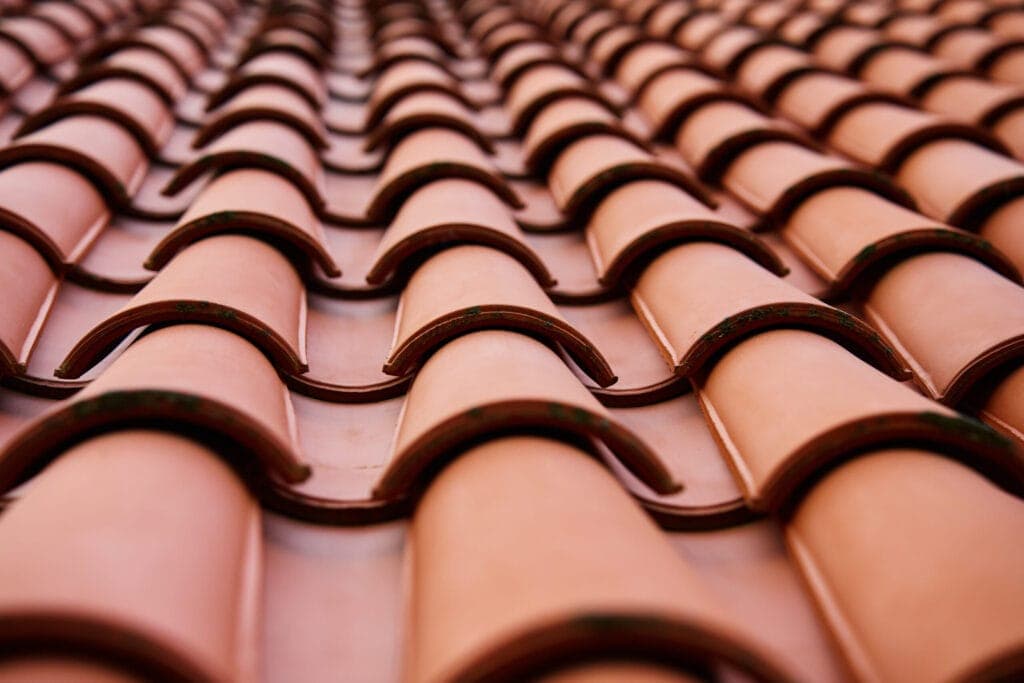
Florida Tile Roof Problems: Repair vs Re-Roof (2026)
Tile lasts for decades, the underlayment under it does not. Here are the tile roof problems Florida homeowners see most, what each repair costs in 2026, and how to tell when a repair is enough and when it is time to re-roof.
Read Article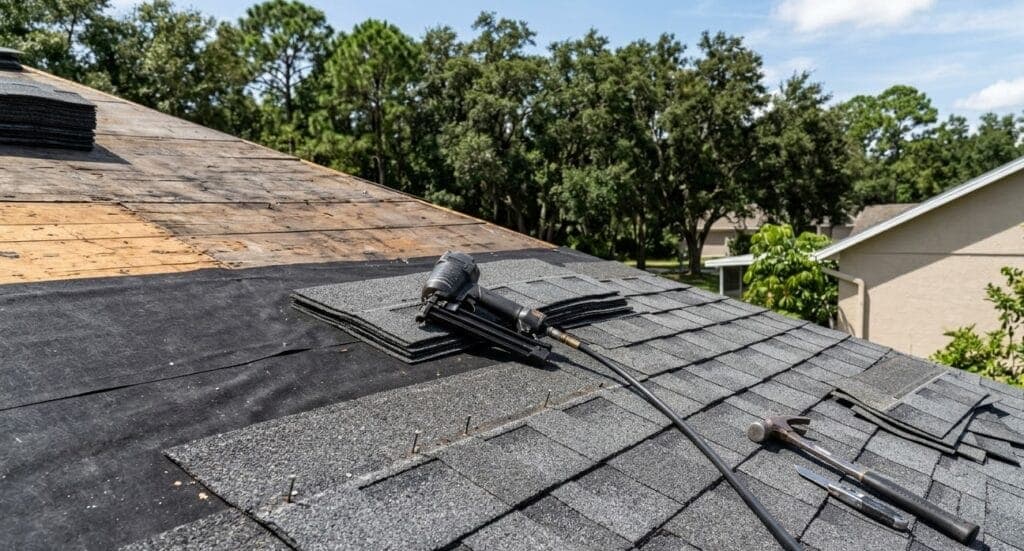
Solar Roofing in Florida: Solar Shingles vs Panels (2026)
Every solar system on a Florida roof is either bolted to the roof or is the roof. Here is how panels and solar shingles compare in 2026, what changed with the federal credit, and why the cheapest solar project often starts with a re-roof.
Read Article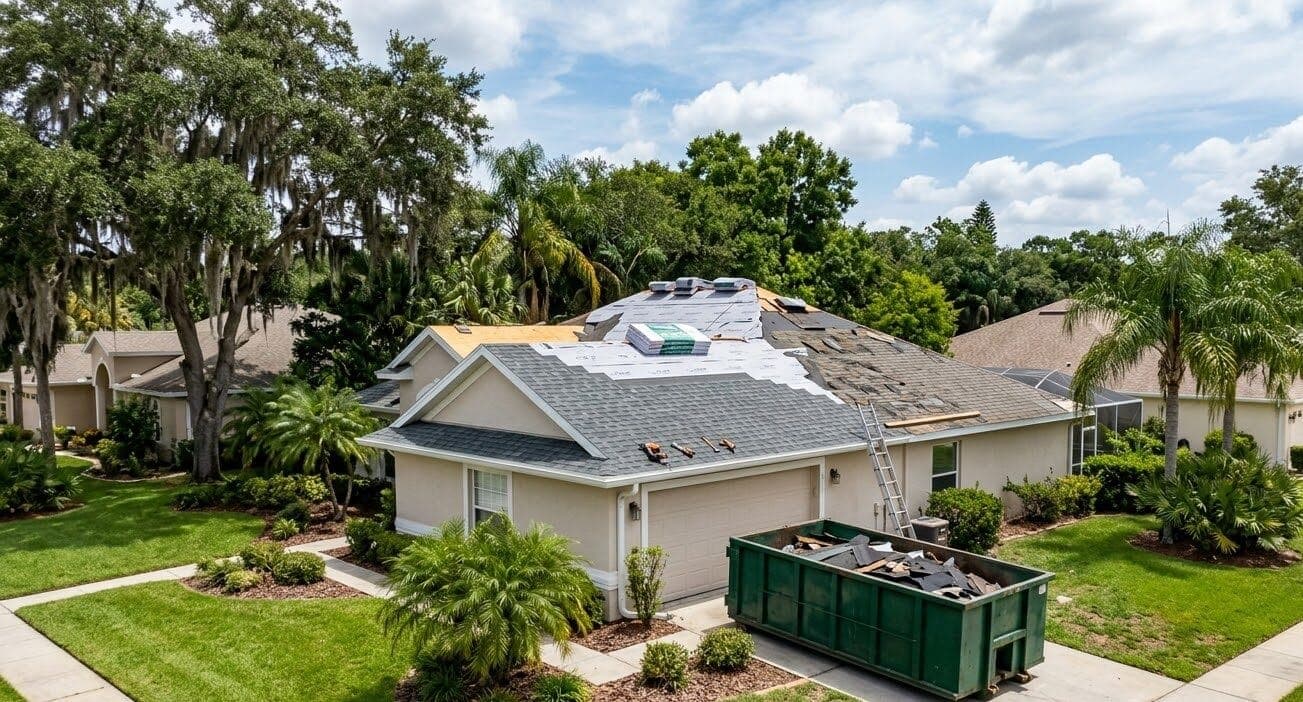
Chimney Flashing Leaks in Florida: Find the Real Cause
Roofs do not leak in the field, they leak at the terminations, and the chimney is the hardest termination on the roof. Here is what Florida code requires, the five failures behind almost every chimney leak, and what a correct reflash costs in 2026.
Read ArticleReady When You Are
Get your free roof inspection today.
No-pressure, written estimate. Same-week scheduling across Hernando County. Call us now or request a visit online.